
We all know that no single teaching approach will engage all students at once, but implementing a culturally-responsive instructional strategy will help you connect to your more diverse students with distinct backgrounds. So what does it mean to be a culturally-responsive teacher? Being culturally responsive means you can relate to people not only from your own culture, but to that of others as well. It’s more than just knowing the backgrounds of your students. It’s about using that knowledge to incorporate teaching strategies that will engage all students in your classroom, even those with different backgrounds.
Below are a few instructional strategies to help you become a more culturally-responsive teacher.
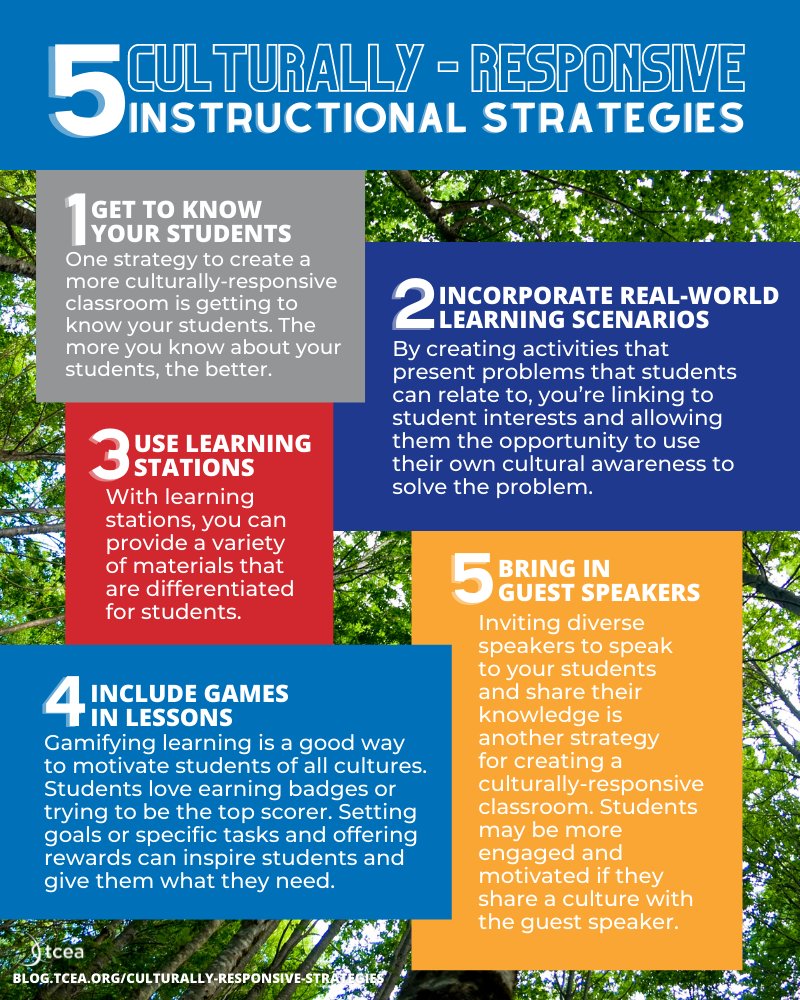
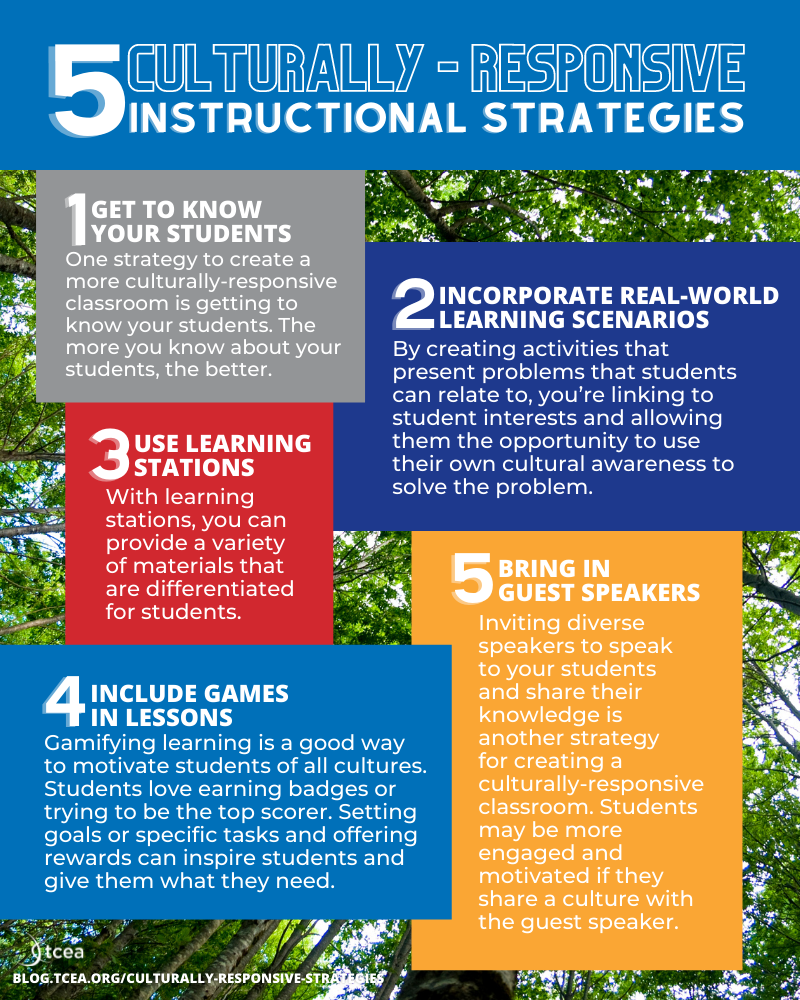
1 – Get to Know Your Students

One strategy to create a more culturally-responsive classroom is getting to know your students. The more you know about your students, the better. Icebreakers are one way to accomplish this. See Classroom Icebreakers and Even More Classroom Icebreakers for activities you can incorporate in your classroom. Other ideas include interest surveys or questionnaires about learning styles. By showing genuine interest in what matters to your students, you are building trust and creating a place where all students feel comfortable.
2 – Incorporate Real-World Learning Scenarios
Another strategy to use is incorporating real-world learning scenarios in your classroom. By creating activities that present problems that students can relate to, you’re linking to student interests and allowing them the opportunity to use their own cultural awareness to solve the problem. Take a look at Collaborative Projects in PBL to get ideas on how to create real-world problem scenarios.
3 – Use Learning Stations
All students respond differently to different types of content due to preference, learning style, and/or culture. With learning stations, you can provide a variety of materials that are differentiated for students. Each station should use a unique method of instructing students so that students have a choice in which station they would prefer to visit. If culturally diverse students can make connections with the content, they will be more engaged.
4 – Include Games in Lessons
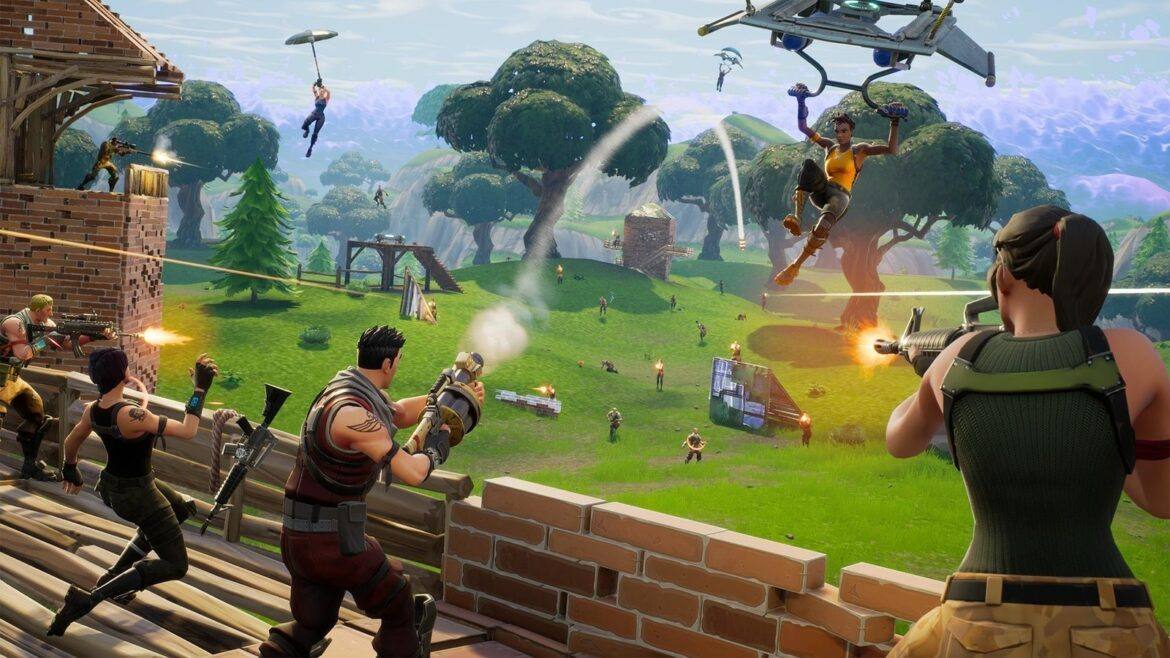
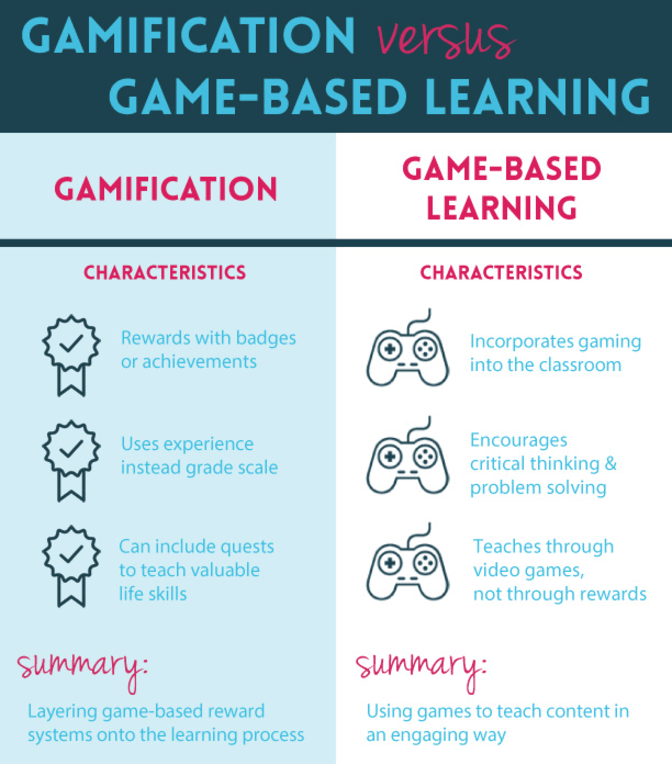
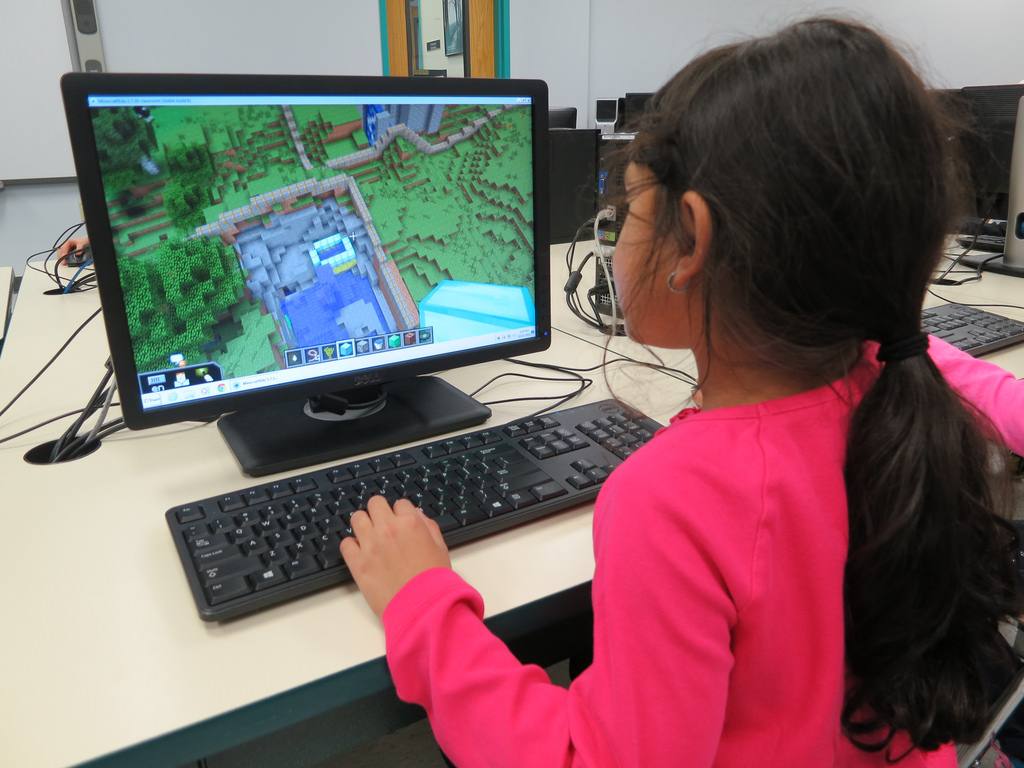
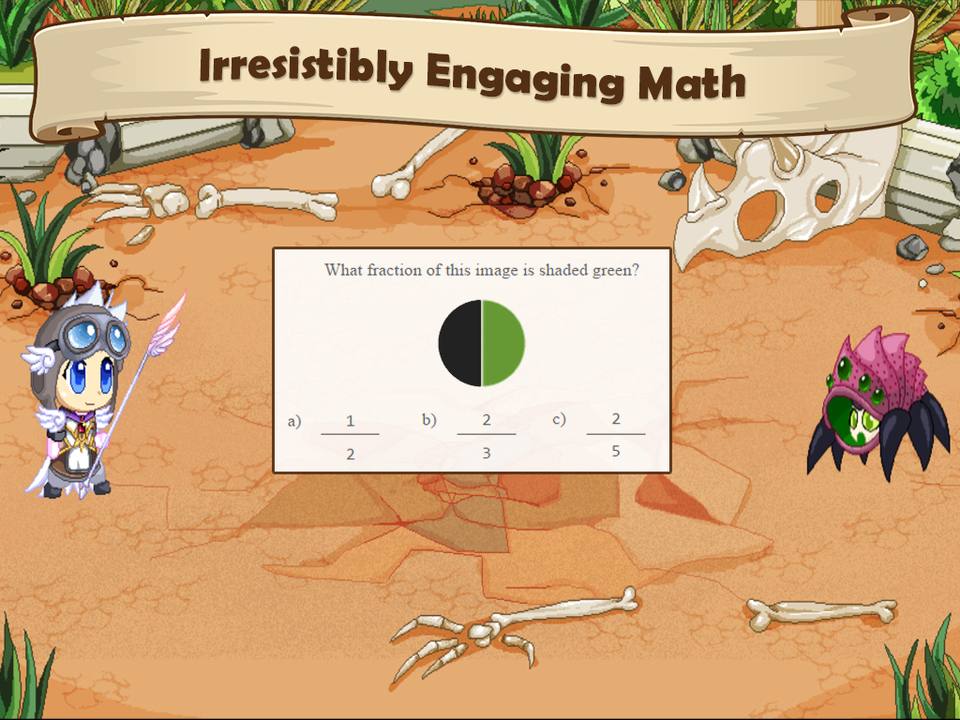
Another way to differentiate content and delivery is to include games in your lessons. Gamifying learning is a good way to motivate students of all cultures. Students love earning badges or trying to be the top scorer. Setting goals or specific tasks and offering rewards can inspire students and give them what they need. In addition, it gives your entire class a chance to have a little fun.
5 – Bring in Guest Speakers
Inviting diverse speakers to speak to your students and share their knowledge is another strategy for creating a culturally-responsive classroom. Students may be more engaged and motivated if they share a culture with the guest speaker. In addition, technology makes it easier than ever to bring speakers into your classroom. It is very easy to set up a Google Hangout or Mystery Skype to connect with others.
Be a Culturally-Responsive Teacher
We live in a multicultural world; therefore implementing culturally responsive teaching strategies is becoming more necessary to create a successful learning environment where all students can learn. Consistency is key to being a more culturally-responsive teacher. Try using all or some of the instructional strategies listed above to ensure that you are meeting the needs of all your students.



 Once you’ve created several missions (the number of missions is up to you), then you can assign each mission a point value based on its degree of difficulty. Decide how long you want the game to run and if a password is required to join. Then the game is afoot! Gather the participants together and have them divide up into teams. (I would recommend no more than four to a team, with three being the optimum number.) One player on each team will need to download the free GooseChase app, available for either an
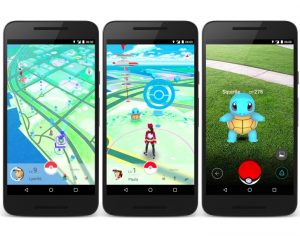 the technology that’s now available. The new version features an augmented reality overlay that uses your phone’s camera and GPS to show Pokemon around you in the real world. So, for example, while I’m walking through the mall, I actually see different Pokemon in the various shops and restaurants.
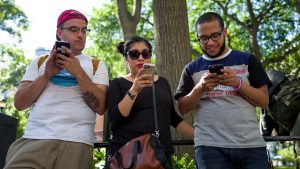 everyone who joins me there can benefit from my generosity as we all catch monsters together. There are no racial or economic barriers between us. We are united, at least for a few minutes. And in today’s world, that’s a huge benefit and need.
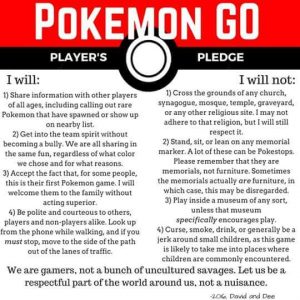 I also found this great Pokemon Player’s Pledge that I wanted to share. While it was written with teenagers or adult players in mind, it could be adapted for younger students. I think it could be a strong lesson starter about how we do anything in life. I can easily see students writing their own pledges. Then the discussion could spin out to how we can be “respectful parts of the world around us” in other areas of our lives. This could lead into talks about bullying, empathy, the environment, and much more.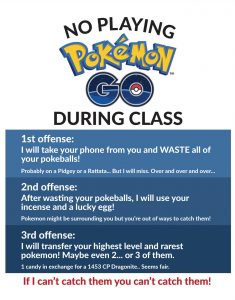
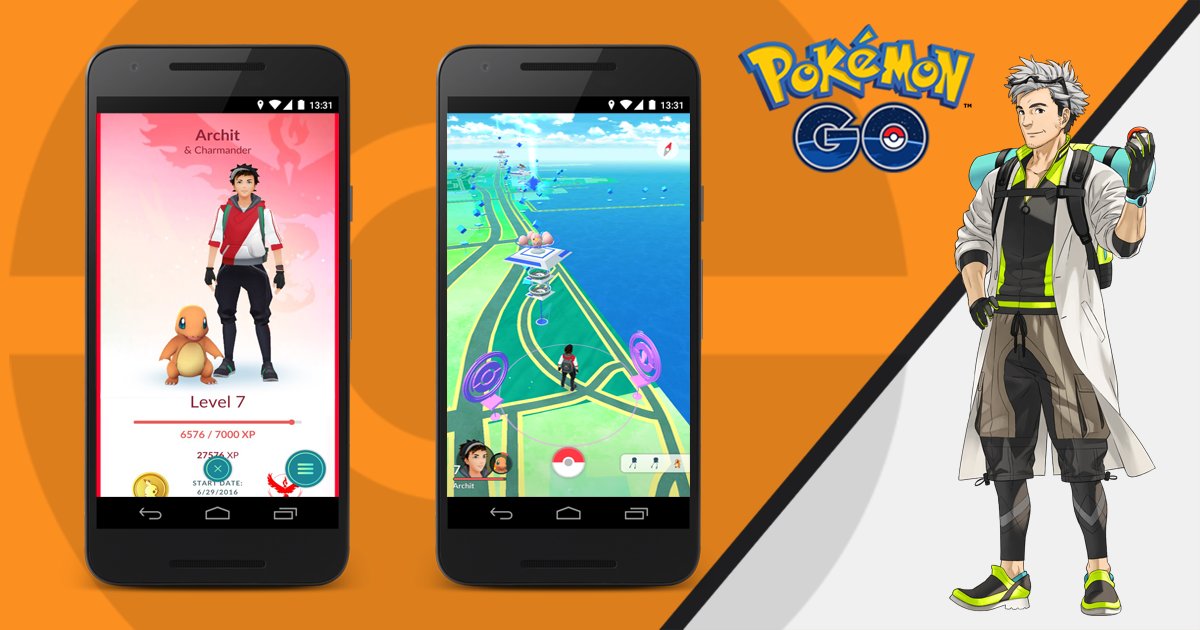 The game publisher released an update of the app today that does include the promised “buddy system.” This is a great feature for education. It will let trainers choose a specific Pokemon and make it your “buddy.” As you walk around, your buddy monster will be trained and you will be awarded with candy, a very useful resource in the game. The key thing here is that you will have to walk in order to make this feature work. So the game is again emphasizing physical activity. It will also allow players to bond with their buddy, something that will be great for helping students develop and practice empathy.