Discover tools, strategies, and resources to support students with special needs. Explore inclusive practices to enhance learning for all learners.
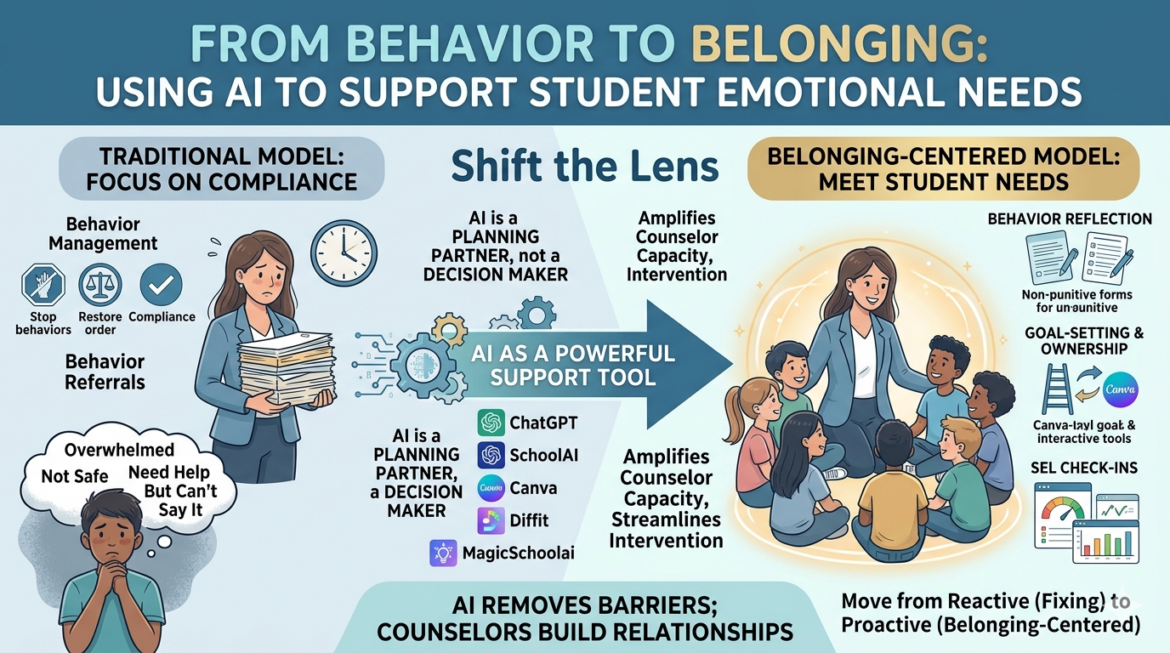
Behavior is communication. When a student shuts down, refuses work, escalates with peers, or disrupts learning, they are often expressing something deeper than defiance: I’m overwhelmed. I don’t feel safe. I don’t know how to say what I need. Behavior is always connected to something.
School counselors work at the intersection of behavior, emotion, and belonging every day. Yet rising caseloads, limited time, and increasing mental health needs make it harder to provide consistent, individualized support. This is where artificial intelligence, used intentionally and ethically, can serve as a powerful support tool. Not as a replacement for counseling, but as a way to amplify counselor capacity, streamline intervention design, and give students more voice.
AI tools such as ChatGPT, SchoolAI, Canva (including Canva Code), Diffit, and MagicSchoolai can help counselors move from a reactive, behavior-focused model to a proactive, belonging-centered approach, without losing the human connection that counseling requires.
Shifting the Lens: From Fixing Behavior to Meeting Needs
Traditional behavior systems often focus on compliance: stopping the behavior, reducing referrals, restoring order. While structure matters, this approach can miss the why behind student actions. A belonging-centered framework asks different questions:
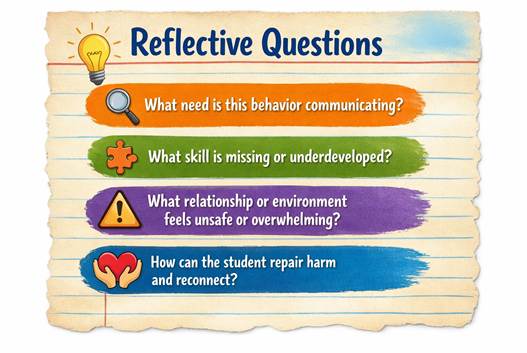
Image Credit: ChatGPT, 2026
AI supports this shift by helping counselors quickly create reflection tools, skill-building resources, and student-centered plans, freeing time for relationship-building and follow-up.
Ethical Guardrails for Using AI in Student Support
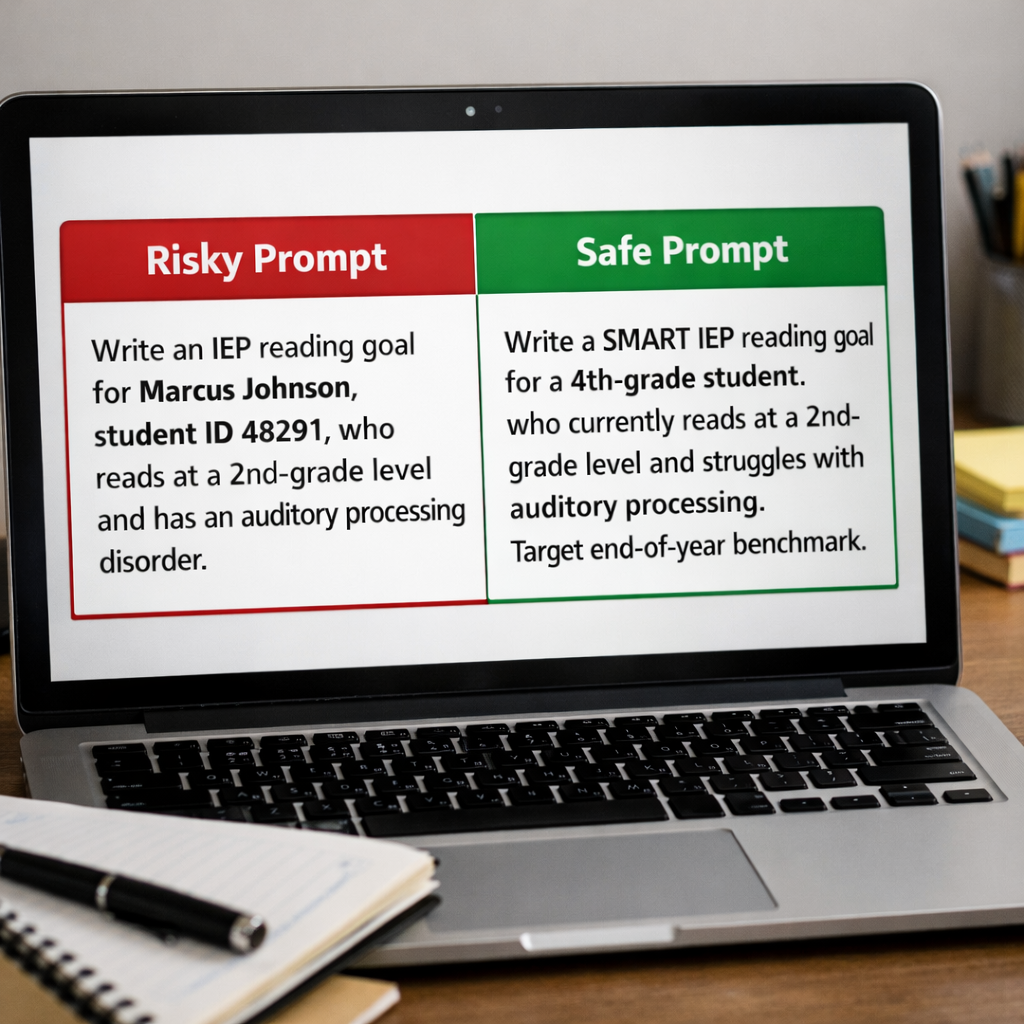
Before integrating AI into counseling practice, guardrails are essential:
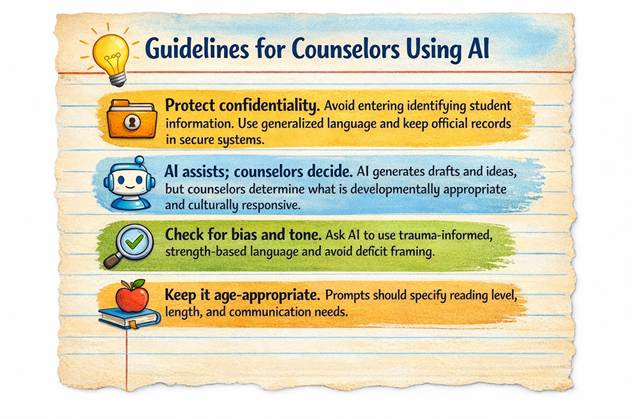
Image Credit: ChatGPT, 2026
When used thoughtfully, AI becomes a planning partner, and does not play the role of the decision maker.
Behavior Interventions: Turning Incidents into Insight
Counselors often spend valuable time recreating behavior reflections, intervention plans, and staff supports. AI can streamline this work.
ChatGPT can generate non-punitive reflection forms that help students process incidents without shame. Counselors can request multiple formats, sentence starters, checklists, or visual-friendly versions, to meet diverse needs. This allows behavior incidents to become learning moments focused on self-awareness and repair.
MagicSchoolai excels at creating counselor- and teacher-facing resources, such as brief intervention plans, de-escalation scripts, and replacement-skill lessons. These tools support consistency across adults, reducing mixed messages and improving follow-through.
SchoolAI adds another layer by offering structured spaces for students to practice reflection or rehearse responses. For students who struggle to verbalize emotions in the moment, these guided check-ins can provide valuable insight for counselors before the next session.
Goal-Setting Conversations: From “I Don’t Know” to Ownership
Students are often asked to set goals before they have the language or skills to do so. AI can help counselors bridge that gap.
Using ChatGPT, counselors can translate vague goals (“I want to stop getting in trouble”) into small, student-friendly steps. AI can generate multiple goal options, empowering students to choose what feels realistic and meaningful, an important factor in motivation and buy-in.
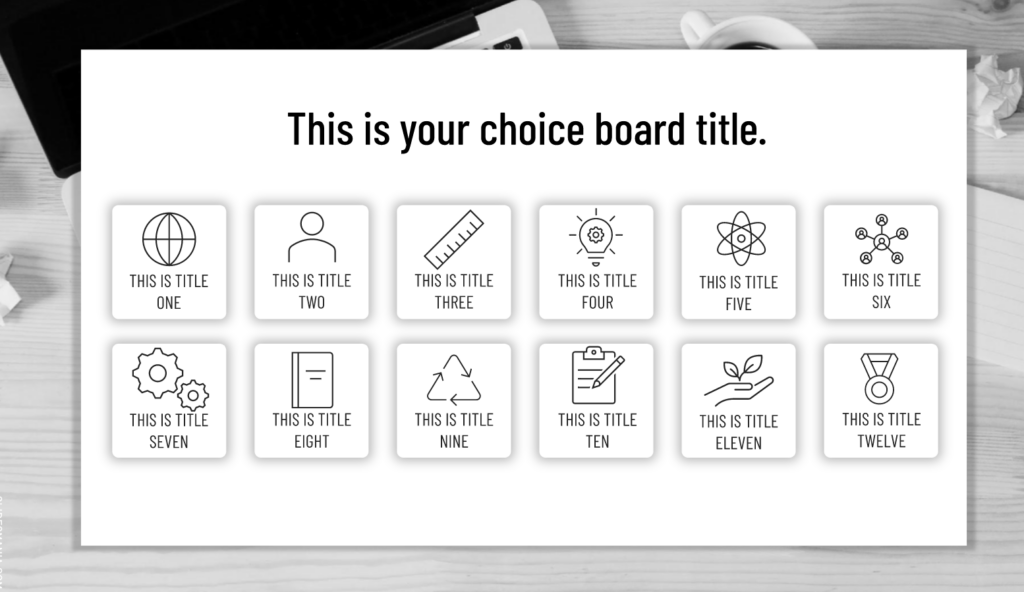
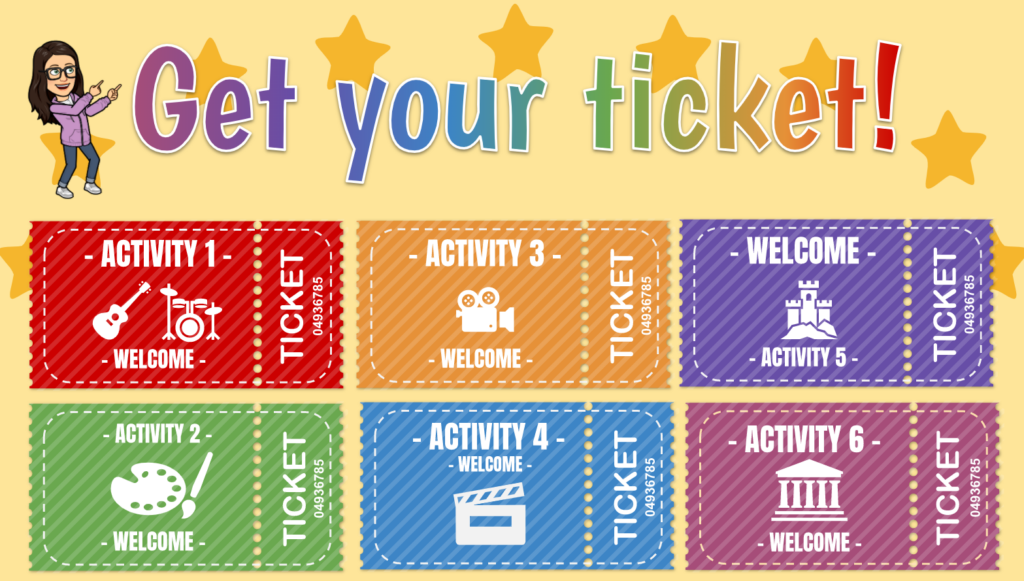
Canva Code enhances this process by turning goals into visual, interactive tools. Goal ladders, progress trackers, and coping choice boards make abstract goals tangible. These visuals are especially effective for younger students or those with executive functioning challenges.
Diffit supports goal-setting by quickly generating leveled texts and activities tied to missing skills, such as emotional regulation, conflict resolution, or perspective-taking. Counselors can deliver brief, targeted lessons without spending hours searching for materials.
Social-Emotional Check-Ins: Catching Needs Early
Consistent SEL check-ins help counselors identify students who are struggling before behaviors escalate. AI makes this scalable without sacrificing authenticity.
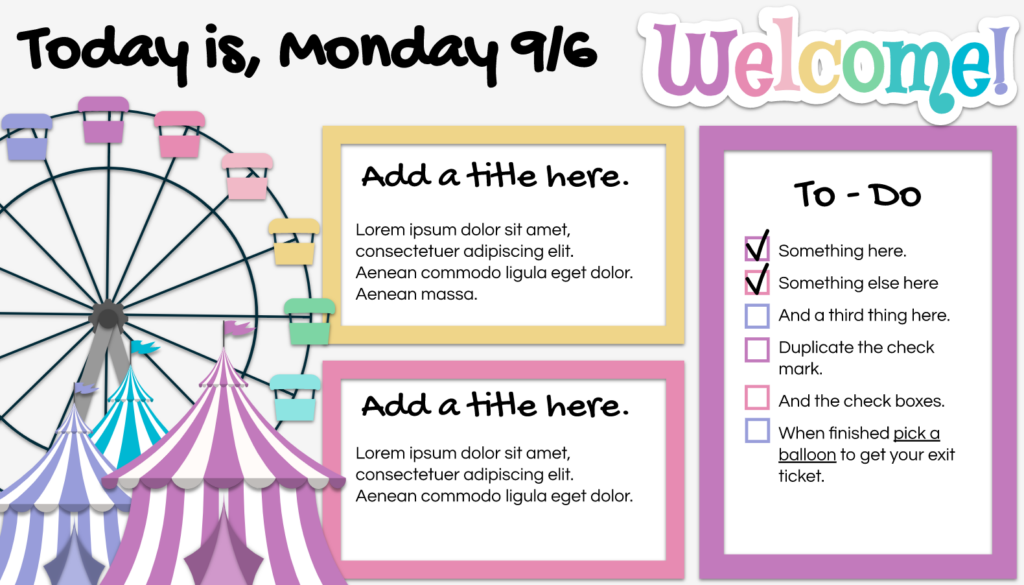
SchoolAI can host routine check-ins that ask students about emotions, stressors, and support needs in a structured, predictable way. Over time, patterns emerge, allowing counselors to intervene proactively.
ChatGPT can generate check-in questions that feel natural rather than clinical, including multiple-choice or indirect prompts for students hesitant to share openly.
Canva Code can be used to design “belonging meters” or weekly wellness check-ins that visually capture how connected students feel to peers and adults. Since belonging strongly predicts behavior, attendance, and engagement, these insights are invaluable.
A Tier 2 Example: AI-Assisted, Counselor-Led Support
Consider a student with frequent classroom disruptions:
- Counselor drafts a trauma-informed reflection using ChatGPT.
- A short intervention plan and teacher support sheet is created with MagicSchoolai.
- The student completes weekly SchoolAI check-ins to identify triggers and coping attempts.
- A Canva Code goal ladder helps track progress visually.
- Diffit provides a short, leveled lesson on managing conflict.
- The counselor meets weekly to adjust supports and strengthen the relationship.
The result is not just reduced behavior incidents, but increased student voice, skill development, and connection.
The Bigger Picture: Belonging as Prevention
AI does not make counseling more human; counselors do. But AI removes barriers: repetitive drafting, resource hunting, and time constraints that pull counselors away from students. When used intentionally, AI supports consistency, responsiveness, and equity in student support.
By shifting from behavior management to belonging-building, schools create environments where students feel seen, supported, and capable of growth. AI, guided by counselor expertise, can help make that shift possible, one conversation, one check-in, and one relationship at a time.