Howdy, folks! Welcome to another in a series of biweekly ed tech news roundups. We hope you enjoy — and if you have a story you’d like to see included, let us know.
Staying Safe Online and IRL
Digital citizenship and personal safety online are a vital part of everyone’s life, and a topic of growing concern in education. As the focus grows, schools and districts are working to imbed good digital practices into their curricula.
- Schools have begun monitoring student behavior online in an effort to prevent bullying and violence, both physical and digital. But questions of safety vs. privacy, especially for students, are being raised. [NPR]
- The U.S. Department of Education announced this month that, beginning in 2020, they will grant two Presidential Cybersecurity Education Awards, one to an elementary teacher and one to a secondary teacher, for educators who “best instill skills, knowledge, and passion with respect to cybersecurity and cybersecurity-related subjects.” [ExecutiveGov]
Game On
Esports is another growing trend, and even as educators begin to consider the effects and educational potential of competitive video gaming, new resources are being rolled out.
- The High School Esports League (HSEL) has released a free, “turnkey” esports curriculum, with the support of Microsoft, called “Gaming Concepts.” [THE Journal]
- Nintendo’s Super Smash Brothers titles are esports mainstays. Now, the Japanese gaming giant has partnered with Digital Schoolhouse to provide UK students with Nintendo’s Switch devices for gaming and devise-based learning. [Pocket-lint]
Not-So-Quiet in the Library
The role of school libraries has changed drastically in previous decades, and as technology continues to adapt, adjust, and innovate, librarians are doing the same.
- In Oregon, the number of licensed librarians in schools has dropped nearly 80% while the number of students per librarian has jumped more than 500%. Schools and districts are hurrying to catch up, even as the role of teacher-librarians expands. [The Register-Guard]
- In a wide-ranging Q & A, a library department supervisor and president of the Pennsylvania School Librarians Association weighs in on the role of the modern school librarian. [Lancaster Online]
…And Finally
The students at North Farmington High School in Michigan didn’t grumble when they had to take their student ID pictures this year; instead, they got creative. Check out how these high schoolers recreated their favorite pop culture characters. [Newsweek]


 We had some huge wins in the area of computer science and computational thinking this session. Our six-year goal of providing weighted funding for the 9-12 Technology Application courses has finally been achieved. In HB 3, the school finance legislation, the weighted funding for CTE was changed from grades nine through twelve to grades seven through twelve. In addition, the
  There are two pieces of legislation that are going to impact educational broadband. The first is HB 1960 which creates a Governor’s Broadband Council that will advise the governor on issues related to broadband access to unserved areas. This is progress, but not as much as we hoped for. There are few, if any, areas of Texas that are unserved. The original bill included underserved areas, but heavy lobbying by the large telecommunication companies eliminated that language from the bill. However, we consider this progress because we finally have some entity at the state level that will look at the state’s needs for broadband from a strategic perspective. For too long, all state entities have tried to provide affordable, scalable broadband for their own purposes when it would be much more cost efficient to survey the needs across agencies and entities and design a plan to meet all the needs. HB 1960 at least establishes a council that could do this in the future, if given the authority.
 There are several opportunities in the bills mentioned above that will provide professional development in digital learning. The Blended Learning Grants are largely designed to provide professional development for educators in blended learning, not to mention the funding provided to UTeach to continue to provide this type of training to Texas teachers. Also, this is a good chance to remind districts that the TIMA may be used to provide professional development on the use of technology. In addition to these bills, the legislature passed HB 2424 that requires the SBEC to establish rules to create microcredentials in fields of study related to an educator certification class. This was one of TCEA’s legislative priorities, so we are excited to see this bill pass.
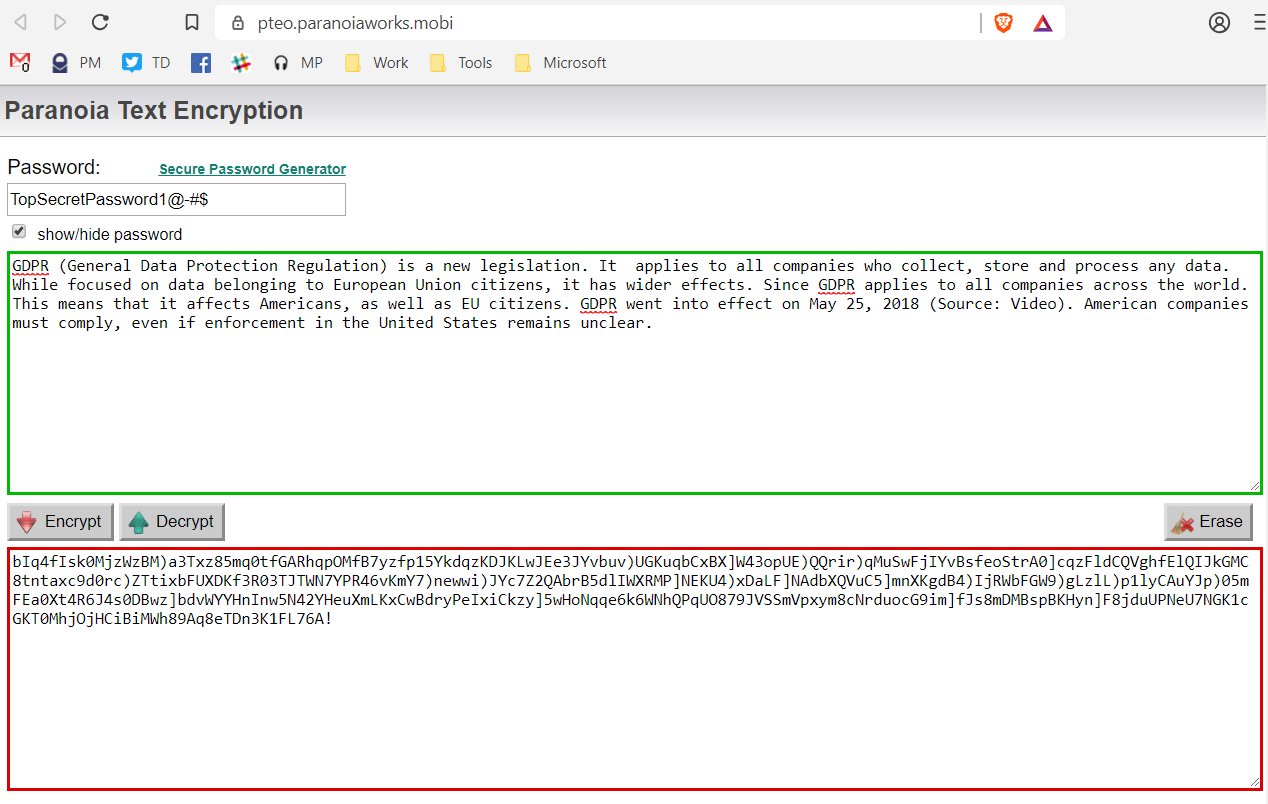
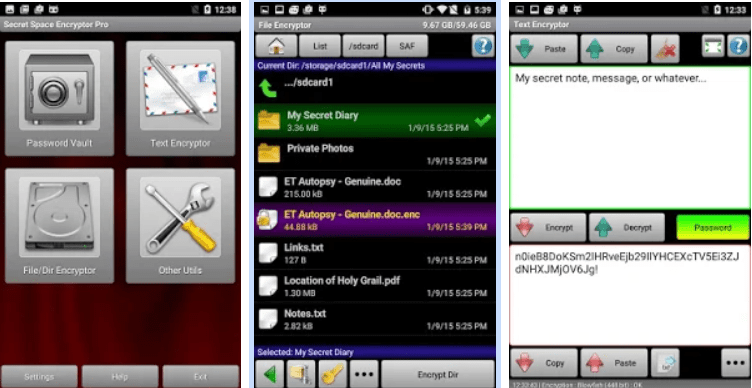

 As of 2004, Cyber Security Awareness Month has been celebrated in October. This month is sponsored by a division within Homeland Security (the
 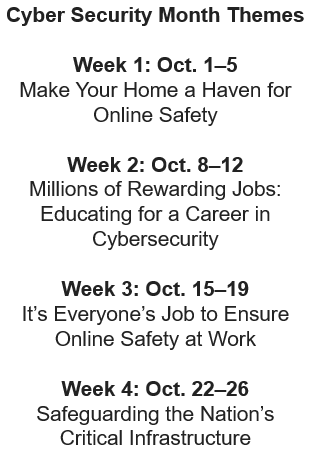 Weekly Security Themes