Explore tools, strategies, and insights for educational leadership. Discover resources to inspire and support effective school and district leaders.
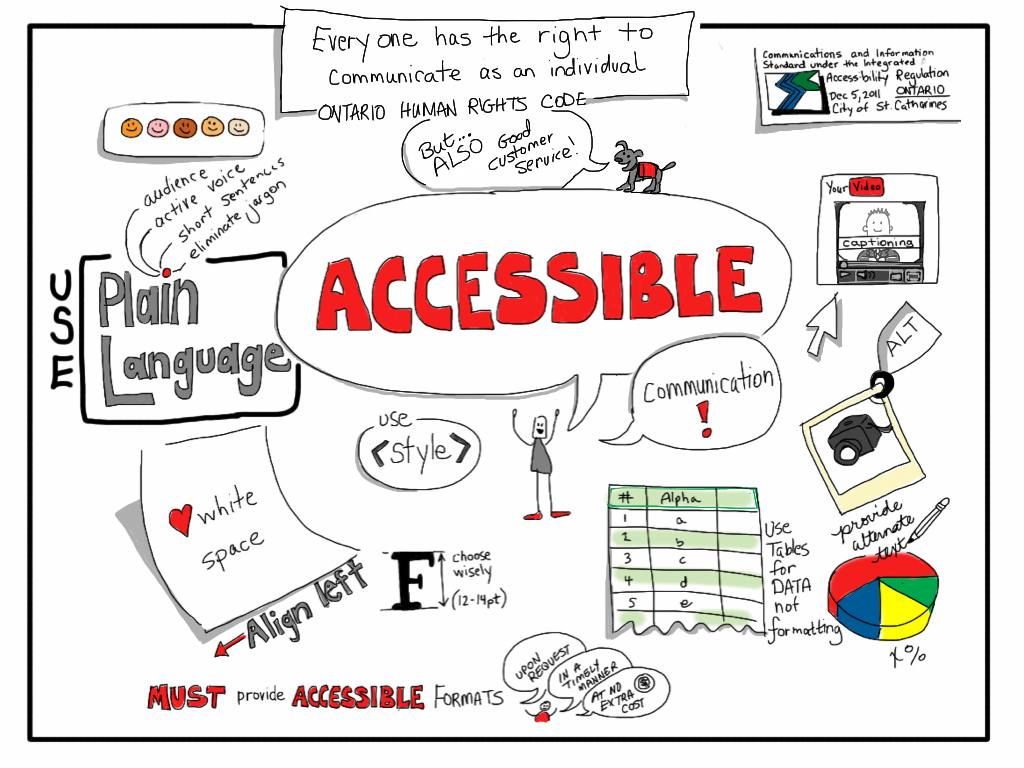
If you are responsible for your district or campus website, then you are already familiar with the need for it to load quickly, to work on mobile devices, and to look good. But you may not be as familiar with the need to ensure that it is accessible to all individuals, including those with disabilities. According to the Centers for Disease Control and Prevention, one in five adults in the United States has a form of disability that impacts their use of a standard website; that’s more than 53 million people. And that’s why website accessibility is crucial.
How Disabilities Affect Website Design
According to the Virginia Department of Education, there are four categories of disabilities that affect website design:
- Visual disabilities – blind, low-vision, vision impaired, elderly, including the following specific conditions: myopia, color blindness, glaucoma, and ocular albinism
- Auditory disabilities – hearing impairments, including presbycusis, acoustic trauma, auditory processing disorder, and otosclerosis
- Motor disabilities – physical disabilities limiting access to device-dependent web content, including repetitive stress injury, cerebral palsy, Parkinson’s, and muscular dystrophy
- Cognitive disabilities – intellectual/development disabilities, including Down’s syndrome, autism, global developmental delay, and dyslexia
That’s an overwhelming list for a webmaster, to be honest. Here’s a better way to think about the problems that can prevent your website being accessible to everyone. If any of these are true of the site you maintain, then you need to make corrections.
- Missing alternative text describing images for blind and low-vision users
- Content inaccessible for users unable to navigate with a mouse
- Inaccessible color combinations for textual information
- Uncaptioned or inaccurately captioned videos
- Inaccessible documents
Website Accessibility Resources
Once you’ve identified the areas on the website that need work, there are lots of resources to help you. Below are some of the better ones.
The most comprehensive web accessibility resources are from W3C (World Wide Web Consortium) WAI. It’s a large website with numerous links and tools. Here are some specific pages that should be helpful for getting started.
- Introduction to Web Accessibility to learn the what and why
- Tips for Getting Started for basic considerations
- Essential Components for more of a conceptual view
- Perspectives has videos that demonstrate the benefits of web accessibility design and related technologies
- Easy Checks to assess the issues on your site
- Evaluation Tool List is alphabetic and very comprehensive. The WAVE evaluation tool is commonly used and has two forms: Online WAVE tool or WAVE browser extensions
- Tutorials – See the right sidebar menu
- WCAG 2.0 at a Glance summarizes the four principles of POUR
- How to Meet WCAG 2.0 is organized by the four principles
- How to Ensure Accessibility for Every Online Audience is an excellent read on why this matters so much.
This site, again from the Virginia Department of Education, includes specific tools to address each of the common problems with accessibility.
This article from Terrill Thompson, “Good Examples of Accessible Websites,” provides basic evaluations of specific sites. It includes some very common sense and simple solutions as well.
Some of the tools recommended to districts to assess their current compliance include the following:
- HiSoftware Cynthia Says Portal is a web content accessibility validation solution. It is designed to identify errors in your content related to Section 508 standards and/or the WCAG guidelines.
- FireEyes is a free tool for testing websites for 508 compliance.
- Tenon’s free checker is another free tool to test your site’s accessibility.
If you offer downloadable documents in Word, Google Docs, or PDF format on your website, you also want to ensure that those documents are accessible by all. You can use this detailed resource “Creating Accessible Documents” or this one to help. Also, if you need to provide subtitles for videos on your website, you can use the free tool Subtitle Horse.
Whether you maintain the website yourself or you pay a company to do that for you, it’s important that the content and information you post there is able to be seen and used by all. Take steps today to check on your site’s accessibility.
This blog was updated with additional resources on November 14, 2017.
 prepared to be tomorrow’s innovators, leaders, and engaged citizens of the world.” The
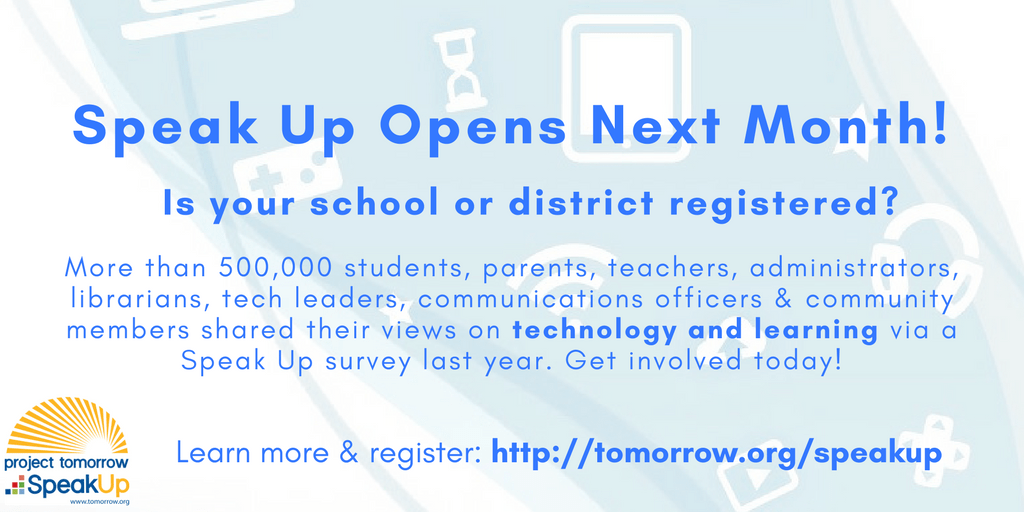
  You have complete flexibility with the implementation of the survey. If this is your first time, you could start small by targeting one school or one grade level. You could decide to only survey students and staff this year and add parents and community members the following year. Just remember, the more data collected, the more information you will have for your strategic planning. This brings us to the best part. After the data is collected, Project Tomorrow analyzes it and provides you with your own data in an extremely easy format to read and manipulate. They even have a PowerPoint template that you can use to easily import your district’s data.

 people through a dramatic shift in their professional practice. The types of change require different kinds of leadership skills. Changing a teacher’s planning period takes different skills than telling them every student is going to have a device and most of their lessons and materials will be delivered over that device. First order change usually deals with cosmetic changes, while second order change deals with the paradigms and philosophies. Research indicates that the leadership team should approach the management of these two types of change differently.
  training, and support they will need. Organizations adopt change, but individuals are the ones that implement change. District leadership might have decided to enact the change, but it is the people at the school level that actually make it happen. The change process can’t be dictated from central office.
 Success takes time and commitment to strategic action plans, review, and adjustment. It may take several cycles after implementation to determine if the new initiative is working. Expect an implementation dip.