Explore tools, strategies, and insights for educational leadership. Discover resources to inspire and support effective school and district leaders.
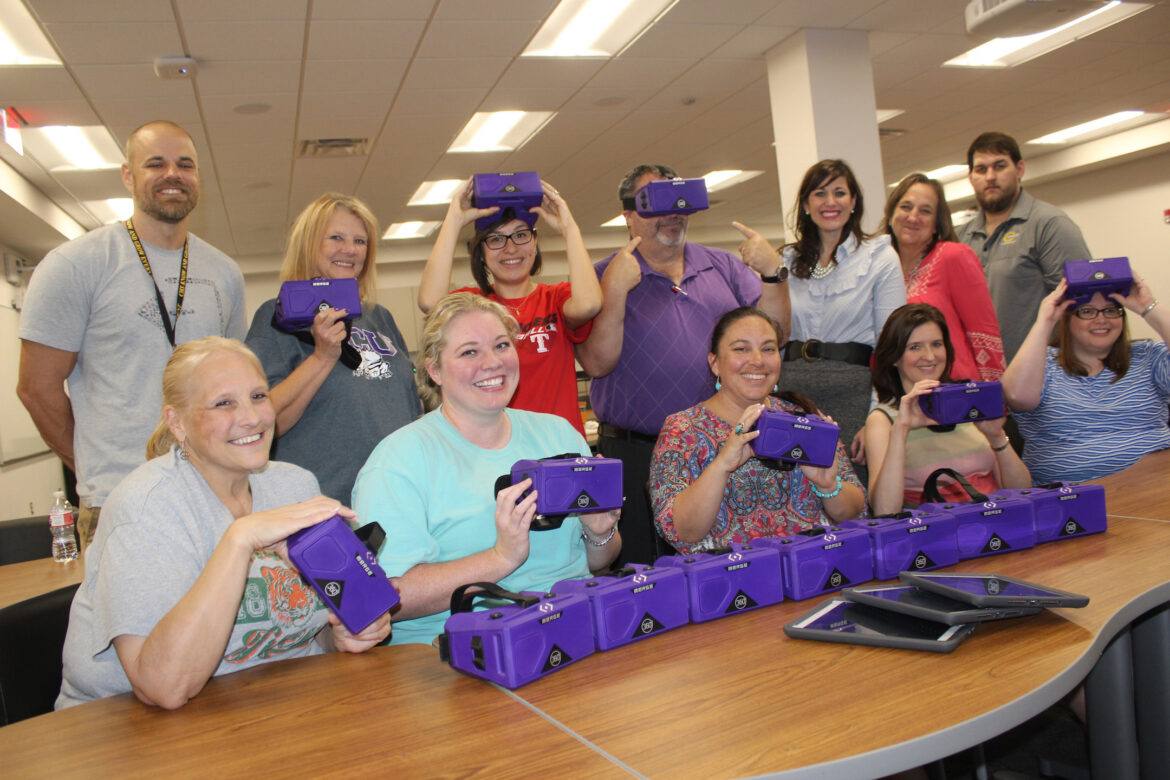
Two years ago, Brent Barnes, a social studies teacher at Cleburne High School, decided he wanted his kids to have virtual reality access. He completed the Google Expeditions application to start the process. Thankfully, Cleburne High School was chosen, and Google provided an excellent VR demonstration to his classes and other social studies classes (more on Brent’s story in his own words below). This was the start of virtual reality within the district.
The Virtual Journey of One Teacher
The following are the experiences of Brent Barnes, who helped spark the district-wide VR implementation.
My journey into virtual reality started at the TCEA Convention in 2016. I was introduced to Google Expeditions by the Google for Education consultants who were present. Google demonstrated the Everest expedition with a group of teachers on stage and the results were incredible. I knew that if VR had that effect on a random group of teachers, then my students would benefit greatly from it.
This experience prompted me to contact Google about becoming a pioneer for Expeditions. Google agreed to visit my campus and provide my students with the ability to experience VR while Expeditions was still in beta. During the visit, my students were engaged and immersed in new environments. They practically begged me to get VR started at our high school. I knew I had to bring this platform to my classroom.
When I first began the VR journey, I thought Google Expeditions was the only VR application out there. Once I started using VR with my students, I was amazed at how many other applications were using this technology or were trying to make the jump to it. VR is really in its infancy, and companies are consistently utilizing it in new and innovative ways.
The best piece of advice I can give those interested in VR is to network. There are so many educators and educational companies who want to help get this technology into classrooms. Educational conferences and social media sites are great places to start the initial research and networking process. I encourage you to consider VR, which has really enhanced the learning in my classroom. The proof of its worth can be seen on the faces of my students. Their world is now much bigger because of it.
Guiding the Process of Implementing Virtual Reality
The following, written by Tracy Perez Shea, describes how Brent’s vision was rolled out in an entire district.
Since Brent showed an interest in VR, he and his department acted as the cohort for implementation last school year. During this time, we learned a lot. A particular lesson learned was that all of the devices needed to be on the same WiFi connection. Last spring, it was decided that Cleburne ISD would roll out VR to the entire district. We are a 5A school district composed of 11 campuses: one high school, two middle schools, seven elementary schools, and one accelerated high school. This VR cohort helped to guide the next steps for district implementation.
We started our district implementation off with four VR carts. Each cart contains the following: a class set of iPods and Merge goggles and one teacher iPad. We chose to use Google Expeditions as our first VR application because of the ease of use and functionality.
The Importance of Good Teacher Training
Teachers across the district were all extended an invitation to be part of the VR rollout. To become part of the rollout group, teachers had to complete one district-level VR workshop. Four workshops have been scheduled for 2017-2018, two in the first semester and two in the second.
The goal of the training is to promote the purposeful use of VR technology. The training is composed of three parts: understanding the technology pieces and how they function together and independently, learning how to develop a VR lesson plan, and receiving hands-on practice with the VR equipment.With this said, the lesson planning components are comprehensive. The teacher is asked to create a lesson plan for what will happen before the expedition, during the expedition, and after the expedition. A lesson plan template is given to teachers during the workshop to help guide the VR events in their classrooms. This thoughtful preparation keeps the VR event creative versus just consumptive.
During the training, teachers acted as students (explorers) first and then took on the teacher (guide) role. While they were explorers, they were laughing, turning in their chairs, and sharing with their seatmates how much they enjoyed the experience. Understanding how each side works is important to the teacher preparation and planning process.
With the first semester coming to a close, we are quite pleased with the initial VR implementation results. Teachers and students are both enjoying this new learning environment. We look forward to what will happen in the spring semester and the possibilities this innovative avenue will give us in the next school year. Undoubtedly, virtual reality has allowed us to share many engaging and enlightening experiences with our students. The world and its treasures are now within reach at Cleburne ISD.
If you would like more information about district implementation, please feel free to contact Tracy Shea at tshea@c-isd.com. If you want to know more about classroom implementation, please contact Brent Barnes at bbarnes@c-isd.com. You may also want to check out this VR video testimonial. The VR story starts at 3:22. In addition, the TCEA 2018 Convention & Exposition will feature a large AR/VR playground area with presentations and networking opportunities.
This is a guest blog by Tracy Perez Shea and Brent Barnes. Tracy is the Secondary Instructional Technology and District Multimedia Specialist at Cleburne ISD. Brent is an AVID Elective/AP Human Geography teacher at Cleburne High School.

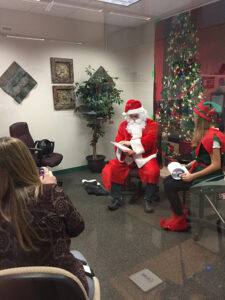 The North Pole
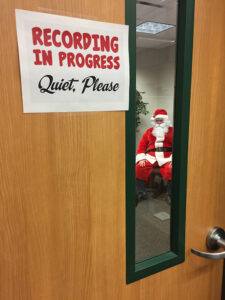 Making It Magical





 If this sounds like the goal of your district and you haven’t taken the
 This blog post is not meant to be exhaustive. The Future Ready initiative is not a one and done type of effort. They have proven over time that they are committed to their mission and are willing to adapt and grow. This is why TCEA is proud to be considered one of their partners. Hopefully I have whet your appetite to know more. Start by checking