Stay updated on the latest education trends. Explore tools, strategies, and insights to keep your teaching and learning practices innovative.
I’ve dusted off my crystal ball again and am looking into it to see what’s coming for educational technology this next year. (If you want to check my accuracy, here are my predictions for 2017. How did I do?)
Artificial Intelligence Comes Into Its Own
We’ve seen the beginnings of the AI movement with the Amazon Echo, Google Home, and Apple’s Siri, all of whom utilize machine-learning technology in order to get smarter. But it’s nothing compared to what’s coming in 2018. Machine learning is defined as:
An application of artificial intelligence (AI) that provides systems the ability to automatically learn and improve from experience without being explicitly programmed. Machine learning focuses on the development of computer programs that can access data and use it learn for themselves (source).
Machine learning should have great interest to us in the education world since it involves learning and computer programming. We won’t see any AI devices taking over the world any time soon, but we will begin to rely on them more and more. Already, we see doctors using AI to diagnose illnesses, Netflix and Pandora using predictive technology to make recommendations, and driverless vehicles. The power of thinking machines to take over more of the daily grind of our lives will increase in 2018. And while we won’t see a huge increase in AI in schools yet, vendors will begin to develop products that use artificial intelligence to help diagnose and prescribe for specific student learning needs. (By the way, if you’ve heard the myth that AI will eventually replace teachers, you can stop worrying. Artificial intelligence is great for helping with data, but not with relationships. And that’s what good teaching comes down to.)
More Things Are Connected to the Internet
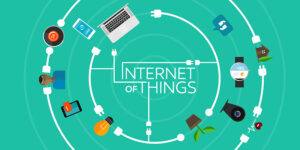
We will see a huge growth in the devices that can be connected to the Internet in 2018. The Internet of Things (IOT), soon to be called the Internet of Everything, has tremendous possibilities for schools with the potential of big cost savings over time. Monitoring sensors will be attached to almost anything, from HVAC systems to buses to doors and windows. They can be used to take attendance, track payments in the cafeteria, monitor student engagement and access of resources, and more. The resulting data coming in from all of these devices will require new ways of thinking, as well as a strong need for additional broadband and storage on our school networks.
Computer Programming Becomes Even More Important
The automation of many jobs across our country and the world will increase in 2018. The McKinsey Global Institute published a report in 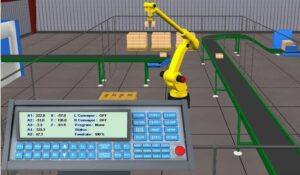 November 2017 about automation and jobs, sketching out different paths the technology might take and its effect on workers, by job category in several countries. One key finding: Up to one third of the American work force will have to switch to new occupations by 2030, in about a dozen years.
What will this mean for education? It will be mean that one of the high-growth fields to prepare our students for will be computer programming and robotics. (Someone has to program and repair all of those robots!) More and more schools will add robotics programs to their offerings, beginning in primary school. All students will be encouraged to take programming/computer science courses and participate in activities such as the Hour of Code school wide. And that will mean that programming will be more important to all educators as well. Districts will need to ramp up their professional development to meet the demand for this skill set.
One Bonus Prediction
My crystal ball gave me one extra prediction for 2018. Educators will continue to do amazing things for all students with little resources and even less time. They will continue to make a difference in the lives of the people they come into contact with each day, working to the make the world a better place and to achieve learning without limits. And I think that’s a prediction that we can all be sure will come true!
 Our district’s journey into OER had begun. During that meeting, I was tasked with finding out how our district could save money by creating our own textbooks using as many OER materials as possible. The district had just gone through the adoption process for science instructional materials and had estimated it would cost close to $2 million for 18,000 students. What if we could use that textbook money in another way? Perhaps to purchase technology for students?










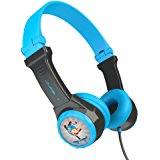 Children and teens will love the features of the
 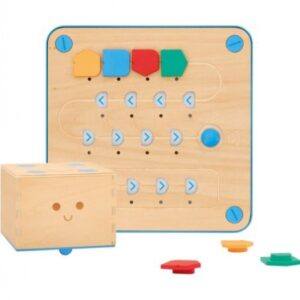 help Cubetto, a wooden robot, navigate a magical world by writing their first programs using hands-on coding blocks. If you’re worried about your children having too much screen time, Cubetto is perfect for you as there is no screen. This device is such fun that kids won’t even know that they are learning while playing. It is pricey at $225.95, but well worth the cost.
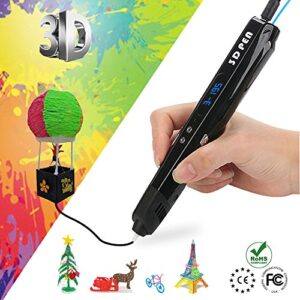 Encourage the artist in your child with the
 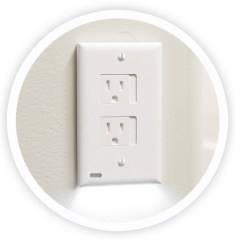 Light is an easy-to-install wall replacement switch that not only childproofs, but also adds illumination so you don’t need to take up one of the outlets with a nightlight. It doesn’t require any batteries. They are available in white, ivory, or light almond. You can get one of these for $16.95 or a pack of four for $60.95.
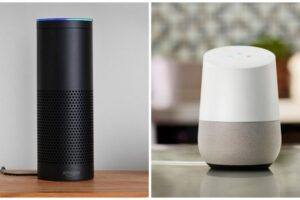 It’s time everyone had their own virtual personal assistant. Purchase a
 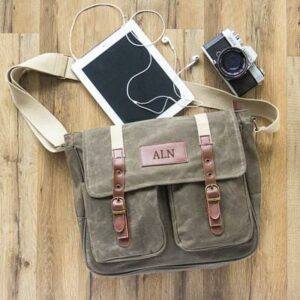 stylish but manly
 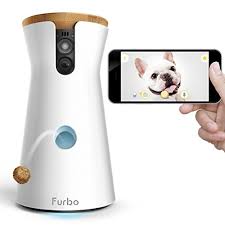 Don’t forget about your canine companion this Christmas. He will absolutely love the
 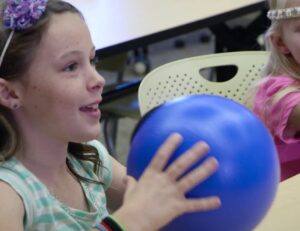 system, whether that’s an expensive one or just a set of computer speakers. It gives every student in your classroom a voice and ensures that what each one says can be heard by all of the others. Since it’s made of light, durable foam, it can take a beating. And the microphone automatically shuts off while “in flight” so you don’t get any thumps or bumps over the speakers. It’s priced at $179, but there are discounts for bulk purchases. And they will accept purchase orders.
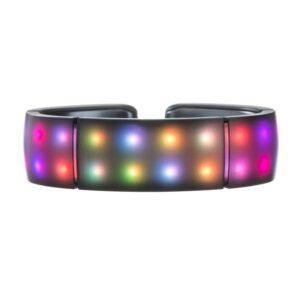 has LED technology that creates millions of colors and endless light effects as it responds to music, movement, and the people around you. Snap-on Tiles let you change the band’s look in an instant and it’s rechargeable. A basic set starts at just $11.99.