
Technology should make teaching and learning easier. Yet in many schools, it has become the opposite. It’s possible that there are too many tools, too many platforms, and too many expectations. When that happens, even the best technology creates confusion instead of clarity.
This is why now is the perfect time for school leaders to take a step back and simplify. A more intentional approach to technology use can keep teachers from being overwhelmed, improve consistency, and better support both students.
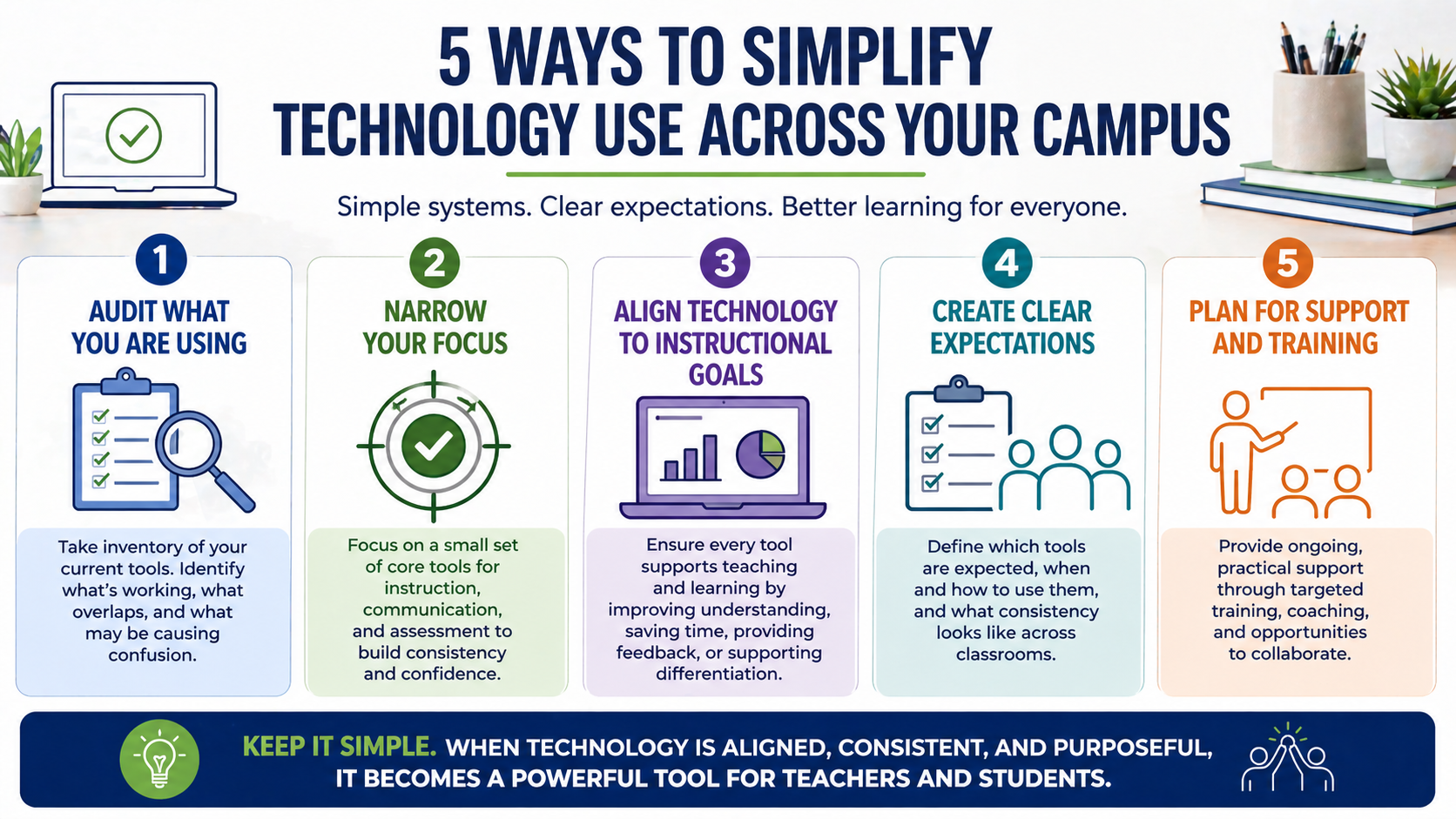
Here are five things you can do to help simplify technology across your campus.
Audit What You Are Using

Before adding anything new, take inventory of what is already in place. Most campuses are using more tools than they realize. Some may overlap. Some may be underused. Others may be creating confusion for staff and students.
Start by asking:
- What tools are currently being used campus wide?
- Which tools are working well?
- Where are there duplications or unnecessary overlap?
- Which tools are rarely used or causing frustration?
You do not need a complicated process. A simple list and a few honest conversations with teachers can reveal a lot.
The goal is clarity. You cannot improve what you have not clearly identified.
Narrow Your Focus
Once you have a clear picture, it is time to simplify. Too many tools can overwhelm teachers and students. A smaller, well-defined set of tools creates consistency and confidence.
Instead of trying to support everything, identify a small set of core tools for your campus.
These might include tools for:
- Instruction
- Communication
- Assessment
When everyone is using the same core tools, it becomes easier to collaborate, support one another, and maintain consistency across classrooms. The goal is not to limit innovation, but to create a clear and consistent starting point for everyone.
Align Technology to Instructional Goals
Technology should support learning, not distract from it. Before continuing or introducing any tool, ask a simple question: How does this support teaching and learning?
Does it:
- Improve student understanding
- Save teachers time
- Provide meaningful feedback
- Support differentiation
If the answer is unclear, it may not be worth keeping. Being intentional means making sure every tool has a clear purpose tied to your campus goals.
Create Clear Expectations
One of the biggest challenges schools face is inconsistency in how teachers use tools. Teachers should not have to guess which tools to use or how leaders expect them to use the tools.
Take time to clearly define:
- Which tools are expected
- When and how they should be used
- What consistency looks like across classrooms
Clear expectations reduce confusion, support new staff, and make it easier for students and families to navigate digital learning environments.

Plan for Support and Training
Even the best tools will not make an impact without support. Professional learning should be focused, practical, and ongoing. Avoid one-time sessions that introduce too much at once.
Instead, consider:
- Short targeted training sessions
- Ongoing support through coaching or collaboration
- Opportunities for teachers to share what is working
When leaders build support into the plan, teachers are more likely to use tools with confidence.
Keep It Simple
Technology should make teaching and learning easier, not more complicated. Choose one area to review, one system to streamline, or one tool to refine. When technology is clear and consistent, it stops being a source of stress and becomes a true support for teaching and learning.
