
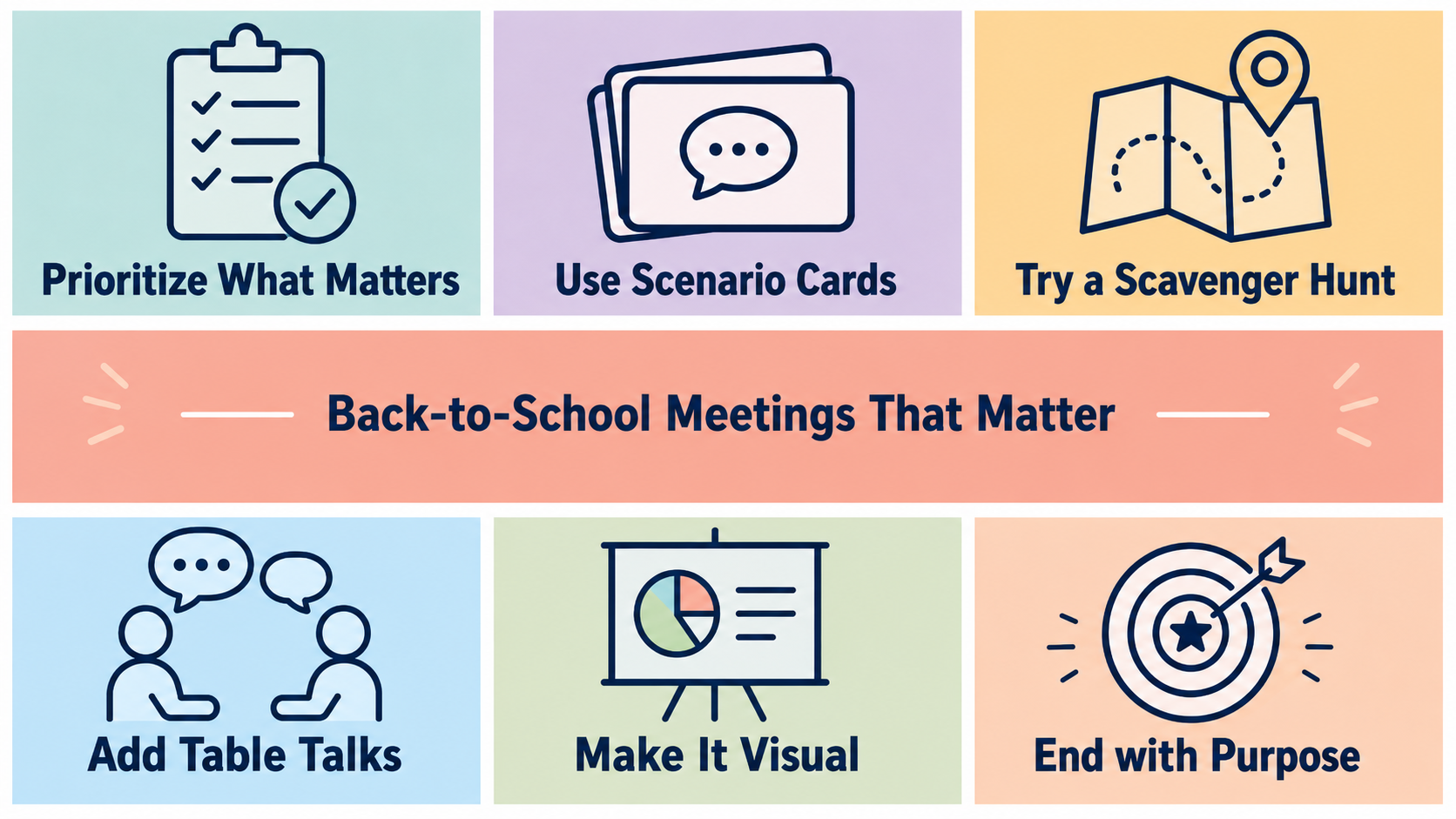
Back-to-school meetings are no small thing. Principals have many things to cover with their staff. There are safety procedures, schedules, duties, instructional expectations, technology updates, behavior systems, campus goals, and more to review. Somehow, all of that needs to happen before teachers welcome students back.
The information matters. None of it is optional. But how it is shared can make a big difference. The goal is to help teachers understand, remember, and use the information they need to start the year with confidence.
Here are a few simple ways principals can make back-to-school meetings matter so that the required stuff sticks.
Start with What Teachers Really Need First
Before building the agenda, take a few minutes to sort information into three categories:
- Need to Know: Information teachers must have before students arrive
- Nice to Know: Helpful information that can be shared in a document or follow-up
- Later to Know: Information that can wait until the first few weeks of school
This small step can save everyone a lot of mental energy.
For example, emergency procedures, arrival and dismissal duties, attendance expectations, and first-week behavior systems probably belong in the Need to Know category.
Teachers are already holding a lot in their heads. Protecting their time shows that you know that.
Turn Procedures into Scenarios
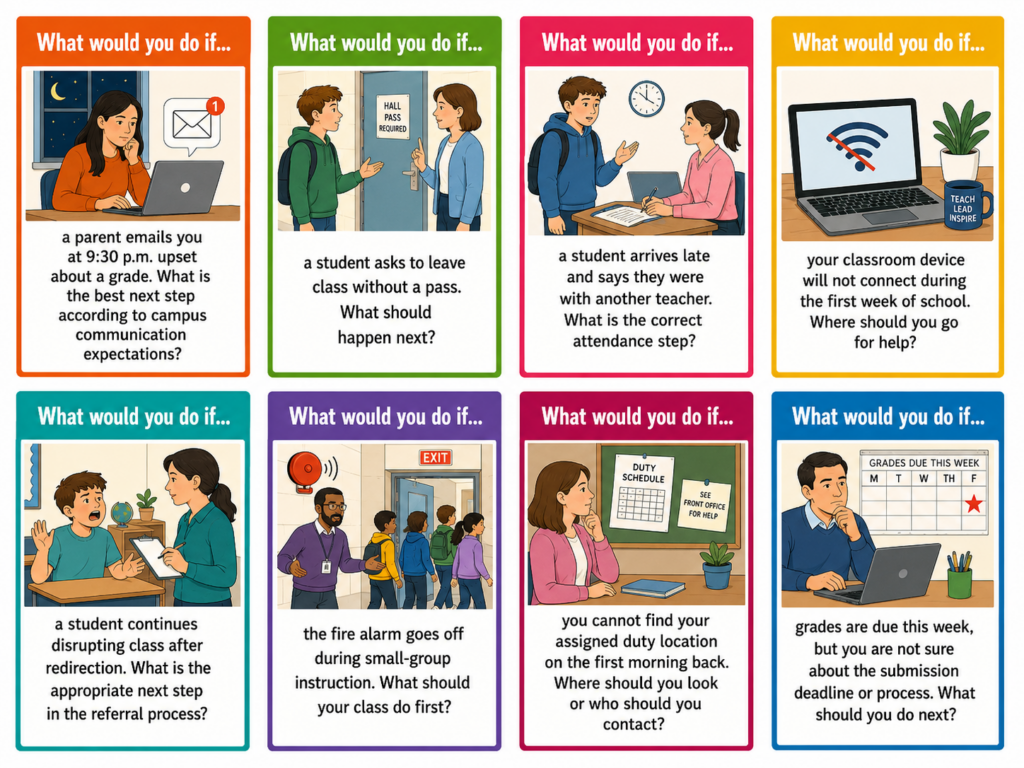
Procedures are easier to remember when teachers can picture them in action. Instead of reading through every expectation from a slide, try turning key procedures into short scenarios. This works well for topics like hallway expectations, emergency drills, parent communication, attendance, discipline referrals, and student support.
For example:
- A parent emails you at 9:30 p.m. upset about a grade. What is the best next step according to our campus communication expectations?
- A student asks to leave class without a pass. What should happen next?
Teachers can discuss with a partner or table group. Then the principal can clarify the campus expectation. It is still direct instruction, but it gives teachers a moment to think, talk, and apply the information. This approach is much more memorable than going through numerous slides.
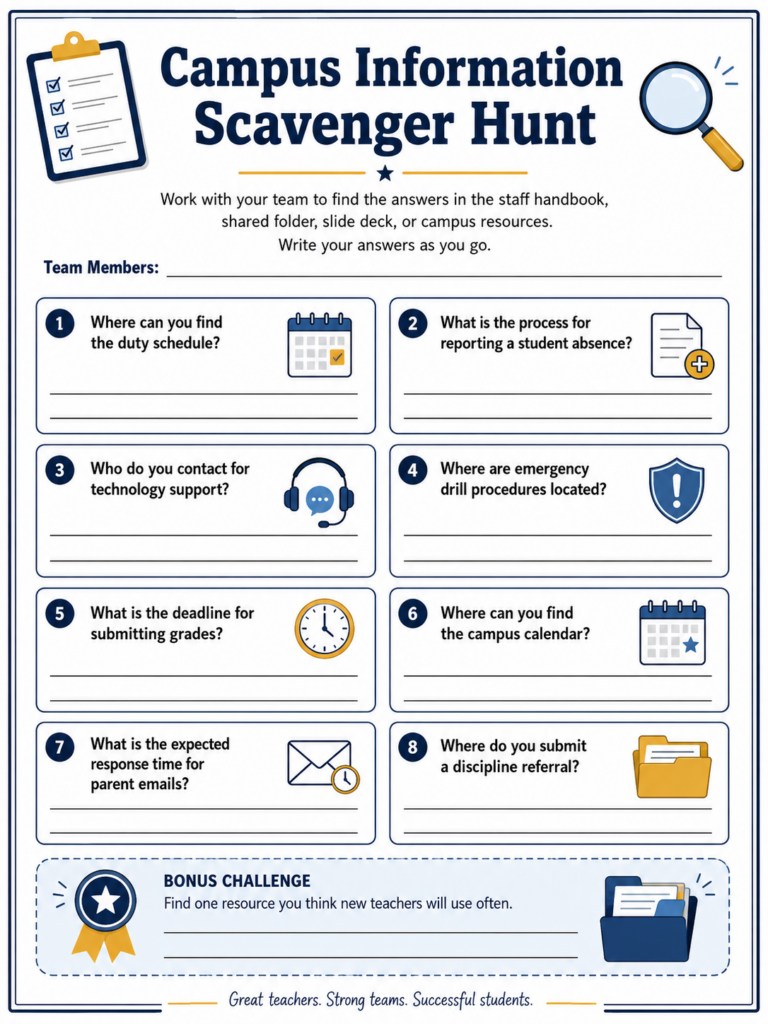
Create a Campus Information Scavenger Hunt
Not every detail needs to be read aloud. Some information just needs to be easy to find. Create a shared folder, handbook, slide deck, or printed packet with key campus information. Then have teachers work in teams to find answers to important questions.
You might include questions about:
- Attendance procedures
- Duty schedules
- Technology support
- Emergency protocols
- Campus calendar
- Grading expectations
- Communication guidelines
- Student support processes
This gives teachers time to explore the resources they will need later. It also helps new staff learn where to find information without feeling like they have to memorize everything in one sitting.
Build in Table Talks
Sometimes all teachers need is a minute to process. After sharing a policy, expectation, or campus goal, pause for a quick table talk prompt. These do not need to be complicated. A good prompt helps teachers connect the information to their daily work.
Try questions like:
- What part of this will matter most during the first week of school?
- What questions might a new teacher have about this?
- What could make this procedure easier to follow consistently?
- How will this look in your grade level or department?
This gives teachers a voice and helps principals hear where clarification might be needed. It also prevents that glazed-over look that can happen when too much information comes too quickly.
Try a Stoplight Check
A quick stoplight check can help principals see what teachers understand and where they still need support. After reviewing important information, ask teachers to mark each topic as:
- Green: I understand this.
- Yellow: I need a little clarification.
- Red: I still have questions or concerns.
This can be done with sticky notes, a digital form, colored cards, or a quick poll. The format does not matter as much as the feedback. If several teachers mark a topic yellow or red, that is a sign to slow down, clarify, or follow up. If most responses are green, you can move on without overexplaining.
Offer Choice When You Can
Teachers do not all need the same information at the same level. A returning teacher may need a quick update, while a new teacher may need the full version. Consider offering short breakout stations during part of the meeting.
Possible stations could include:
- New Teacher Questions
- Campus Technology Tools
- Student Support Procedures
- Classroom Management Systems
- Communication Expectations
- Instructional Priorities
This allows teachers to spend time where it is most useful. It also gives principals, assistant principals, instructional coaches, counselors, and other leaders a chance to support smaller groups.
Choice does not mean chaos. It just means teachers get a little more ownership of their learning.
Make Complicated Information Visual
If a process has more than three steps, a visual can help.Instead of giving teachers a long explanation they may not remember, create a one-page reference they can revisit later. This works especially well for procedures that involve decisions, timelines, or multiple people.
Helpful visuals might include:
- Referral flowchart
- Communication decision tree
- First-week checklist
- Emergency procedure quick guide
- Technology help request steps
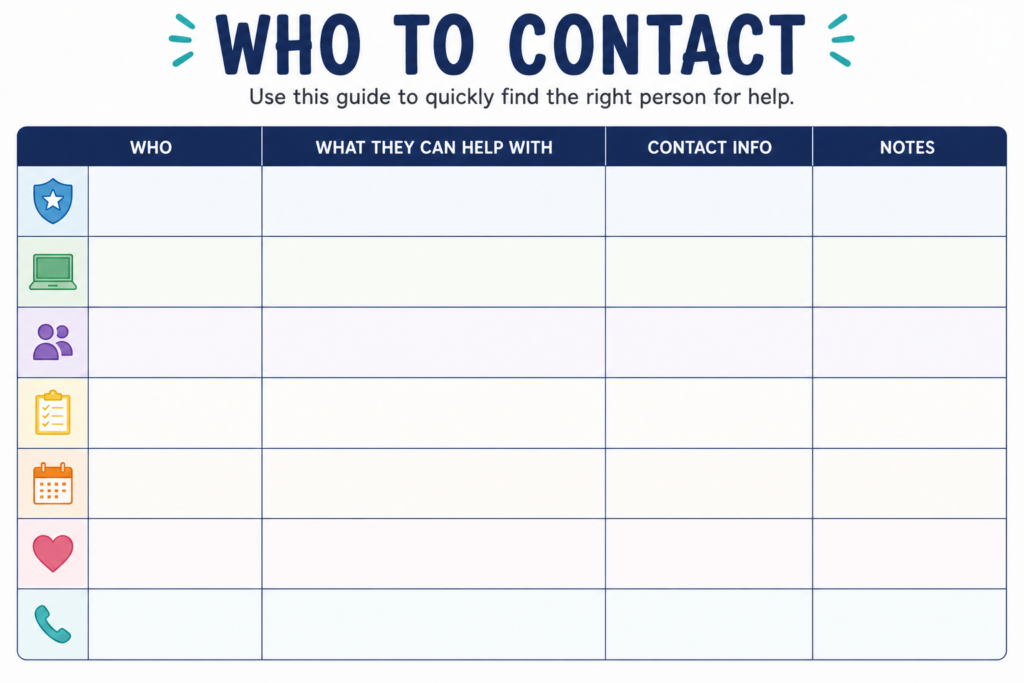
- Who-to-contact chart
The best visuals are clear, simple, and easy to find. Teachers should be able to glance at them and know what to do next.
Add Reflection Time
Meetings often end with final reminders, parking lot questions, and someone asking about jeans days. Those things matter but a short reflection can give principals useful feedback and help teachers leave with clarity.
Try asking teachers to complete one or more of these prompts:
- One thing I feel clear about is…
- One question I still have is…
- One thing I need before students arrive is…
- One way I can support our campus goals is…
This can be done on an exit ticket, in a form, or on sticky notes. The responses can help campus leaders plan follow-up communication, adjust support, and spot common concerns before they become bigger issues.
End with Purpose, Not Just Logistics
Required information is important. But the meeting should not end with nothing but lunch procedures and duty reminders.
Close by reconnecting the details to the bigger picture. That might be a short student-centered story, a campus goal connected to student success, a message of appreciation, or a reflection on the kind of school culture you want to build together.
Back-to-school meetings will always include required information. That part is not going away. But with a little planning, principals can make those meetings clearer, more interactive, and more useful. Teachers will leave feeling more prepared, more supported, and maybe even a little less overwhelmed. That is a pretty good way to start the school year.

1 comment
Very good information for teachers who want to become principals.