
As a bilingual student myself growing up, I often found myself in the situation of speaking Spanish at home, thinking in Spanish, and then having to prove I understood photosynthesis in English. Eventually, I learned to think in English or in Spanish as the situation demanded. But in those early days, the question my teachers never asked was, when I failed a quiz, which did I get wrong? Did I get the science wrong, or did I get the English wrong? This caused problems for me in second grade, parent-teacher/principal meetings, and summer school tutoring in English. Today, this problem wouldn’t be as big an issue. That’s because some quiz tools are more flexible, avoiding reliance on a single language. This blog entry is about one of those.
Why Language-First Quiz Tools Fall Short
Paperless quizzing is often simple, affordable, and reliable. Since some quiz tools are English only, that can be a real problem in bilingual and ESL classrooms. When the interface is in a language students are still learning, you’re not even measuring general English proficiency. Rather, you’re measuring Cognitive Academic Language Proficiency (CALP).
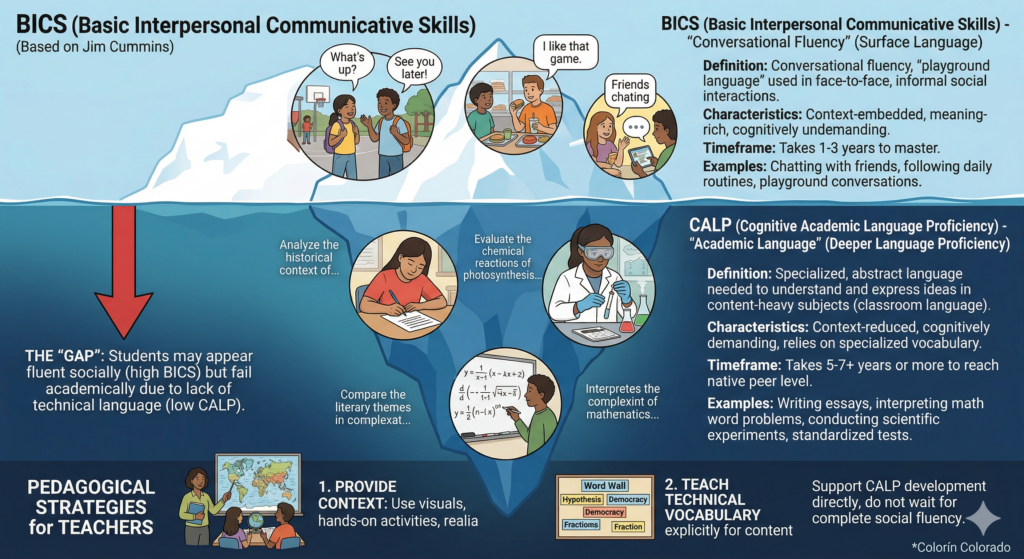
That is, the academic language register that takes 5–7 years to develop. A student who can discuss the water cycle fluently in conversation may still lack the academic English to navigate a multiple-choice prompt about it. The quiz penalizes CALP development, not content gaps. Those are two different things and conflating them distorts the data you are trying to collect. An awareness of Basic Interpersonal Communication Skills (BICS) and CALP is something I didn’t develop until graduate school, long after my second grade self struggled with managing two languages.
TCEA PROTECT Assessment
Before I share a little more about NoPaperTest, I need to share that TCEA evaluates solutions using the PROTECT rubric. NoPaperTest scored 9 out of 14 when the Terms of Service and Privacy Policy was evaluated. These documents evolve over time, so don’t be surprised if the score improves. Details appear below:
- Key Strengths: Good transparency about data collection, clear data security practices with encryption, COPPA compliance acknowledgment
- Areas for Improvement: Limited parental rights specifics, vague opt-out mechanisms, incomplete third-party disclosure
Learn more about TCEA PROTECT via this blog entry. Now that you are aware of the TCEA PROTECT assessment, let’s take a closer look at NoPaperTest.
What NoPaperTest Does Differently
NoPaperTest takes a different approach. It currently supports 11 languages: English, Spanish, German, Portuguese, French, Italian, Czech, Dutch, Chinese, Japanese, and Hindi. They have more planned, too.
The way it works is that students take the quiz with the interface in their own language. Instructions, navigation, and prompts appear in the language they chose. That means a Spanish-dominant student can focus on answering a science question correctly rather than decoding what “submit” means.
For teachers running a dual-language program or a sheltered instruction classroom, this changes what the data actually tells you.
Fuzzy Matching for Short-Answer Responses
What’s more, NoPaperTest includes fuzzy matching for short-answer responses. It catches typos and phonetic spelling.
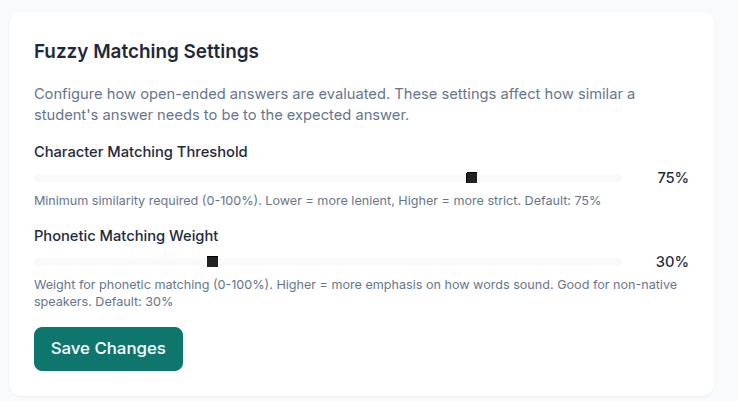
Students writing in their second language make consistent, predictable errors. They spell words the way they sound in their home language. A student might write “fotosintesis” instead of “photosynthesis.” Standard quiz tools mark that wrong. Fuzzy matching recognizes the intent and gives credit.
I do not think enough people talk about how often grading penalizes language acquisition instead of measuring content mastery. This feature does something about it.
A Quick Overview
Here’s an overview of some of the features NoPaperTest has. Please be aware that features change over time, so you should investigate these features before making a financial investment.
| Feature | NoPaperTest |
|---|---|
| Interface Languages | 11 languages (e.g., EN, ES, DE, PT, FR, IT, ZH, JA, HI) |
| Student Response Cap | Unlimited |
| Fuzzy Matching | Yes (Native support) |
| Cost | $3/month (Approx. $36/year) |
What features are you looking for in solutions such as NoPaperTest?
How to Get Started
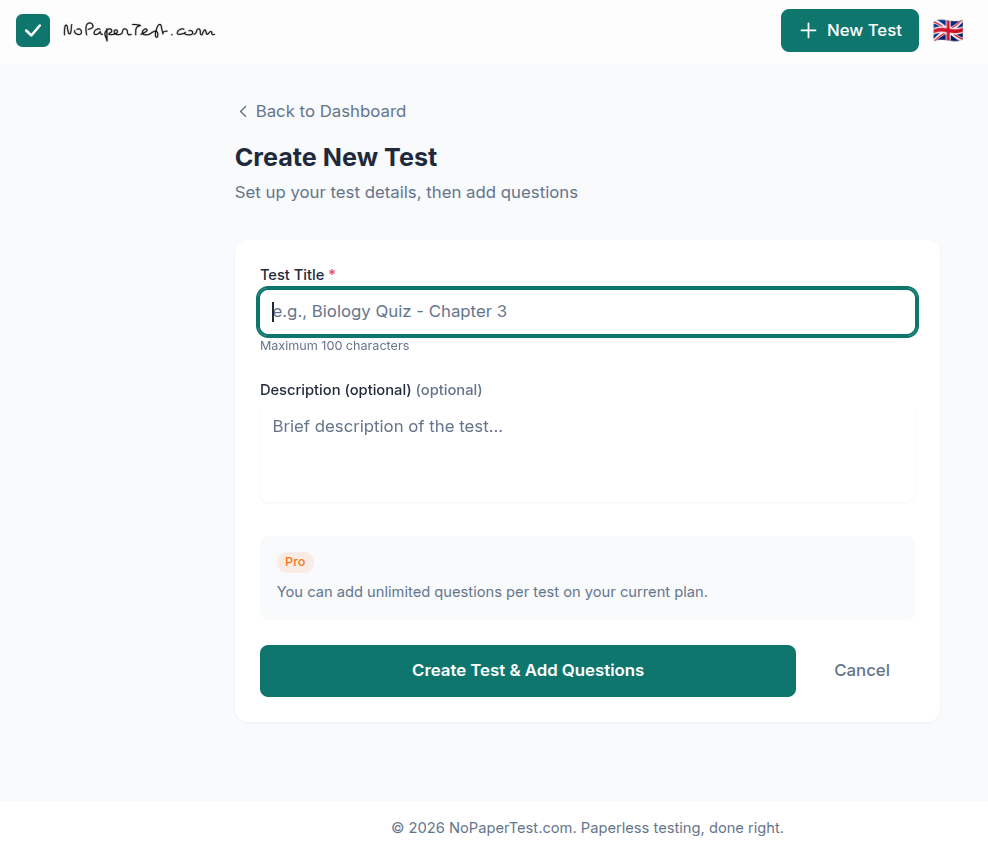
- Go to NoPaperTest and create a free account
- Build your first quiz using the question editor
- Share the quiz link with students
- Review results and check where fuzzy matching flagged alternative spellings
Learn more about NoPaperTest via their blog. Some recent titles include:
- How to Conduct Effective Online Student Assessments
- Comparing Online Testing Platforms: What Teachers Need to Know
- Using Data from Online Assessments to Improve Instruction
One More Thing Worth Noting
For classrooms where English is not everyone’s first language, NoPaperTest offers a new solution to a problem. Which of your current quizzes would give you better data if students could take them in their home language?

2 comments
Is this s product you are selling as part of your job?
Dan, howdy! Long-time no see. Actually, no. We are often asked to take a look new products that become available. This is one of those products shared to make people aware of it and then make their own decision. However, if you are suggesting I have a career future in sales, I’ll have to reflect on that. 😉
Hoping you’ve been doing well, fellow wanderer of the web,
Miguel