Discover tools, tips, and strategies for teaching digital literacy. Equip students with skills to navigate and evaluate the digital world effectively.

“Bring a lesson plan that you love, then we’ll blend technology into it.” I’ve heard this request a thousand times, a way to assist low-tech teachers plan a lesson. As a veteran educator, lesson planning remains a simple way to shift teachers’ focus. Often, the focus of the teacher is on the activities. But good lesson planning forces one to step back and look at the big picture. In this blog entry, we’ll shift our perspective through the use of the ISTE Standards for Students and move from local to global collaboration.
Lesson Planning: A Work of Fiction
Since lesson planning is writing and organizing ideas, I had a lot of fun with it. You might say lesson planning was my first introduction to an idea. The idea? Creative nonfiction, defined as “true stories well told” (source). Lee Gutkind describes it in this way (revised):
“Creative” doesn’t mean inventing what didn’t happen. It is not reporting and describing what wasn’t there. The writer’s pledge to the reader is the anchor of creative nonfiction. That pledge? “You can’t make this stuff up!”
If you wonder, why bring up fiction or non-fiction at all, that’s easy. Lesson plans are works of creative non-fiction. Some go so far to say, they ARE fiction, a waste of time. According to them, the purpose of lesson plans is for some authoritarian administrator to review them. Then the admin will provide helpful suggestions. This supposes that lesson plans are those acts of creative nonfiction. I would argue they are not. And I’m not alone. Consider this perspective:
If you work for a district that doesn’t trust you to plan your own lessons and instead requires you to follow a scripted program with fidelity, then why in the world would you have to write down your lesson plans? They’re already written in the teachers’ guide that you’ve been told to blindly follow. If principals want required lesson plans, then a reasonable question is why. Why should teachers need to rewrite plans that they’ve been handed and told to use?
With the ISTE Standards for Students in mind, how can we shift these perspectives on lesson plans?
Start with the Standards
When you start with the standards in mind, you are stepping back to find greater significance in a lesson. One of my favorite student standards is that of Global Collaborator. In this standard, students use digital tools to broaden their perspectives. They seek to enrich their learning via collaboration with others. This means working in teams at the local and global level. The indicators for Global Collaborator include:
- Student use of digital tools to connect with learners from various backgrounds
- Using collaborative technologies to work with others and examine issues/problems
- Collaborate and contribute in a constructive way as part of a project team
- Investigate solutions to local and global issues
How do you work at the global level? Consider the expectation second grade students might encounter in an actual lesson plan. For example in Fig19F, second grade students must make connections to:
- Their own experiences
- Ideas in other texts
- The larger community and then discuss textual evidence.
How do you make connections to the larger community?
Facilitating Global Collaboration
Ready to make global collaboration possible? In the past, we may have relied on websites like iEARN. While teacher-to-teacher, class-to-class connections are possible, even more opportunities exist. Here are some resources that may assist you in facilitating global collaborations.
Resource #1: GlobalEdGuide
Teachers’ Guide to Global Collaboration: This website encourages the skills students need. They offer rich resources that will give you ideas on how you can bring global collaboration into your classroom. They offer project ideas such as:
- GlobalSpeedChat: #GlobalSpeedChat is a curriculum that includes digital activities to use with your students to build an awareness of others in our world.
- One Day in the Life: This project involves a student image exchange. Students exchange photographs/images describing days in their lives. Then they make cross-cultural comparisons.
- Classroom Conversations: This project matches registered classes with a global partner class (or classes) of the same grade range for an asynchronous VoiceThread conversation.
There are many more projects available at the GlobalEdGuide.org website.
Resource #2: ISTE Connect Global Collaboration Network
It may come as no surprise that ISTE Connect supports global collaborations as well. ISTE Connect seeks to support network and collaboration year-round as a platform for ISTE’s Global Collaboration Network (GCN). The GCN seeks to:
Promote digital technologies for connecting and collaborating beyond the classroom walls. The Global Collaboration Network offers best-practice curriculum design. The design embeds global learning experiences into everyday teaching. The community shares tools and methods, curriculum developments, and opportunities for collaborations.
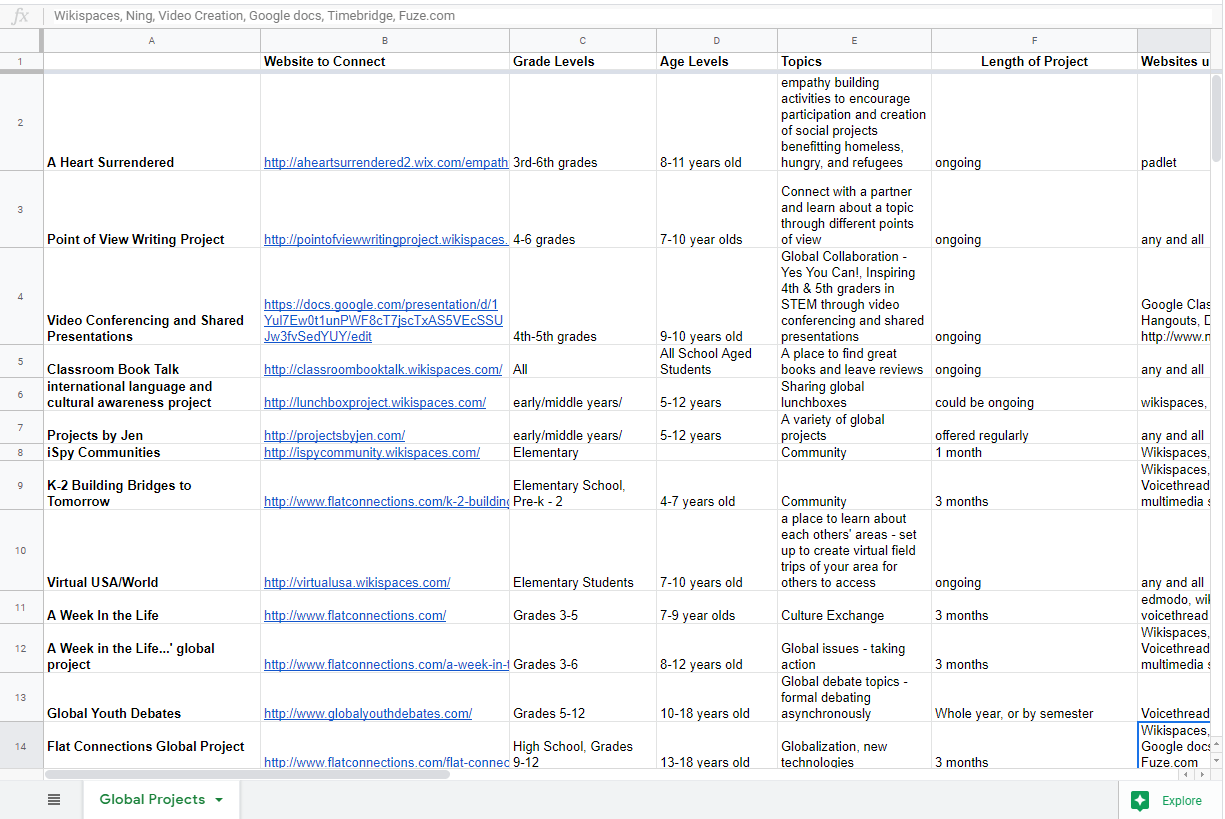
Connect with Amy Jambor, Anne Mirtschin and Makisha Rogers and see their ISTE 2018 presentation. They encourage the use of Twitter global hashtags, Flipgrid, Voxer, and Voicethread. One example they share is the Winter Around the US slides. See a list of global projects via this Google Sheet:
Shift Perspectives with Global Collaboration
The more connected our society becomes, the more essential global collaboration becomes. It goes beyond building cultural understanding and empathy. Teaming and problem solving with remote collaborators is essential. When you start with the ISTE Student Standards, you can take a broader view of lesson plan activities.
To learn more about how to best use the ISTE Standards, consider becoming ISTE Certified. Our next cohort will begin July 11 and others will be be scheduled in the fall. It’s not too late to register for the ISTE New Zealand cohort, if you happen to be in Queenstown on July 2 & 3rd. Register now.


 We had some huge wins in the area of computer science and computational thinking this session. Our six-year goal of providing weighted funding for the 9-12 Technology Application courses has finally been achieved. In HB 3, the school finance legislation, the weighted funding for CTE was changed from grades nine through twelve to grades seven through twelve. In addition, the
 There are two pieces of legislation that are going to impact educational broadband. The first is HB 1960 which creates a Governor’s Broadband Council that will advise the governor on issues related to broadband access to unserved areas. This is progress, but not as much as we hoped for. There are few, if any, areas of Texas that are unserved. The original bill included underserved areas, but heavy lobbying by the large telecommunication companies eliminated that language from the bill. However, we consider this progress because we finally have some entity at the state level that will look at the state’s needs for broadband from a strategic perspective. For too long, all state entities have tried to provide affordable, scalable broadband for their own purposes when it would be much more cost efficient to survey the needs across agencies and entities and design a plan to meet all the needs. HB 1960 at least establishes a council that could do this in the future, if given the authority.

 There are several opportunities in the bills mentioned above that will provide professional development in digital learning. The Blended Learning Grants are largely designed to provide professional development for educators in blended learning, not to mention the funding provided to UTeach to continue to provide this type of training to Texas teachers. Also, this is a good chance to remind districts that the TIMA may be used to provide professional development on the use of technology. In addition to these bills, the legislature passed HB 2424 that requires the SBEC to establish rules to create microcredentials in fields of study related to an educator certification class. This was one of TCEA’s legislative priorities, so we are excited to see this bill pass.


 A major frustration with social media is when it involves parents who listened to their children and took them at their word rather than following up with the teacher when something might sound unreasonable or silly. I had a parent post on Facebook, “How stupid is it that the school has a new rule that kids can’t run on the playground during recess. Isn’t that what recess is for?” This caused several other jerky parents (that’s right, I said it) to chime in with what they considered to be stupid rules. I called the mother and asked where in the world she got that information and she explained that her daughter told her they weren’t allowed to run on the playground. I explained that the students were welcome to run on the playground except in the mulch area (this is the area where we ground our playground equipment) because it’s often congested with students and there are lots of poles and pieces of equipment they can run into if they aren’t paying attention or trip over while running. The parent completely understood the need for that rule when I spoke to her, but unfortunately, she caused a negative situation by assuming the information her child gave her was true, even though it was ridiculous.



 Image Source: