Discover coding and computer science resources for educators. Explore tools, tips, and activities to inspire students and develop digital skills.
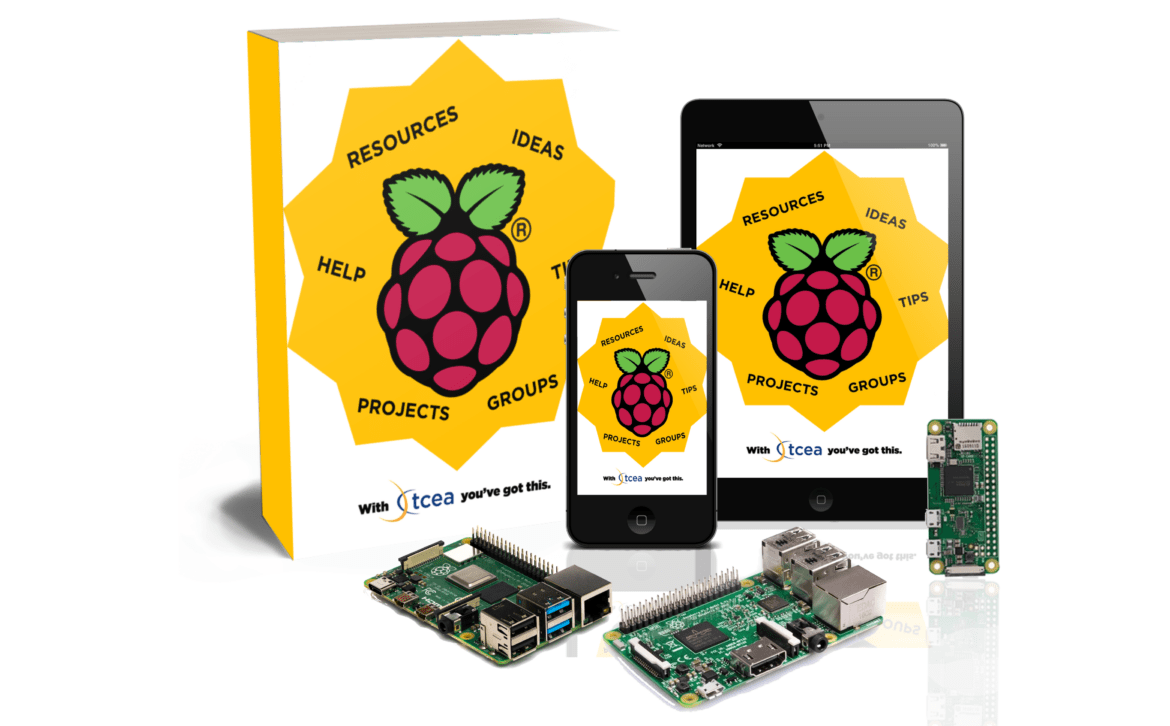
What can be better than a computer designed to inspire children? That was the motivation for creating Raspberry Pi even as early as 2006 when it was just a concept. At the end of 2011, 25 Raspberry Pi boards were assembled and tested for market. The next year, these were auctioned off on eBay with official sales to the public starting in February of 2012. The board with the serial number 01 was the last to auction off and sold for £3,500 (approximately $4,508.70 in today’s dollars).
Fortunately for educators, we don’t have to vie for limited quantities for historical purposes. We have choices today, such as the smallest and simplest of the boards, the Raspberry Pi Zero, for just five dollars, to the newest and most robust microcomputer, the Raspberry Pi 4 with 4GB of RAM, for only $55 — with none being much larger than a credit card.
With such a low entry point, it is clear why many educators are introducing their students to microcomputers. These boards allow students to learn algebraic thinking and reasoning, coding, basic hardware/software interfacing, and physical computing by incorporating sensors, motors, actuators, LEDs, speakers, and more. Many students have found Raspberry Pi to be an entry to programming using languages such as Scratch, Python, Ruby, C, and C++. To help you introduce Raspberry Pi to your students (and possibly to yourself if you are a n00b) or extend the learning possibilities, here are a few resources that I’ve curated for you to enjoy.
Books
Excited About Coding! – An Introduction to Coding Using Scratch 2 Software on the Raspberry Pi 4 Computer
Author: Grant H. Williams
Age Range: 9 and up
Paperback: 162 pages
Publisher: Grant Williams (November 22, 2019)
ISBN-10: 0692197281
ISBN-13: 978-0692197288
Raspberry Pi Projects for Kids: Create an MP3 Player, Mod Minecraft, Hack Radio Waves, and More!
Author: Dan Aldred
Paperback: 288 pages
Publisher: No Starch Press (December 2, 2019)
ISBN-10: 1593279469
ISBN-13: 978-1593279462
Sensor Projects with Raspberry Pi: Internet of Things and Digital Image Processing
Author: Guillermo Guillen
Paperback: 157 pages
Publisher: Apress; 1st ed. edition (December 19, 2019)
ISBN-10: 1484252985
ISBN-13: 978-1484252987
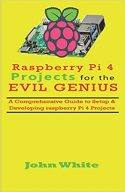
RASPBERRY PI 4 PROJECTS FOR THE EVIL GENIUS: A Comprehensive Guide to Setup & Developing Raspberry Pi 4 Projects
Author: John White
Paperback: 150 pages
Publisher: Independently published (September 13, 2019)
ISBN-10: 1692743295
ISBN-13: 978-1692743291
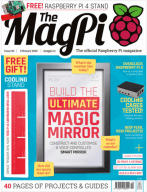
The MagPi Magazine – The Official Raspberry Pi Magazine
Published by the Raspberry Pi Foundation, you’ll enjoy monthly tips, tricks, how-to’s, and projects for you to get the most from your Raspberry Pi. You can subscribe and get a discount from the price you’d pay if you bought if off the magazine rack.
NOTE: You can download the magazine as a PDF for free, going all the way back to Issue 1, May 2012!
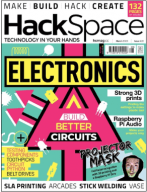
HackSpace Magazine
This magazine is also published by the Raspberry Pi Foundation and has lots of ideas not limited to just Raspberry Pi. At the time of this post, Issue 28 has been released and covers adding audio to Raspberry Pi projects, as well as how to design a vase in Fusion 360, making things with toothpicks and getting stronger prints with your 3D printer.
NOTE: Issues of HackSpace can also be downloaded as PDF files for free!
Websites
Instructables – Though you will need a login (which is free) to access the Raspberry Pi projects, this site is known for its wide variety of crowd-sourced ideas and projects. You will also find great contests and classes to challenge you and extend your learning. You can even take a short class to learn how to write your own Instructable to share with the group.
Hackaday.io – With over 1,000 projects tagged with “Raspberry Pi,” you are sure to find some interesting things to spark your own creativity. More than 23,000 projects are shared at the time of this post, so you are definitely looking at having any free time filled. You are sure to find interesting projects for kids, by kids as well.
Top 20 Raspberry Pi Blogs, Websites and Influencers in 2020 – Be sure to look this list over and explore some great resources that you didn’t realize existed.
Top 20 Raspberry Pi 4 Projects That You Must Try Now – Seeed Studio put together a list of great and fun projects for you to try with your Raspberry Pi 4. Some are definitely more involved, but are still worth the effort and time to create. Which will be your favorite?
Raspberry Pi Resource Guide – Mitch Allen created and maintains the DesertBot website in order to share his love for robotics with other hobbyists. In this post, he shares various resources for you to consider if you are interested in Raspberry Pi … and possibly robots.
Groups
Meetup – Here is a list of search results for various meetups around the globe that have Raspberry Pi User Groups or Raspberry Pi-related events. If you don’t see one close to you, then touch base with one of the many groups clustered around programming languages or makerspaces to see if they will be planning one soon. Or, start your own Raspberry Pi User Group!
Reddit – There are several different groups to check out on Reddit that address Raspberry Pi. Consider joining each group to stay current on what others are doing, as well as having a lot of like-minded nerds available to assist you with troubleshooting. Groups to check out include:
- r/raspberrypi – 26.3k members – Created August 2011
- r/RASPBERRY_PI_PROJECTS – 61.8k members – Created August 2014
- r/raspberry_pi – 1.7m members – Created October 2011
- r/raspberryDIY – 8.5k members – Created May 2014
- r/RetroPie – 84.8k members – Created May 2014
Twitter – Follow the #RaspberryPi hashtag to get numerous ideas of how Raspberry Pi is being using around the world. This is great if you have students with languages other than English, since there are people in many other countries tweeting their ideas, projects, questions, etc. Be sure to check out the photos and videos link as well to get more ideas.
Facebook – Don’t overlook Facebook as a source of relevant groups to check out. Here are a few groups to get you started.
- Raspberry Pi – 74k members – about 20 posts a day
- Raspberry Pi 3 & 4 – 27k members – about 20 posts a day
- Raspberry Pi and DIY Projects – 25k members – about 60 posts per day
- Raspberry Pi Zero – 2k members – about 10 posts per week
YouTube – And let’s not forget all the folks who share via YouTube. Here, you’ll find the videos posted this year, curated playlists, and channels dedicated to Raspberry Pi. Here are a few to check out.
- Raspberry Pi Projects (playlist) – 114 videos – Last updated: July 2019
- Raspberry Pi Projects for beginners (playlist) – 38 videos – Last updated: December 2019
- leepspvideo (user) – 100+ videos – February 2020
Your Recommendations
Have I left anything off that you would recommend? Post in the comments below and share what other resources you have found helpful, and what types of projects you enjoy working on with your Raspberry Pi. We look forward to hearing from you!





 Kyle Ivey is the Instructional Technology Director in Central ISD.

 We had some huge wins in the area of computer science and computational thinking this session. Our six-year goal of providing weighted funding for the 9-12 Technology Application courses has finally been achieved. In HB 3, the school finance legislation, the weighted funding for CTE was changed from grades nine through twelve to grades seven through twelve. In addition, the
  There are two pieces of legislation that are going to impact educational broadband. The first is HB 1960 which creates a Governor’s Broadband Council that will advise the governor on issues related to broadband access to unserved areas. This is progress, but not as much as we hoped for. There are few, if any, areas of Texas that are unserved. The original bill included underserved areas, but heavy lobbying by the large telecommunication companies eliminated that language from the bill. However, we consider this progress because we finally have some entity at the state level that will look at the state’s needs for broadband from a strategic perspective. For too long, all state entities have tried to provide affordable, scalable broadband for their own purposes when it would be much more cost efficient to survey the needs across agencies and entities and design a plan to meet all the needs. HB 1960 at least establishes a council that could do this in the future, if given the authority.
 There are several opportunities in the bills mentioned above that will provide professional development in digital learning. The Blended Learning Grants are largely designed to provide professional development for educators in blended learning, not to mention the funding provided to UTeach to continue to provide this type of training to Texas teachers. Also, this is a good chance to remind districts that the TIMA may be used to provide professional development on the use of technology. In addition to these bills, the legislature passed HB 2424 that requires the SBEC to establish rules to create microcredentials in fields of study related to an educator certification class. This was one of TCEA’s legislative priorities, so we are excited to see this bill pass.