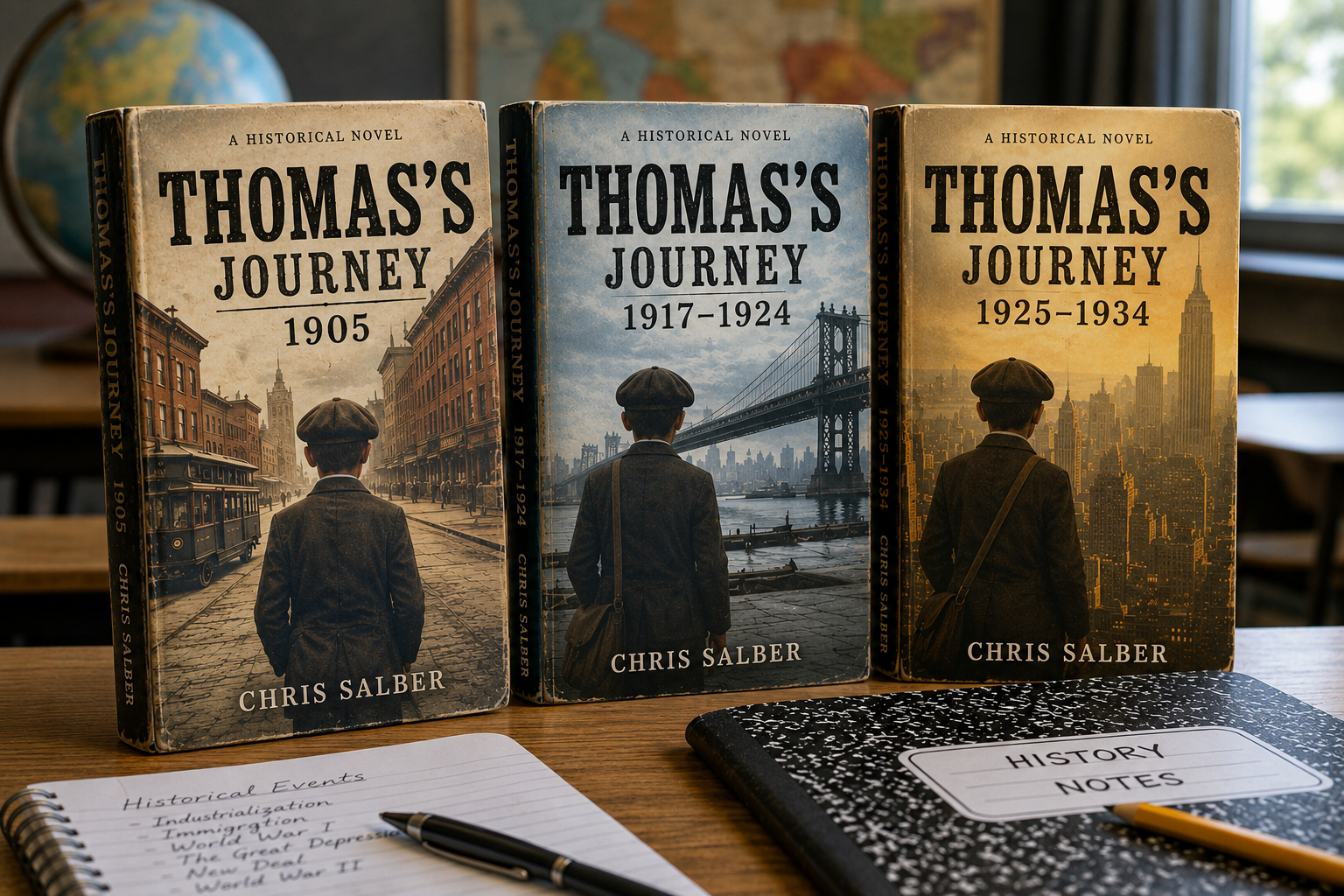
I have taught history for more than 15 years, across six states, and I learned one thing early that no textbook ever solved for me: a paragraph about the past rarely makes a teenager care about it. My US History classroom is full of readers who are capable but reluctant, and many of them are still learning English. A textbook summary of the 1918 flu or the Great Depression gives them facts to forget. What students remember is a person, typically someone their own age they can relate to, walking through the same history, afraid of the same things that they are. With the help of Artificial Intelligence, I realized I could create that person myself.
I decided to create that person. With artificial intelligence as a drafting partner, I wrote a novel for my students. Then I wrote two more. AI did not replace my judgment as a teacher or as a historian. What it did was accelerate the parts that used to make writing a whole book impossible for a working teacher with more than 150 students, a stack of grading every night, and three kids active in sports.
The anchor: “The Other Side of the Wire”
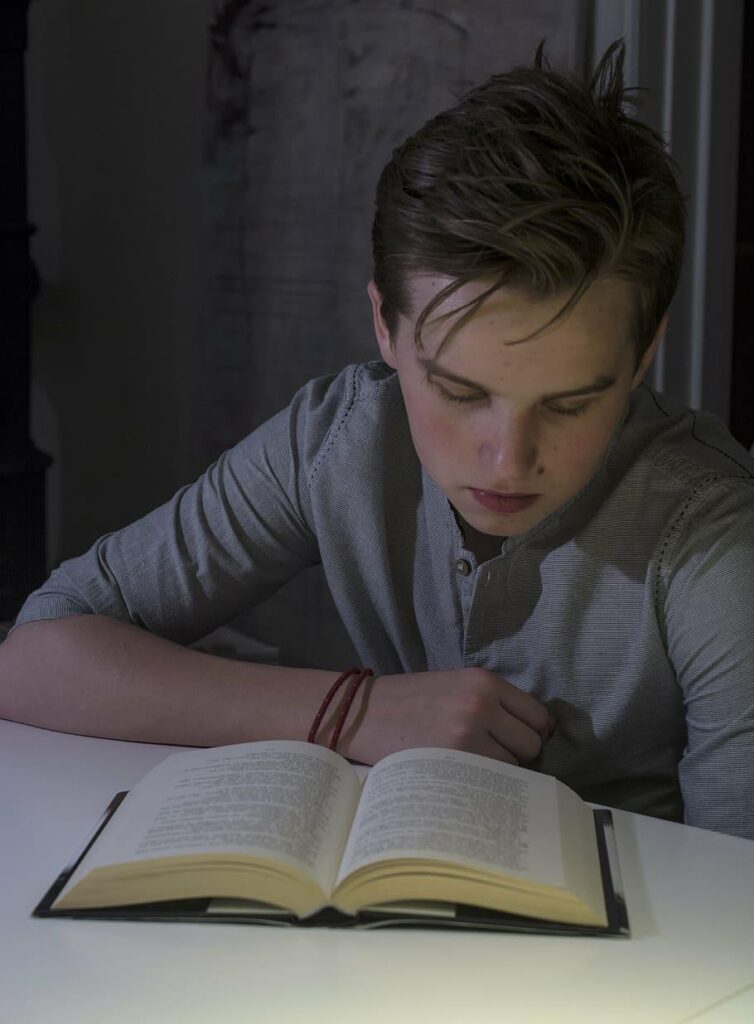
My flagship novel is “The Other Side of the Wire,” the anchor text for my 11th grade US History course. It follows Thomas, a boy from Gilded Age Philadelphia, through World War I, the 1918 flu, Prohibition, and the Great Depression, the exact arc my students study, aligned to our California content standards. Real figures, like the baseball player Grover Cleveland Alexander, move through the story beside the invented ones, so the history stays honest.
The book was built for the readers actually sitting in my room. I write true footnotes at the bottom of the page for historical context, and I keep a separate glossary in the back for the period and cultural terms a teenager today would not know. When I worried a sentence was too tangled for an English learner, I rewrote it simpler. Every design choice was made to teach something. My students are not decoding a document, they are following a friend. To get a better idea about the book, I have a selected excerpt of the book attached here.
The companions: the Civil War and Cold War Berlin
Once I finished the first book I thought that a better way to introduce this model would be to ease my students in to the format using a simpler and shorter book. This would alow me to better anticipate pacing and what scaffolding would be necessary since I have never done this and I needed content that would pre-date my Other Side of the Wire. Therefore my second book is a Civil War story built around the Irish Brigade and one religious medal handed down through a family across generations, which enabled me to loosely tie the two together. It opens in Ireland during the Potato Famine and follows a family that splits in two, the branch that emigrates and the branch that stays, all the way to Fredericksburg and Gettysburg.
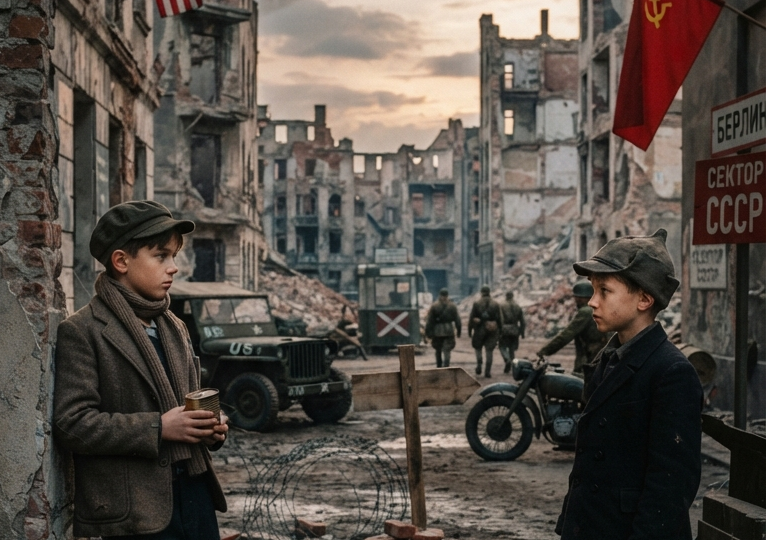
I also teach a World Civilizations course, and didn’t want to leave them out. I developed a Cold War novel called “A Tale of Two Boys,” and it started with a question I wanted my sophomores to actually feel: does where you are raised matter more than where you are born? Two boys, about ten years old, grow up as neighbors in the same Berlin apartment building, one from an American family and one from a Soviet family. On the night the 1948 Berlin Blockade seals the city, in the dark and the panic of each family fleeing to its own sector, the boys are taken by mistake, and by the time anyone realizes it, the line between the sectors can no longer be crossed. Each family raises the boy it has. The novel follows both of them in alternating chapters as the Cold War hardens around them, through the McCarthy years on the American side and Stalin’s last purges on the Soviet side, until a real event, the 1957 Moscow World Youth Festival, finally makes a reunion possible and forces each boy to choose whether to go back. Every turn in the story rests on a documentable moment, so my students are learning the real history of a divided Berlin even as they argue about who these boys truly are.
How you can do this in your own classroom
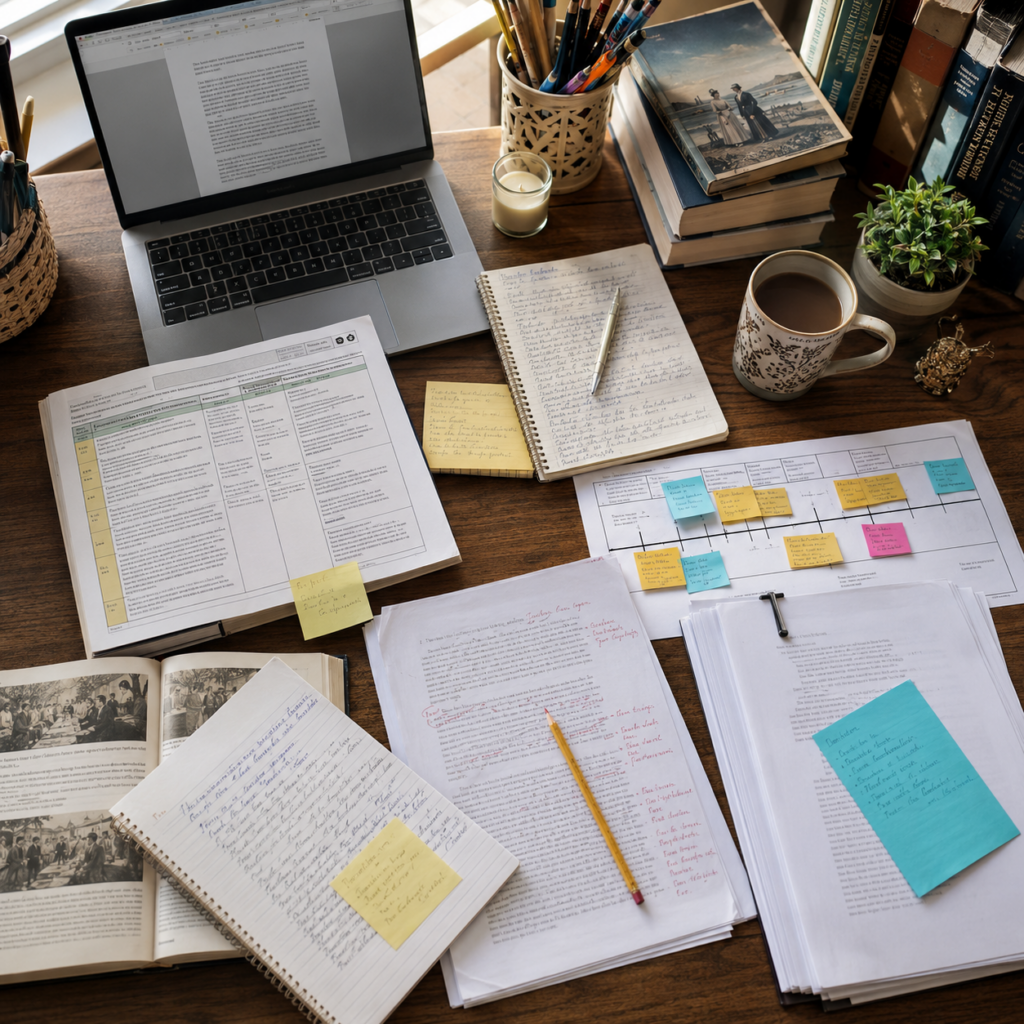
Here is the part I most want to share, because it works in any subject, not just history.
- Start with a standard, not a story. I begin with the exact content standard I am required to teach and let it set the novel’s spine. The story serves the learning, never the other way around. I also knew that I wouldn’t get to every single standard and some did not fit with the narrative. It was okay, that is what supplemental resources are for.
- Define your reader first. Before I draft a word, I describe my classroom dynamics to the AI: their reading level, their language needs, what tends to confuse them. That one step is why the books fit my room instead of a generic one.
- Keep yourself in the historian’s chair. AI will happily invent a detail that never happened. I treat every draft as a manuscript to verify, not a final answer: I check names for the period and the culture, flag anything historically shaky, and cut what does not hold up. I wanted even the small background details right, so I looked up specific games and dates, and I often found the AI had introduced errors I had to correct to keep the book authentic.
- Build the support alongside the book. The same tools that draft a chapter can draft footnotes, a glossary, and a “real people in this book” section for the back matter, the scaffolding that makes a novel usable for striving and multilingual readers.
- Revise like a teacher. I read every line asking one question: can my students actually read this? Then I fix it.
The payoff
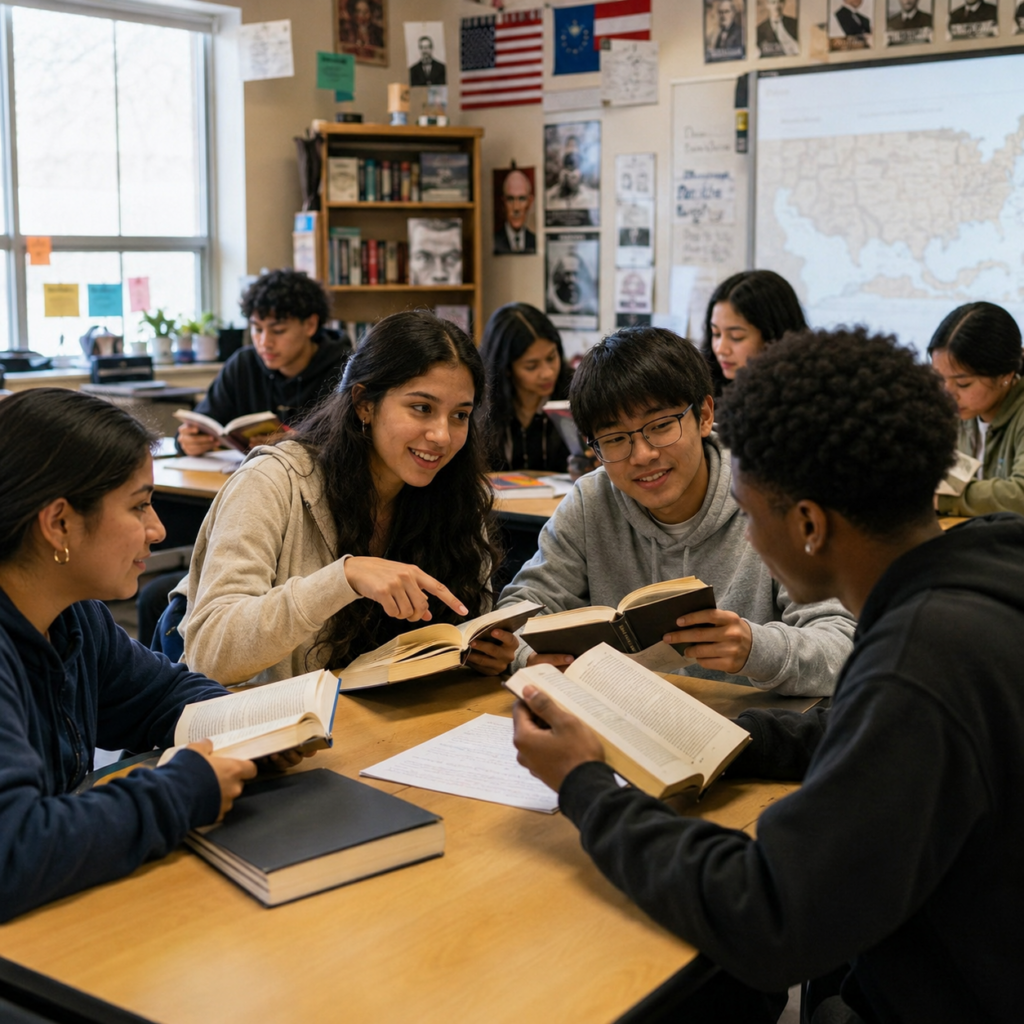
The change in my room has been the whole point. Students who used to slide down in their seats during reading now want to know what happens to Thomas. They argue about his choices. They tie a character’s fear to an event they will be tested on and do not even notice they are reviewing. The story does the work the textbook could not.
I am not a novelist. I am a history teacher who wanted his students to care, and AI gave me a way to build the books I always wished I had. If you have ever thought your curriculum needed a story your students could not put down, you are closer to writing it than you think.