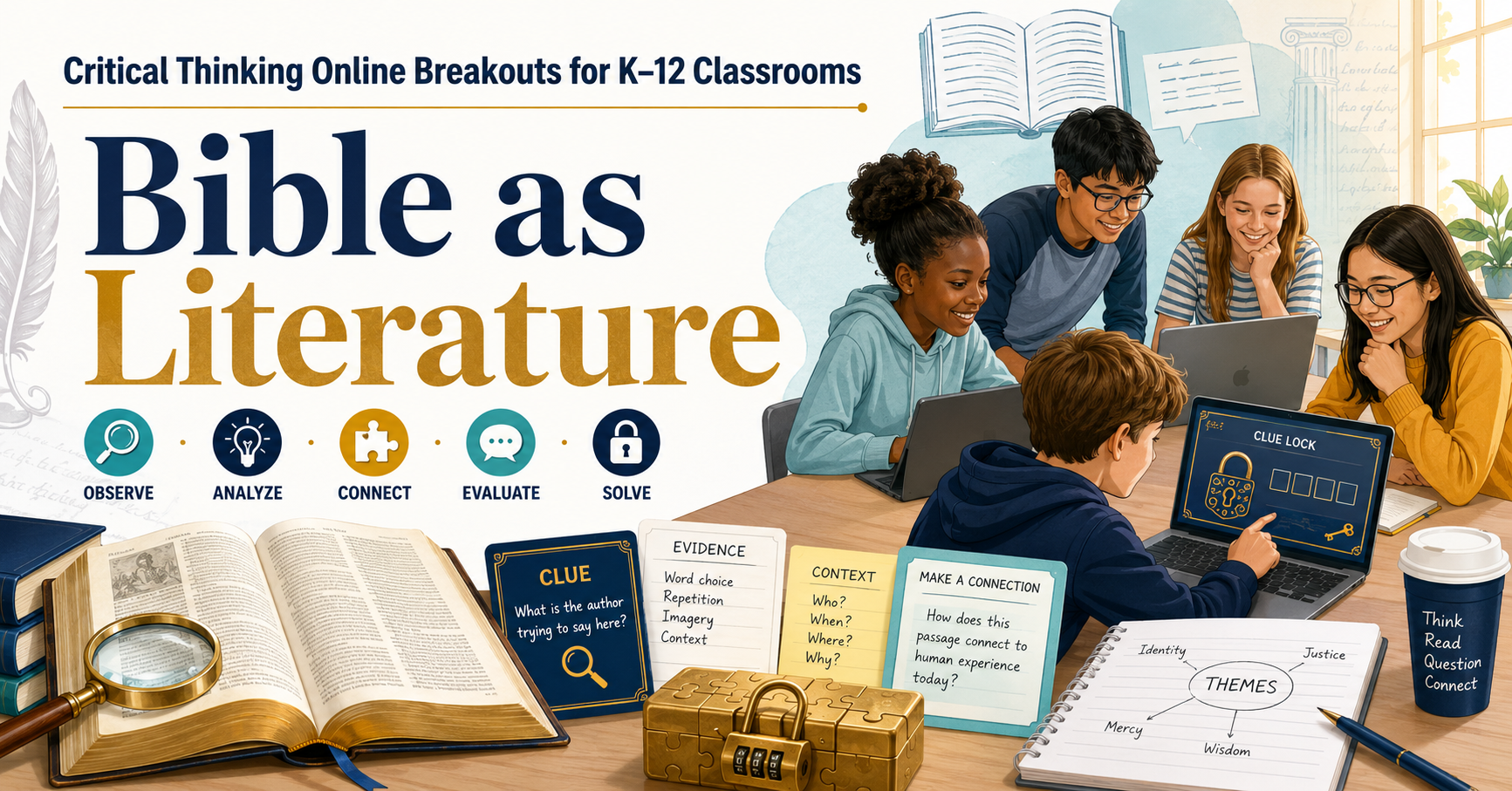
You may have seen the headlines, board discussions, or hallway conversations already. Bible-related texts are showing up in new ways in Texas instructional materials and reading lists. That can make classroom planning feel a little more delicate than usual. As someone who has taught in both private and public schools, finding engaging, neutral, and appropriate activities for new content can be tough. That’s why this multilingual (seven languages) collection of 31 Critical Thinking Online Breakouts (CTOBs) is now available. And, it’s not limited to use in Texas public schools. Others who teach the Bible as Literature may find this of use as well.
Note: Be sure to read about PlotPoint, a literature learning arcade for grades 6–12, featuring over 100 texts used in Texas and USA classrooms. Students examine artifacts, solve evidence-based breakouts, play short literary games, and explain the thinking behind their choices. It also comes with built-in links to Project Gutenberg texts and audiobooks, as well as LibriVox recordings.
Looking for More Critical Thinking Online Breakouts (CTOBs)?
Be sure to read Science Detectives: Critical Thinking Online Breakouts (CTOBs) for Your K-2, 3-5, and 6–8 Classroom, Celebrate America’s 250th Birthday, as well as the Critical Thinking Online Breakouts blog entries, Part One and Part Two. Science educators may also appreciate the Lab Safety Certification Activities.
The Challenge
Students may be asked to read stories, poems, parables, and references that have shaped literature, art, history, law, and public language. How do school teachers approach those texts in a way that is academically useful, respectful, and appropriate for the setting?
A quick review of what’s been happening in Texas may be helpful:
| Date | Legislation or SBOE decision |
|---|---|
| June 2026 | SBOE adopted the required K–12 literature list, including Bible passages. (SBOE) |
| April 2026 | SBOE approved the literary works lists on first reading. (SBOE) |
| January 2026 | SBOE delayed action on the proposed reading list until April. (The Texas Tribune) |
| November 2025 | SBOE discussed TEA’s recommended literary works lists. (SBOE) |
| September 2025 | SB 11 took effect, allowing local prayer and Bible or religious-text reading periods. (LegiScan) |
| June 2025 | SB 10 was signed, requiring Ten Commandments displays in classrooms. (Texas Legislature Online) |
| November 2024 | SBOE approved optional Bluebonnet Learning K–5 materials with biblical references. (KERA News) |
| September 2023 | SBOE began the HB 1605 literary-list process. (Texas Education Agency) |
| June 2023 | HB 1605 passed, requiring vocabulary and literary works lists in RLA standards. (LegiScan) |
Comment (edited for readability) from a high school English teacher in private, religious school:
“These resources are excellent. The questions following each passage clearly address the literary analysis and close-reading skills identified in the Texas Essential Knowledge and Skills across grade levels. The selected passages also have lasting value.Exposure to biblical literature, especially at the high school level, helps students recognize and understand the many allusions found in classic novels, short stories, and poetry. Without that background knowledge, students may miss important layers of meaning in the literature they read.”
A Possible Solution
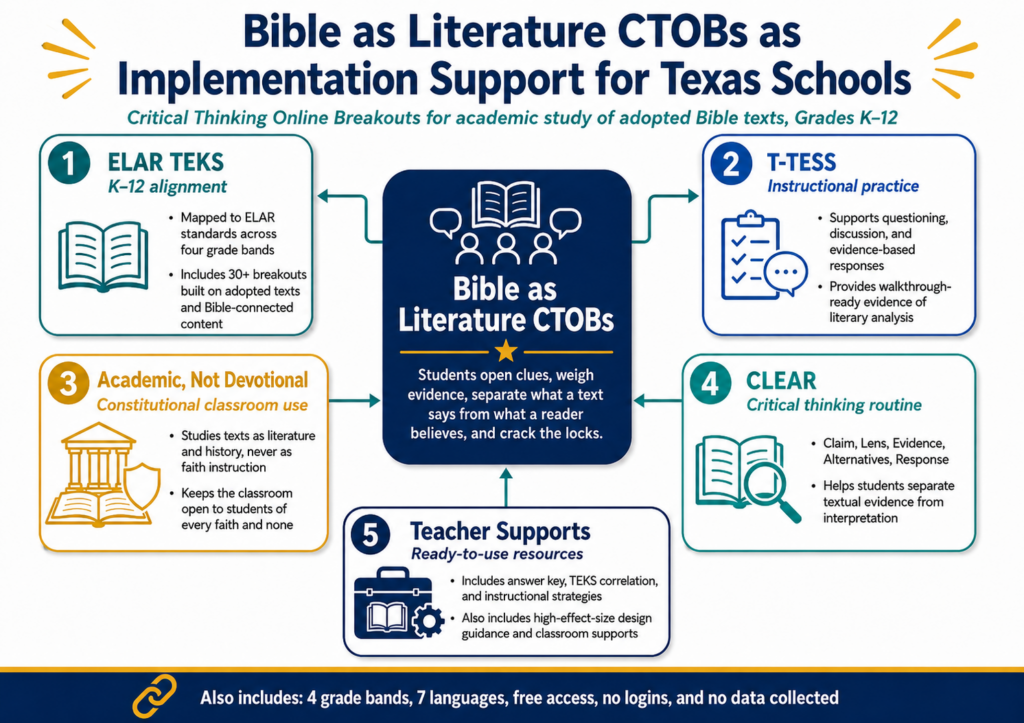
That is where the Bible as Literature: Critical Thinking Online Breakouts may help. This attempts, perhaps falling short of perfection, to handle both Bible as Literature as well as Bible-connected items in the literary works adopted by the SBOE.
Note: While I have made every effort to “get it accurate,” there may be some omissions or additions. Please be kind in comments at the end of this blog entry.
What is included?
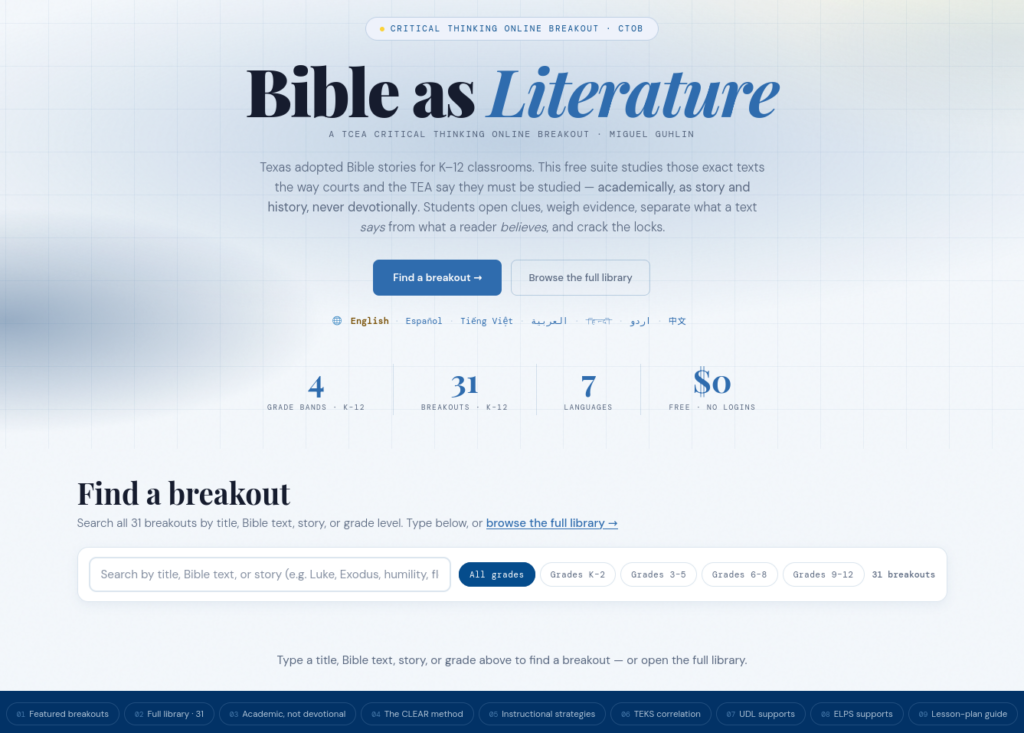
The Bible as Literature CTOB suite includes 31 self-contained critical thinking activities across four grade bands:
- K–2
- 3-5
- 6-8
- 9-12
Each grade band includes six activities. You can see all activities on this page with this description:
Six breakouts per grade band, each built on a different adopted text — creation, the flood, the Ten Commandments, Jonah, the Psalms, the Good Samaritan, Solomon, Esther, the Last Supper, and more. Every one is studied as literature: sequence, theme, genre, archetype, allusion, and the line between what a text states and what a reader believes.
The activities are built around familiar texts and references, including Genesis 1–2, Noah and the Flood, Jonah, the Good Samaritan, Psalm 23, Esther, Solomon’s judgment, and the Last Supper as both Gospel narrative and art history.
There are also other selections connected to Texas instructional materials and literary study. You can find a detailed list of those at the end of this blog entry for exploration.
Each activity asks students to open clues, read carefully, sort evidence, and solve reasoning locks. The goal is not to ask students what they believe. The goal is to help them notice what the text says, what evidence supports a claim, and where interpretation begins.
Why “Bible as Literature”?
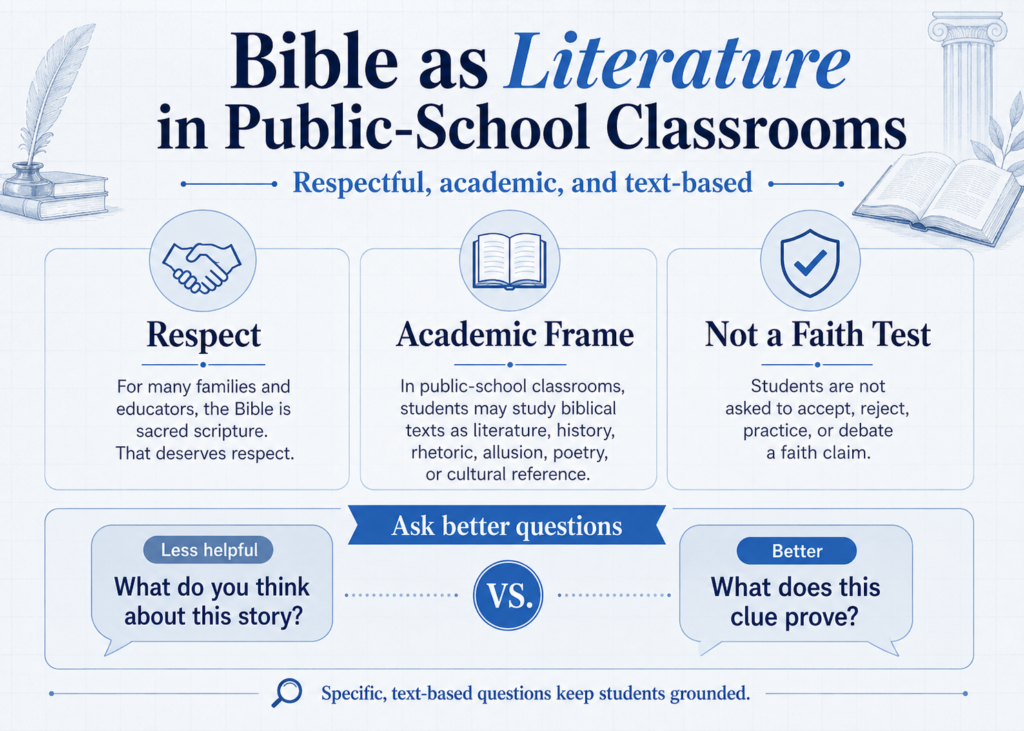
For many families and educators, the Bible is sacred scripture. That deserves respect. At the same time, public-school classrooms have to handle religious texts differently from a church, synagogue, mosque, temple, home, or private religious school.
The academic frame matters. Students can study a biblical text as literature, history, rhetoric, allusion, poetry, or cultural reference without being asked to accept, reject, practice, or debate a faith claim. That distinction is important, and it is built into these activities.
I find that students do better with sensitive content when the task is specific. “What does this clue prove?” is easier than “What do you think about this story?” While the first question keeps students grounded in the text, the second can wander fast (like 40 days and 40 nights).
How do the breakouts work?
Each breakout uses a familiar digital escape-room structure. Students read clue cards, test answers, and open locks. A lock might ask them to put events in order, choose the strongest evidence, identify a genre, or separate a supported claim from a true-but-irrelevant detail.
That last part matters. Every clue set includes one decoy that may be true but does not answer the question. Students have to slow down and ask, “Does this actually prove the claim?” That is a useful habit far beyond this topic.
| Grade band | Main focus | Sample activities |
|---|---|---|
| K–2 | Sequence and story details | Creation sequence, Noah, Jonah, the Good Samaritan |
| Grades 3–5 | Theme and evidence | David and Goliath, Daniel, Solomon, the Last Supper |
| Grades 6–8 | Genre and interpretation | Parables, Psalms, Esther, Jonah, Solomon |
| Grades 9–12 | Allusion and literary analysis | Adam and Eve, Psalm 23, Lamentations, Good Samaritan laws |
What makes this classroom-friendly?
The activities run entirely in the browser. There are no student accounts, no logins, and no data collected. That keeps the setup simple and reduces the privacy questions that come with many online tools.
Multilingual Support
Like all the Critical Thinking Online Breakouts, every effort has been made to leverage Gen AI translations into target languages most found in Texas classrooms, including English, Spanish, Vietnamese, Arabic, Hindi, Urdu, and Chinese. Use the handy language switcher at the top right of every breakout. It appears as the following:

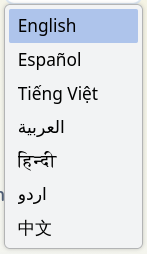
All activities are fully translated. Feel free to explore them via each individual breakout. For example, here’s a quick list of the Spanish version of each activity.
One Example
Teachers can use the activities as a station, enrichment option, close-reading practice, substitute lesson, or small-group challenge. In public-school settings, you will still want to follow district guidance and review materials before assigning them. In private religious schools, the same activities can support literary study while leaving room for the school’s own mission and instructional choices.
Where does this fit instructionally?
These breakouts are not a replacement for curriculum. They are a practice space.
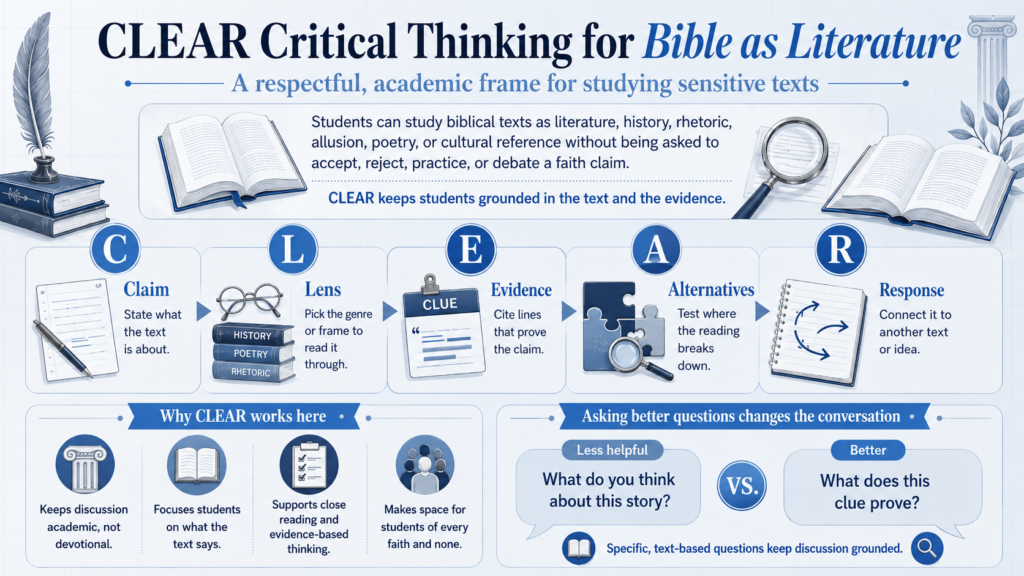
Use them when you want students to:
- Read a short text or clue closely
- Cite evidence instead of guessing
- Identify genre, sequence, theme, or allusion
- Separate textual fact from interpretation
- Discuss a sensitive topic through an academic frame
- Practice reasoning without collecting student data
For younger students, that may mean putting story events in order or naming the source of a detail. For middle school students, it may mean noticing irony, reversal, or poetic language. For high school students, it may mean tracking allusion, archetype, metaphor, or the difference between academic and devotional reading.
A note on respectful use
This resource is designed to avoid two mistakes, including the following:
- It does not treat sacred texts casually, and
- It does not turn public-school reading into religious instruction.
That balance is not always easy. Some readers will come to these texts with deep personal faith. Others will come from different religious traditions, no religious tradition, or simple curiosity. A good classroom activity should make room for all of those students by keeping the task clear, fair, and text-based.
As an educator, it’s worth bringing students back to the evidence. What does the clue say? What claim does it support? What answer can you prove from the text?
Ready to try these out?
Use the Bible as Literature: Critical Thinking Online Breakouts when you need a careful, respectful way to help students read biblical texts as literature, history, and cultural reference. The activities are free, browser-based, multilingual, and built for close reading rather than debate.
Explore the Bible as Literature CTOBs, review the correlation guide, and choose one activity that fits your students’ grade band and reading goal.
List of Additional Links For Your Exploration
- Adopted State Board of Education Rules Not Yet Effective (as of 7/7/26) – A list of all new rules or amendments to existing rules with effective dates in the future.
- TEA Bluebonnet Learning: K–5 English Language Arts and Reading — TEA describes Bluebonnet K–5 RLA as full-subject, tier-one instructional materials with scope and sequence, daily lesson plans, student materials, TEKS coverage, and ELPS coverage. Texas Education Agency
- Bluebonnet Learning Portal — access point for TEA Bluebonnet materials. TEA states that educators and individuals can access digital versions for free. Texas Education Agency
- TEA Draft Rule Text: Literary Works List — official TEA draft/rule-text source for the required literary works list. The draft includes items such as Jonah and Psalm 23 in grade seven. Texas Education Agency
- Texas Education Code §28.002 — required curriculum language that includes religious literature and its impact on history and literature. A parsed reference version states this includes the Hebrew Scriptures, New Testament, and their impact on history and literature. Justia Law
- Abington School District v. Schempp — useful legal framing for the “academic, not devotional” language. The Court distinguished devotional school-sponsored Bible reading from objective study of the Bible for literary and historic qualities.
Answer Key Availability
While this content is available for free classroom use by individual teachers, if your campus or district would like to license this content for use, please don’t hesitate to reach out. The answer key can be made available.
Connect via this online form
👤 Human-directed (Miguel Guhlin) · 🤖 Gen AI-assisted (Claude, ChatGPT)