Discover resources and strategies for teaching core content areas. Explore tips, tools, and activities to enhance learning across all subjects.
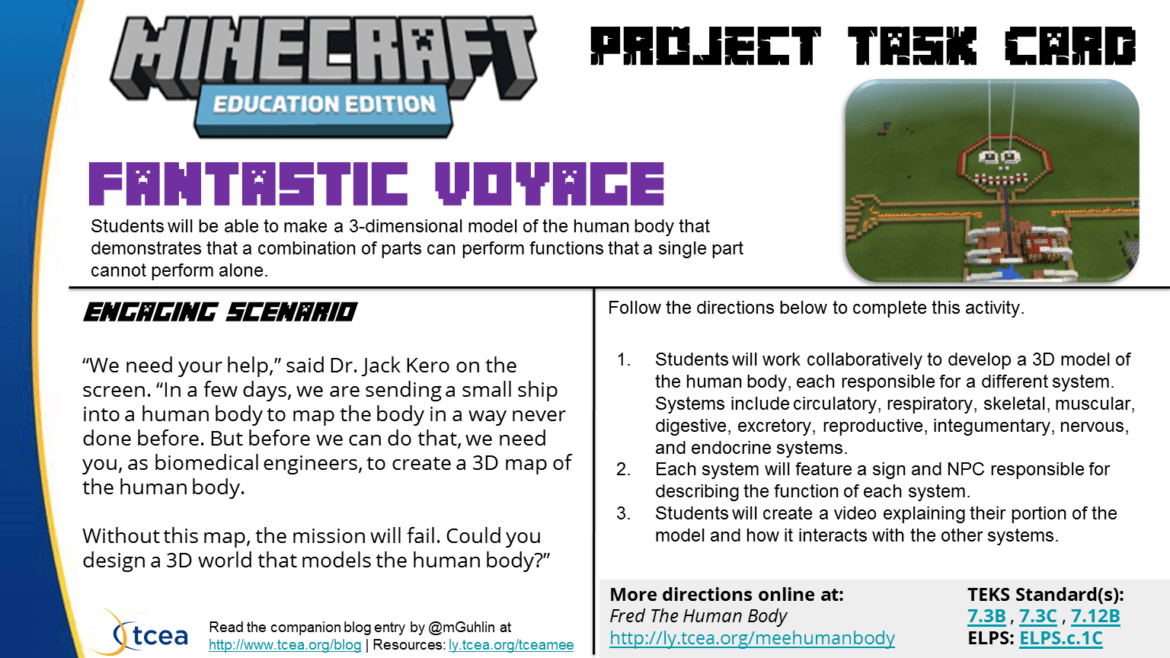
Embarking on a fantastic voyage of learning with Minecraft? Let’s review the building blocks of project-based learning success. Minecraft Global Mentor, Benjamin Kelly (@BBTNB), starts us off with this project, Minecraft Musical Chairs:
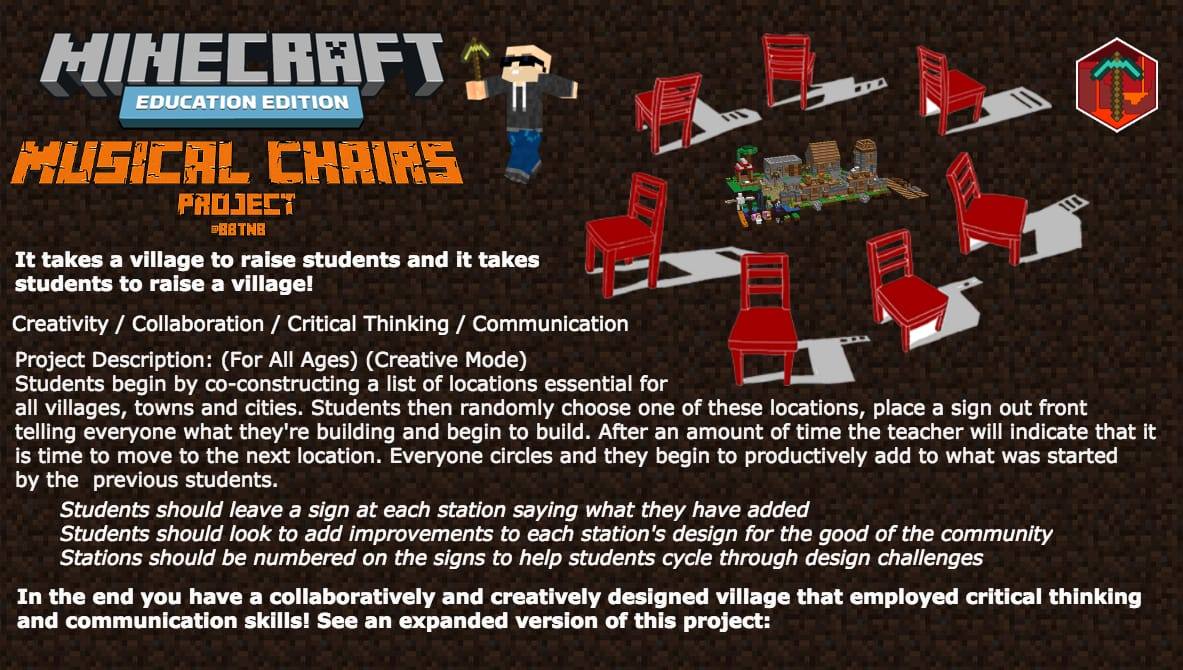
Anatomy of a Project
Texas educators may want to add a few more components to Ben’s project task card:
- SWBAT statement
- TEKS and ELPS
- Engaging scenario
- Formative assessment activities.
Let’s take a closer look at these building blocks.
Block #1 : Student Will Be Able To (SWBAT)
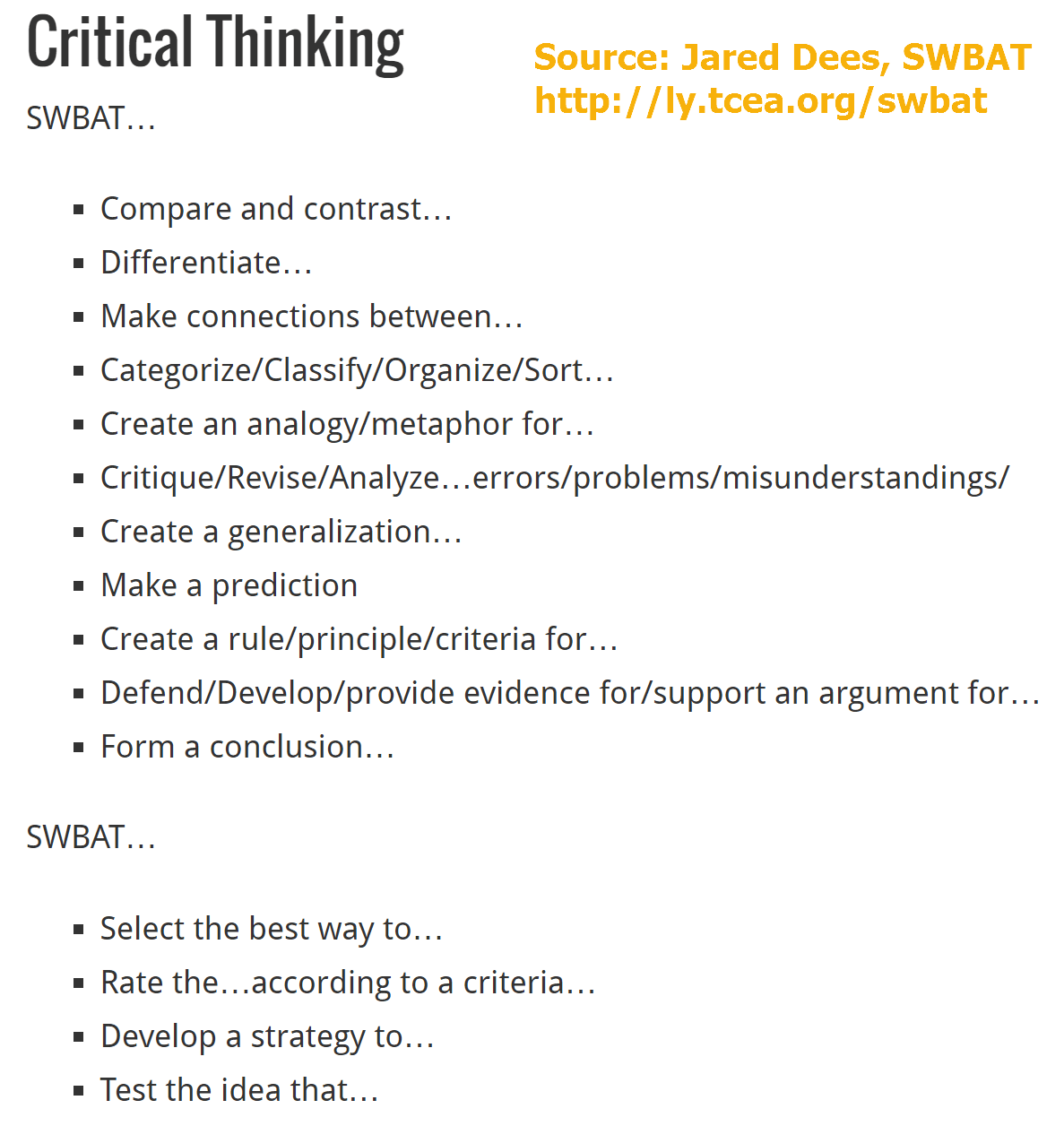 Jared Dees writes “SWBAT stands for “Students Will Be Able To….” Use SWBAT to focus a lesson plan on what the students learn by doing. Ask yourself “How do these verbs Jared includes align to what students do in Minecraft?”
Block #2: Relevant TEKS and ELPS
Learning happens on the messy journey from problem to solution. Aside from using The TEKS Resource System, hook students with a problem scenario. Match the grade level TEKS to a core content-embedded scenario.
In Ben’s example, students show how they can work together. They construct a 3D physical representation of their learning by first developing construction criteria together and then adding their own positive improvements. In this way, student-architect teams achieve constructions they could not do alone.
Block #3: Fantastic Voyage
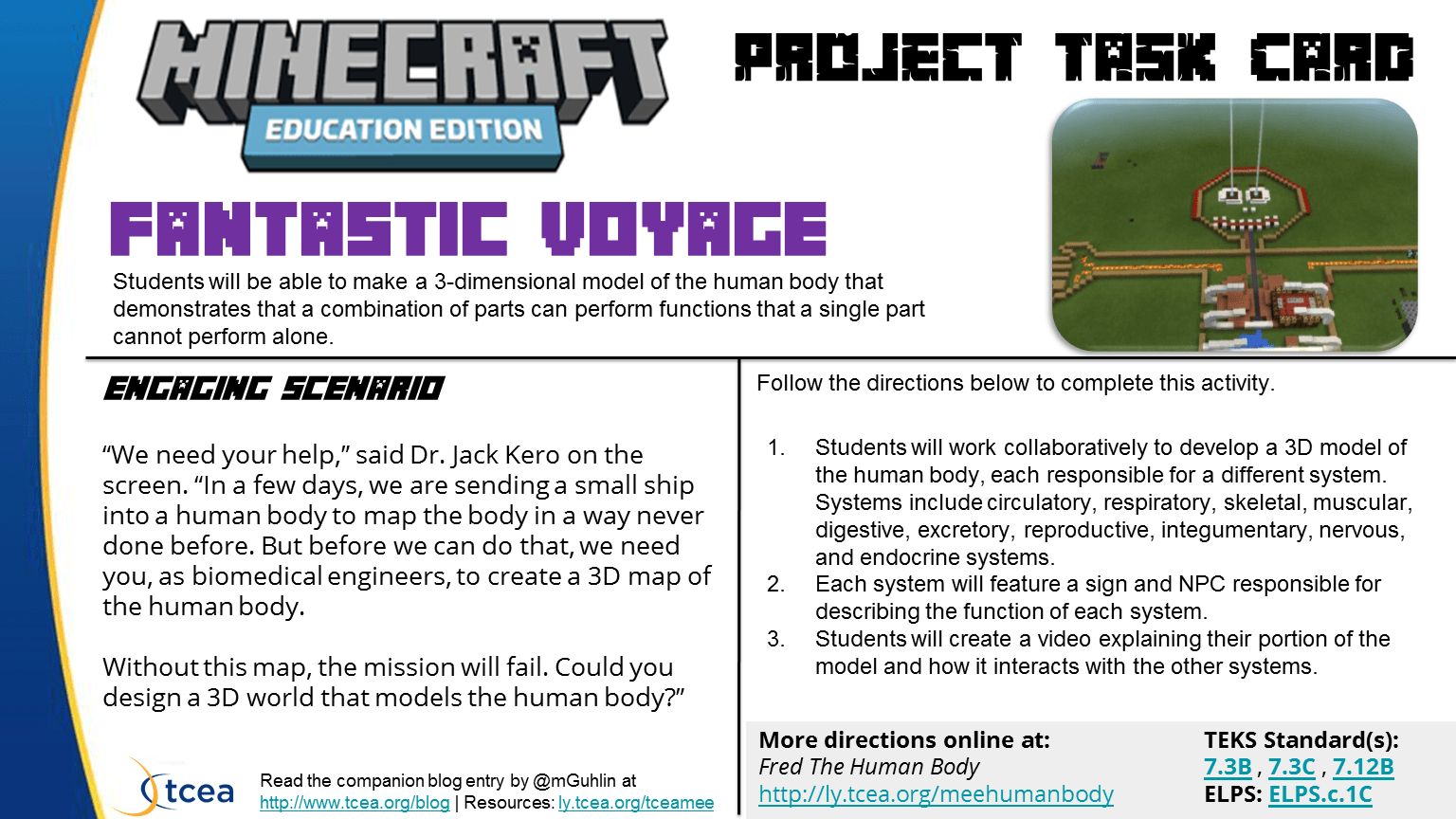
In the Project Task Card above, I adapted Lynne Telfer’s (@lynnetelfer | blog) lesson, Create Fred The Human Body! from the Minecraft: Education Edition website. In The TEKS Resource System, this science lesson for grade 7 students helps them grasp the key concept that individual components combine to perform functions as a system.
During this unit, students study human body systems for the first time…They identify the main functions of the systems of the human organism.
Block #4: Assessment
Adapt an existing assessment, (e.g. rubric) from an existing one, such as this one offered on The TEKS Resource System. To gain maximum credit, modify the rubric as shown.
The 3D model of the human body is highly detailed, accurate. The model reflects the selected system with a high degree of accuracy. Each component is clearly labeled. Signs and Non-Player Character (NPC) provide functional details. Critical fluid flow is accurate and possible. Specific information on how size, scale, properties, and materials are included. 3D human body modeling is evident, analyzed, and explained.
Conclusion
While you can teach this lesson the old-fashioned way , using Minecraft: Education Edition makes students architects of their own learning in 3D virtual environments. Research shows this is a growing future work trend (source).
Be sure to check out these links to additional lesson ideas.
- Lessons for Minecraft
- Fueling Analytical Thinking in Minecraft
- Adventures in City Planning
- Minecraft Math Activities


 conduct their research as they normally would. But as they collect information that they need, they are now able to highlight the data, drop it onto a “Candy card” with automatic site location and citation, and then organize the ideas into a “Storyline” to reveal connections and find answers. Candy cards can be dragged and dropped into different orders, which is fabulous for organizing the final draft, and the contents of each card are searchable. Once the research is complete, the Storyline can be exported as a text file with just one click.
 Information and quotes from any source can be Candyed, including websites, social media, videos, images, and more. When you’re ready to insert the Candy cards into a document, the original source comes with it, making citation simple, complete, and automatic. To help students throughout the project, a teacher can ask that the Storyline in digest format be emailed to her to look over. Candys can also be shared via email and social media and inserted into blog posts, which is great for student blogs.


 Virtual FieldTrips and More with Sherrie Berry and Shelley Kozma (Lampasas ISD)
 Coding in the Language Arts Classroom with Kelly Hong
 Digital Learning Centers with Crystal Flores and Jeanine Freeman
 (
(