Across Texas, something interesting is happening.
School boards are debating device use, lawmakers are asking tougher questions about technology in classrooms, and parents are increasingly concerned about how much time students spend on screens.
For a long time, the focus was simple: phones.
Now, the conversation is shifting.
Screen Time Is Entering the Spotlight
Recent legislation around personal device bans has opened the door to a broader question:
How much screen time is happening on school-issued devices—and is it the right amount?
This isn’t theoretical. These conversations are showing up in local board meetings, budget discussions around device purchases, and early-stage policy conversations at the state level.
District leaders are being asked to weigh in, often without clear data to support their answers.
Start with Reality, Not Assumptions
There’s a common perception that students are on devices all day.
The data tells a different story.
- Nationally, students spend an average of 77 minutes per day on school-issued devices.
- That usage isn’t evenly distributed, either. Screen time tends to peak in middle school, where digital workflows and independent work increase, and it peaks during the month of February, when testing prep and winter instructional patterns drive more device use.
- At the other end of the spectrum, K–2 students average closer to 30 minutes per day, reflecting more limited and intentional use.
- Even more important: most of that time is spent in instructional and productivity tools, not recreation or passive consumption.
- This national data is based on actual screen time data from hundreds of anonymized districts using Lightspeed Insight (source).
That context matters.
Balance Matters—And It’s Not One-Size-Fits-All
There’s a real need for balance when it comes to technology in the classroom.
What makes sense for a high school student completing research or writing assignments doesn’t apply to a second grader learning foundational skills. Grade level, subject area, and instructional goals all matter.
The goal isn’t eliminating screens.
It’s using them intentionally—and adjusting that balance based on age and need.
Not All Screen Time Is Created Equal
A student coding, writing, collaborating, or completing assignments in a productivity tool is not the same as passive or off-task use.
Lumping all screen time into a single category misses the point.
What matters more than total time is the type of activity, the instructional value, and whether the experience is age-appropriate.
Without this nuance, policies risk oversimplifying a complex issue—and solving for the wrong problem.
The Risk: Getting This Wrong Has Real Consequences
If we approach screen time too broadly—or too aggressively—we risk unintended outcomes.
Overcorrecting could limit access to digital learning tools, reduce opportunities for skill development, and create inconsistencies between districts.
And ultimately, it could widen existing opportunity gaps.
For many students, school-issued devices are their primary access point to digital literacy skills, research tools, and college and career readiness resources.
The goal should be thoughtful use—not blanket restrictions.
Better Data Leads to Better Decisions
As conversations around screen time continue to grow across Texas, districts need a way to participate with confidence—and lead the conversation, not react to it.
That means:
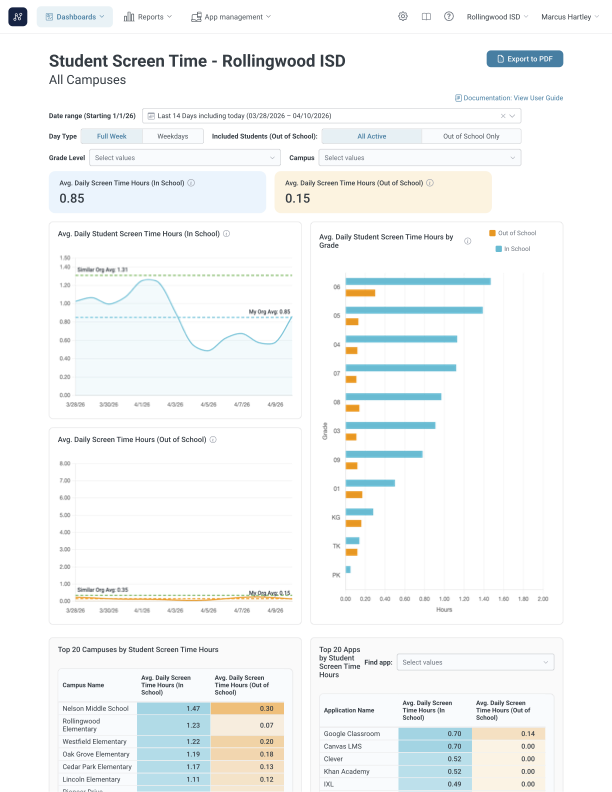
- Understanding actual usage patterns by grade and time of year
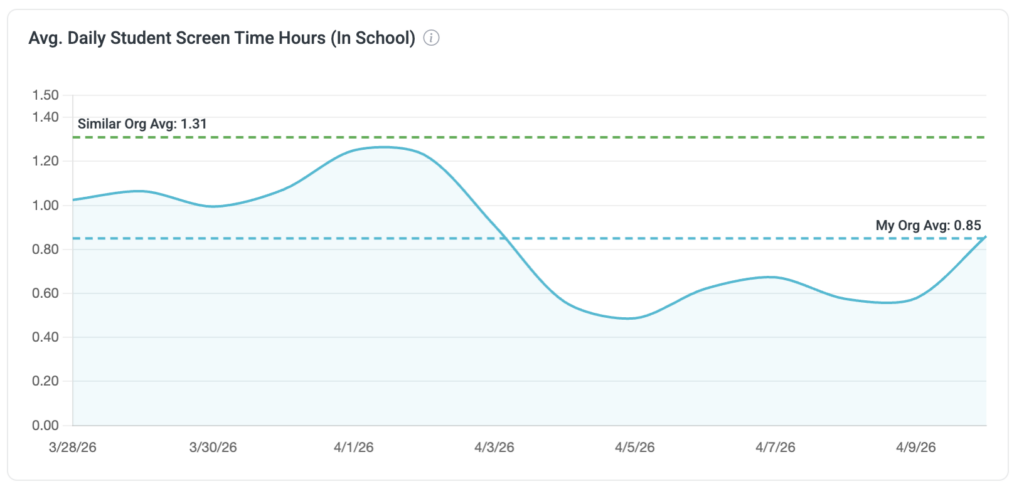
- Monitoring trends over time, not relying on one-time snapshots
- Using tools like filtering and classroom management to ensure time on device is focused, appropriate, and free from distraction or harmful content
Balance doesn’t happen by accident. It’s managed.
Start with Data, Not Guesswork
The first step is understanding your own environment.
Lightspeed is offering a free 14-day Screen Time Audit to help districts:
- Measure actual device usage and get their baseline screen time data
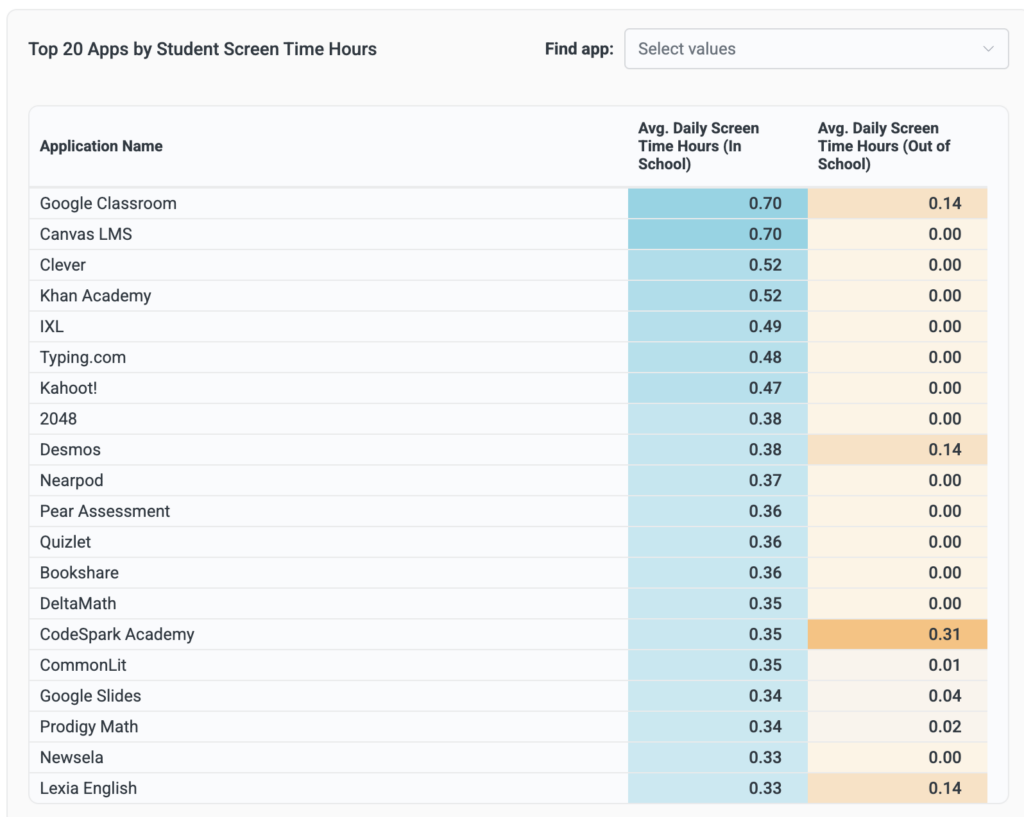
- Break down activity by grade, school, app and more
- Lead these conversations with data and real information about what’s happening in their schools
Get your data today to start productive conversations within your district, and with your boards and parents.
Final Thought
Screen time in schools isn’t a simple problem—and it doesn’t have a simple answer.
But one thing is clear:
The conversation is happening, whether districts are ready or not.
The districts that lead it well will be the ones who bring data, context, and a balanced approach—ensuring technology is used where it adds value, and managed where it doesn’t.
About the Author

The author of this guest blog is Amy Bennett, Chief of Staff for Lightspeed Systems, where she leads marketing and communications. With decades of experience in educational technology and more than 17 years at Lightspeed, she brings a practical, district-informed perspective to how schools use technology every day.
Amy is passionate about helping districts get the most from their investments—ensuring tools support both effective learning and appropriate, responsible use. She works closely with school and IT leaders to stay grounded in the realities they face, from budget constraints to growing expectations around visibility and compliance. Connect with her via LinkedIn and X.