
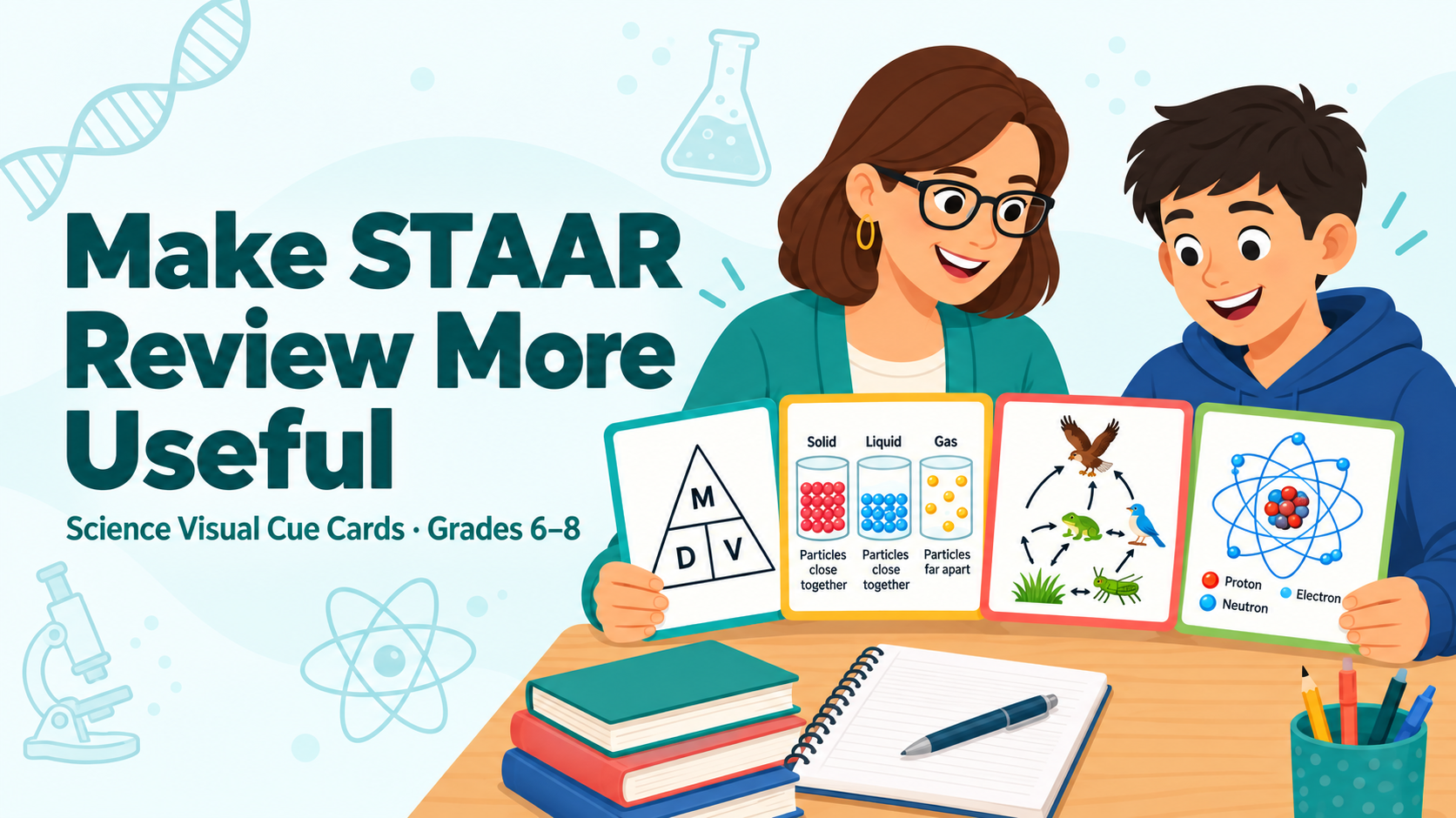
Welcome to a new series focused on teacher printables for classroom teachers. Ever wish you could just grab-n-go content that you could print and use tomorrow (or today)? Let’s take a look at this series of Science Visual Cue Cards. You will find middle school aids, as well as elementary aids.
Did You Know?
There are many visual cue documents available in addition to Science elementary and middle school. Those include math visual cue cards that are teacher printables. Explore Literature Circles teacher printables as well.
Science Visual Cue Cards To the Rescue
There is a big difference between giving students a page packed with facts and giving them a visual cue that helps them retrieve something they already learned. This new collection tries to address that gap.
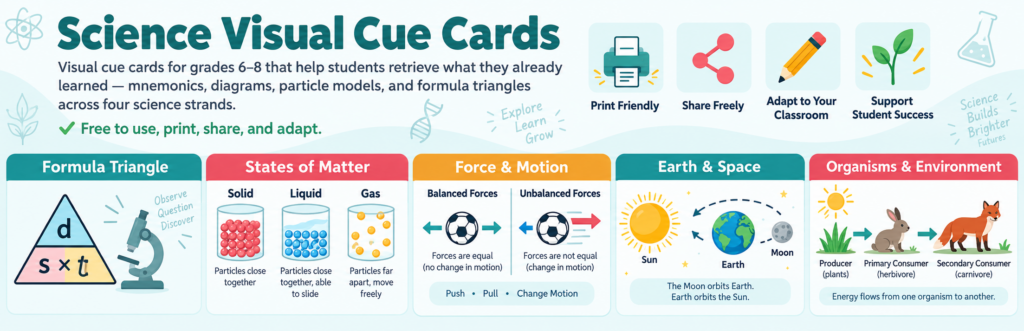
Filling the gap behind this new collection of Middle School Science Visual Cues for grades six through eight. The printables use mnemonics, diagrams, particle models, formula triangles, and other visual cues connected to science concepts students are expected to understand.
What’s more, you will find student activity packets for each of the 26 different aid cards.
One important note: these materials are classroom supports for teaching and learning. When used as formal testing accommodations, supplemental aids must meet current TEA requirements, be locally approved, and be routinely used by eligible students during instruction.
STAAR Testing Notice: These resources are designed primarily for classroom instruction, review, and intervention. Not every printable shown here is allowable during STAAR in its current form. Texas limits science supplemental aids used during state testing to specific formats, including unlabeled scientific graphics and qualifying formula triangles. Testing accommodations must be individually approved and routinely used by an eligible student. Consult current TEA guidance and your district testing coordinator before using any resource during a state assessment. You can find those here (or see the end of this blog entry for pictures, too).
Here are five ways to put the collection to work.
Update Note: Due to a comment request from Miriam Esparza, you will now also find elementary science visual cues at the end of the post.
1. Reinforce Matter and Energy
Students can revisit states of matter, particle motion, physical and chemical changes, evidence of chemical reactions, and conservation of mass. Colorful particle models make some fairly abstract ideas easier to see. And, you get activity packets with each.
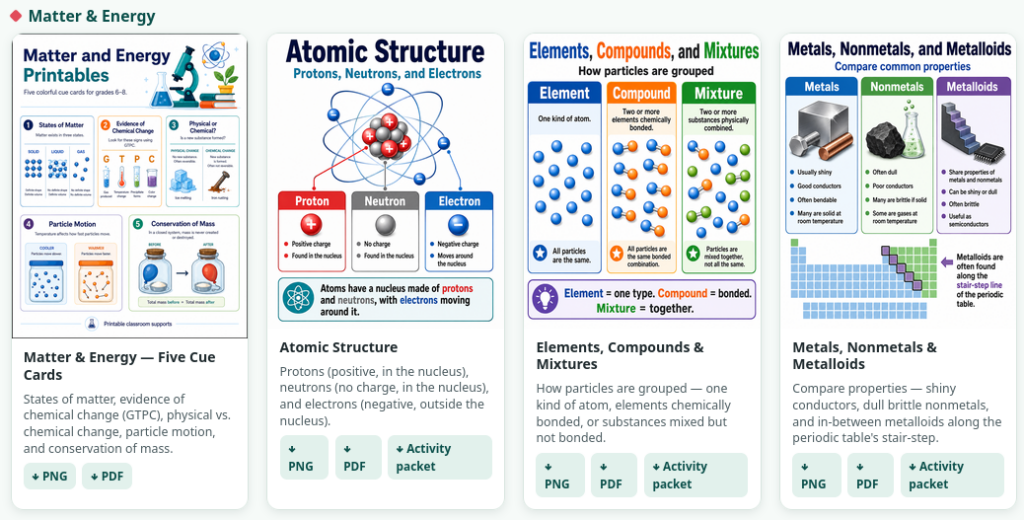
You will find the following:
- Atomic Structure
- Elements, Compounds, and Mixtures
- Metals, Nonmetals, and Metalloids
- States of Matters
- Physical Properties of Matter
- Chemical Formulas
- Chemical Changes
Each of these is a quick cue for this type of content.

2. Make Force and Motion More Visual
Formula triangles for average speed and force provide quick retrieval cues. Other printables focus on Newton’s laws, heat transfer, and wave properties. Note that student activity packets you can print and use right away are available with each cue card.
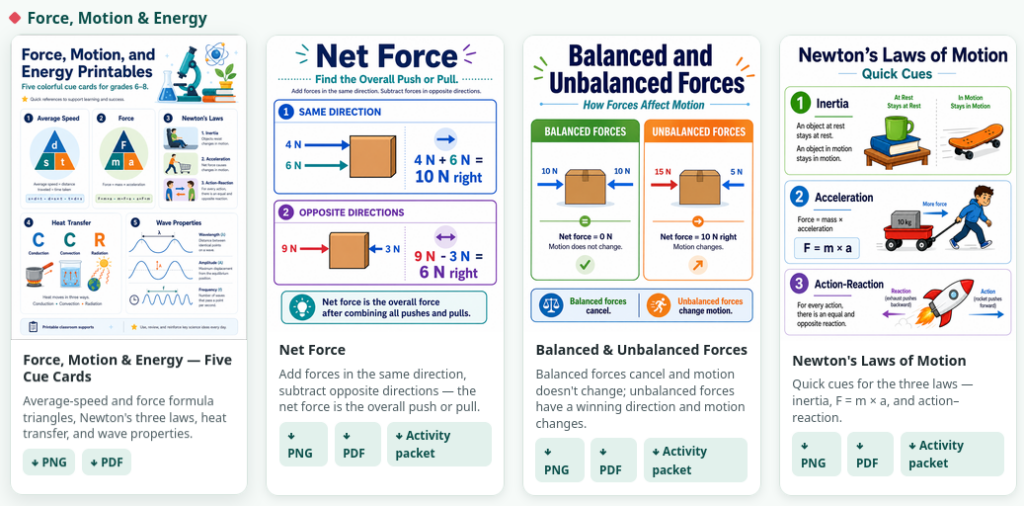
The goal is not to replace understanding. The visual should help students retrieve the relationship they already know.

3. Give Earth and Space a Picture
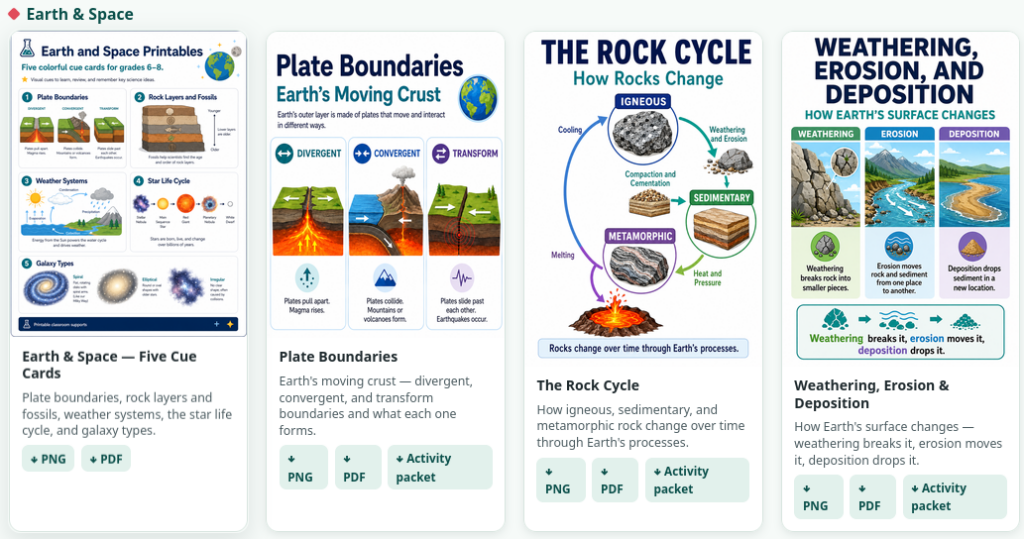
Plate boundaries, rock layers, weather systems, star life cycles, and galaxy types all benefit from diagrams. A student may forget a paragraph but remember what two colliding plates looked like. You can find some for the following:
- Plate boundaries
- Phases of the Moon
- Weather Systems and the Water Cycle

4. Connect Living Systems
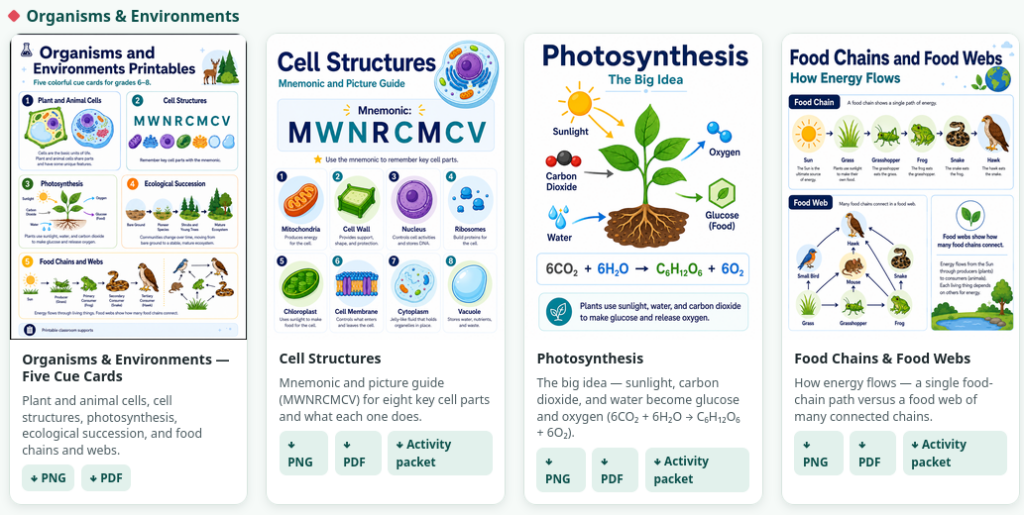
The Organisms and Environments collection includes cells, photosynthesis, ecological succession, food chains, and food webs. These work well during stations, intervention, or quick review. You can find them for:
- Cell structures
- Photosynthesis
- Food Chains and Food Webs
5. Build the Cue Before Test Day
The most useful visual is one students already recognize. Introduce a card during instruction. Use it again during retrieval practice, quizzes, and review. Let students explain what each visual means.
The goal is that when it’s time to assess, the printable is no longer new information. It is a familiar cue connected to learning they have already done.
But Wait, What About Formula Triangles?
You will also find a variety of formula triangles blended in, each with its own student activity packet, and available for printing as PDF. I don’t know about you, but this first one has to be the formula I have most often taken advantage of as an adult:
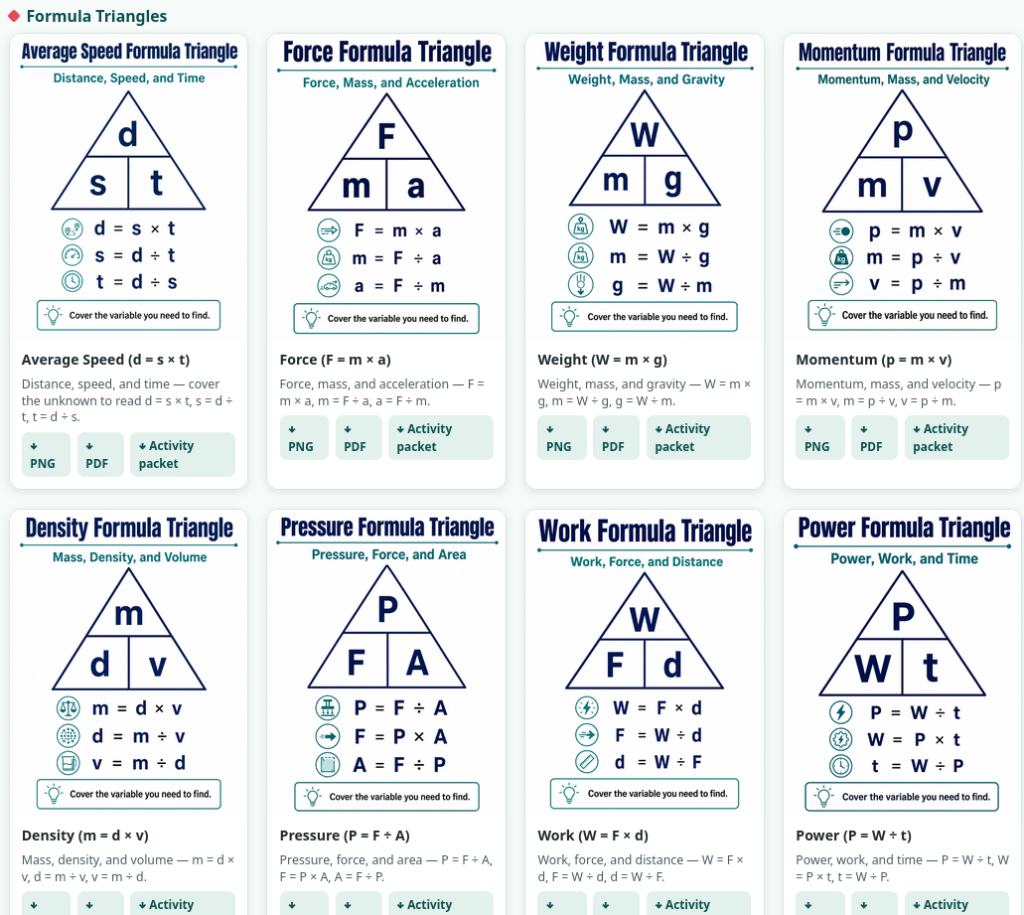
There are more online at the site, of course. Each student activity packet comes with activities, as well as an ACE It activity. You also get a teacher key.
Visual Cues for Elementary Science
Thanks to a request in the comments, visual cues for elementary learners are now available (activity packets are under development).
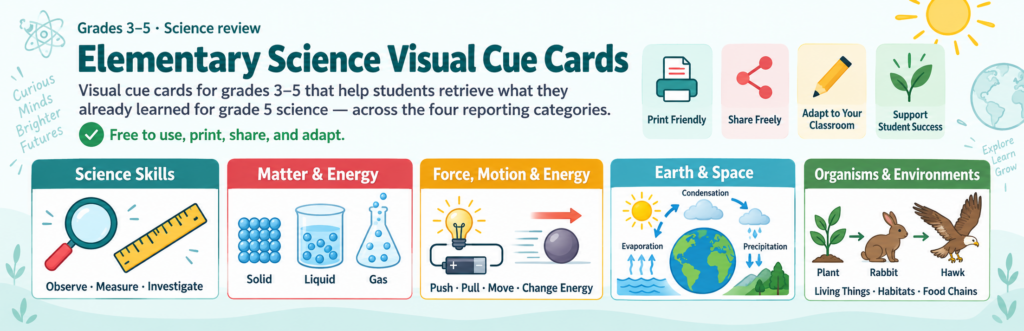
You will find the following:
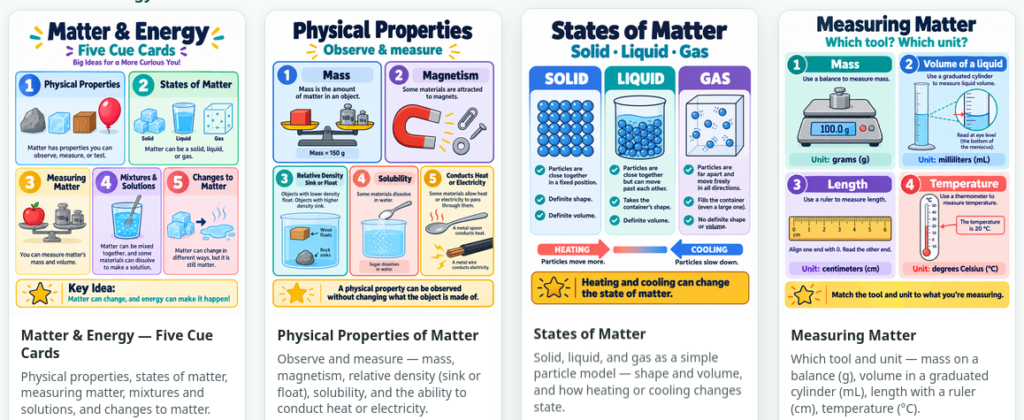
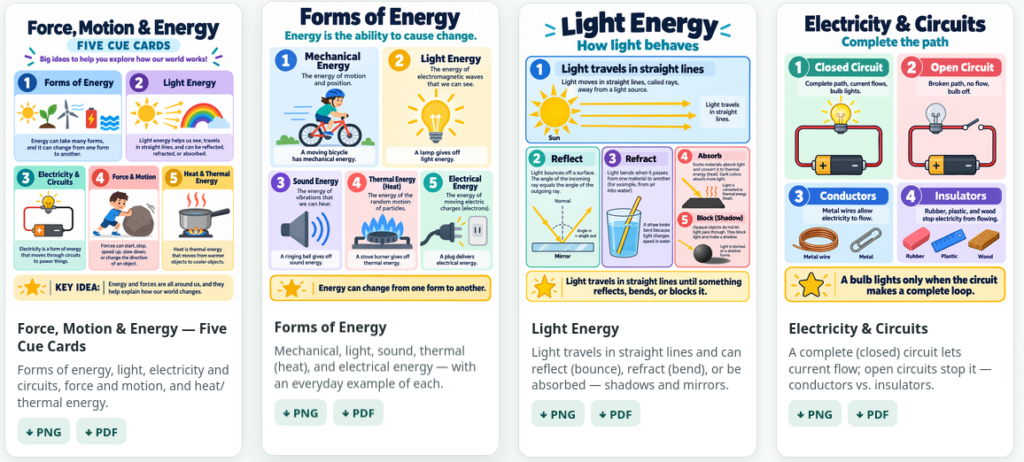
There are also many more you may find of interest.
STAAR Supplemental Aid Candidate Library for Science
Explore Supplemental Aid Candidate Library gives Texas educators practical, classroom-ready supports students can use to make challenging content easier to understand.
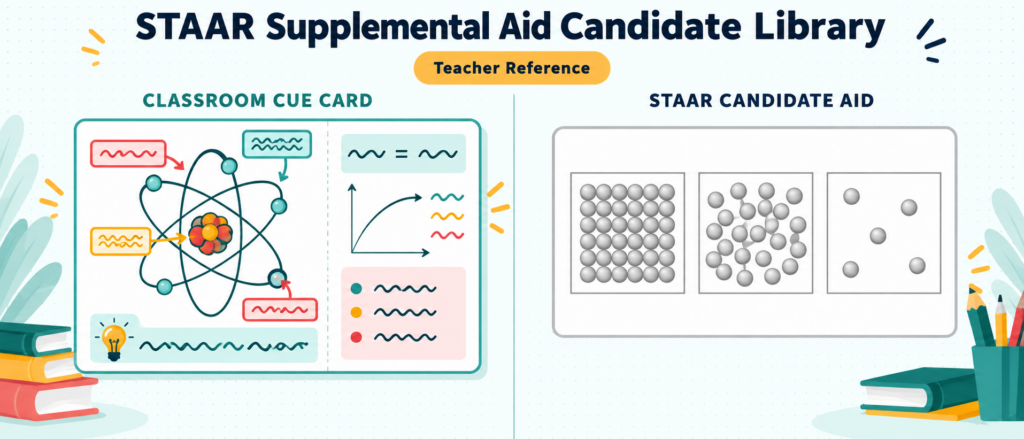
The collection is designed as a quick-reference resource, with clear visuals and organizers that help students recall key concepts, processes, vocabulary, and relationships without replacing instruction. Teachers can use the guides during daily lessons, intervention, review, or assessment preparation, making them especially useful for students who benefit from structured visual supports.
Access it here. You will find both math and science available.
👤 Human-directed (Miguel Guhlin) · 🤖 Gen AI-assisted (Claude, ChatGPT)

7 comments
Are there versions of these for elementary students that meet the guidelines for STAAR testing?
Miriam, elementary science has now been added.
-Miguel
Do you have printables for middle school math?
@Kitty Check this blog entry for math sustainable aids:
https://blog.tcea.org/teacher-printables-make-staar-review-more-useful-with-math-supplemental-aids/
🙂
THANK YOU!!
These supplemental aids do not meet STAAR Guidelines – do you have any that do? Thank you!
Mai, thank you for catching this. You’re correct: the original visual cue cards were created for classroom instruction, intervention, and STAAR review, but many do not meet the more restrictive TEA requirements for supplemental aids used during the actual assessment.
I’ve updated the resources and website to make that distinction much clearer. I’m also offering a collection (see updated blog entry above) of separate test-use versions that follow current TEA supplemental-aid guidelines. Even then, use during STAAR would depend on the individual student’s eligibility, routine use, documentation, and local approval.
With appreciation for your comment,
Miguel Guhlin