In the pursuit of digital equity, the Broadband Equity, Access, and Deployment (BEAD) Program, under the umbrella of the federal $42.5 billion Infrastructure Investment and Jobs Act (IIJA), has earmarked a new historic allocation of $3.3 billion for broadband expansion in Texas. This allocation represents a pivotal investment aimed at enhancing access to reliable, high-speed internet and closing the digital divide across the state.
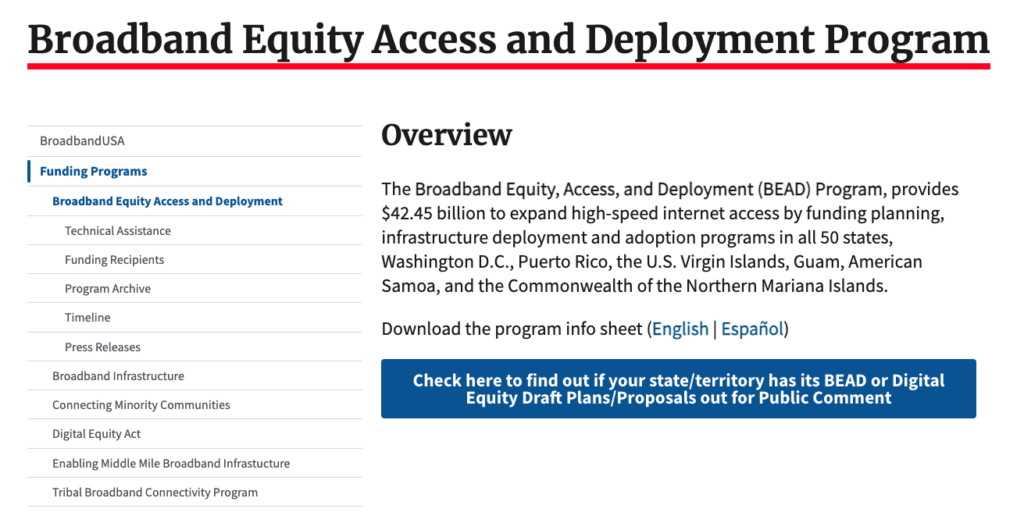
While we acknowledge this unprecedented funding, it is important to recognize that Texas, despite having the highest federal funding allocation, also has one of the largest number of unserved addresses in the nation, highlighting the scale of the task at hand.
How You Can Help
Public feedback is a pivotal component of this planning process. As leading professionals in the field of education and technology, your insights and perspectives are invaluable to this process. By contributing to the discourse, you can help to shape a robust and effective strategy that optimizes the allocated funding and addresses the broadband needs of the state – specifically for our schools and their students.
You can contribute to an improved understanding of the challenges Texas households are facing in accessing affordable and reliable internet service by participating in the Texas Digital Opportunity Public Survey. This information will directly inform the Texas Digital Opportunity Plan.
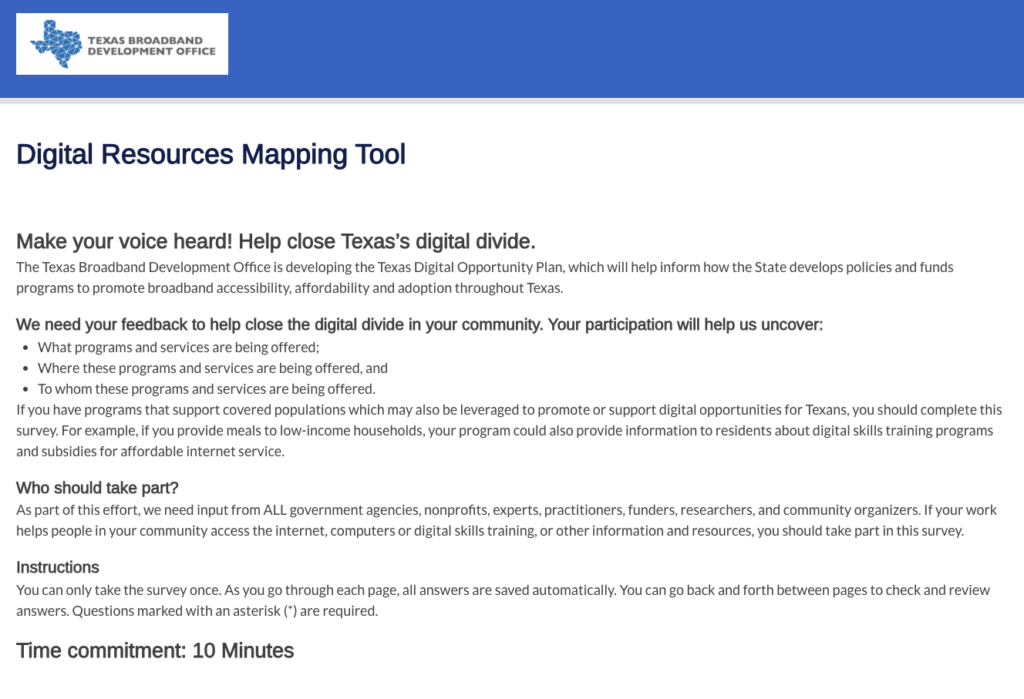
Take 10-15 Minutes to Complete an Anonymous Survey
The deadline for the survey is August 31 and TCEA encourages each one of you to take the 10-15 minutes to complete the survey and to share it with your networks. The survey, which is anonymous and available in English, Spanish, Mandarin, and Vietnamese, is designed to identify barriers to internet access, affordability, and adoption.
Why Does It Matter?
As a member of TCEA, your participation is vital to ensuring a comprehensive and representative digital strategy for Texas education. With your assistance, we can help to bridge the digital divide and ensure that the forthcoming expansion of broadband services benefits all Texas educators and students.
TCEA thanks you for your participation and contributions to this crucial endeavor.


 something because of their interests. This helps me see how students are using technology when they are looking for specific information or want to learn a skill. Only 9% of both middle and high school students post a question on a discussion board or a forum. Do we need to be more intentional in using this type of application? Do they just not know how, or have they found better ways to seek answers to their questions?
  I also discovered that 43% of my teachers are facilitating student collaboration projects using online tools. This is such a great skill. How can I leverage these teachers to help other teachers do this as well? Also, I’m pleasantly surprised that 44% of my teachers are using an online curriculum. However, I want to know more. What is the frequency? Are they occasionally doing this or is this something they use every day? I also want to know what they are using. Are they using the district’s Learning Management System, or is it an online textbook?
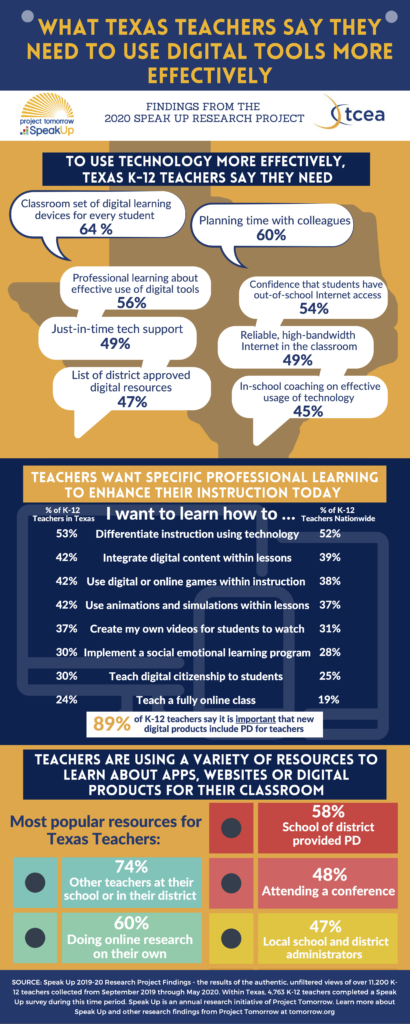
  integrate digital content, tools, and resources into their daily instruction. 51% said they wished they had a classroom set of digital devices. 49% said they needed to know that their students had adequate broadband access outside of school and 46% indicated they were concerned that they didn’t have consistent, reliable internet access within school. Maybe I need to have my staff do some focus groups related to internet access and speed. Looking at my network resources, they should have adequate bandwidth, but maybe something is happening on campus that I am not aware of. While my team is on campus, I probably should also have them ask teachers about the availability of technical support since 47% of the teachers indicated it was lacking. And lastly, my teachers still need time to plan with their colleagues (60%) and additional professional development (50%). I need more staff to be able to meet this need!

 .
. 


 prepared to be tomorrow’s innovators, leaders, and engaged citizens of the world.” The
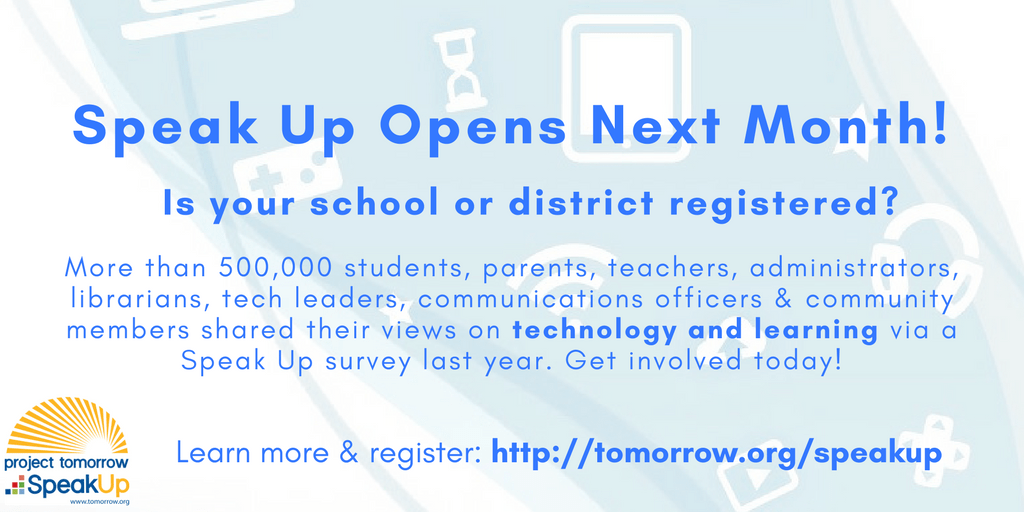
  You have complete flexibility with the implementation of the survey. If this is your first time, you could start small by targeting one school or one grade level. You could decide to only survey students and staff this year and add parents and community members the following year. Just remember, the more data collected, the more information you will have for your strategic planning. This brings us to the best part. After the data is collected, Project Tomorrow analyzes it and provides you with your own data in an extremely easy format to read and manipulate. They even have a PowerPoint template that you can use to easily import your district’s data.


 emails, lesson plans, a list of the survey questions, and press releases. They have made it super simple to get started. As an incentive, if your district participates in the SpeakUp Survey, it will be eligible to win one free