At the start of a new school year, I want to pause and thank school librarians.
TCEA recently wrapped up access to our fifth online Librarian Conference, where attendees explored practical strategies, innovative tools, and forward-thinking practices. I had the chance to listen to fantastic librarians share what they are doing and offer resources and support to fellow librarians. Thank you to everyone who attended and to librarians across Texas, the country, and around the world who continue showing up for students, teachers, and their school communities.
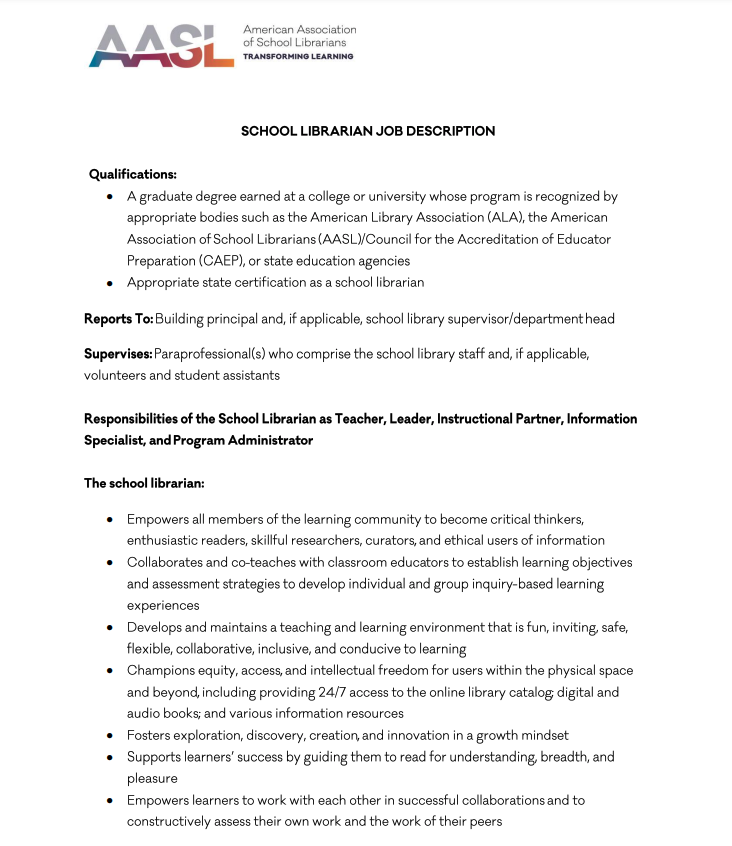
What Do School Librarians Really Do?
To explore what librarians do beyond the circulation desk, I turned to Shirley Dickey, high school librarian at Clear Lake High School. Her presentation, “Advocating for Yourself and Your School Library,” offered practical advice for helping others understand the value of a school library.
Her message was clear. Librarians listen to their communities, build relationships, advocate for their programs, collaborate with others, and give people a reason to walk through the library doors.
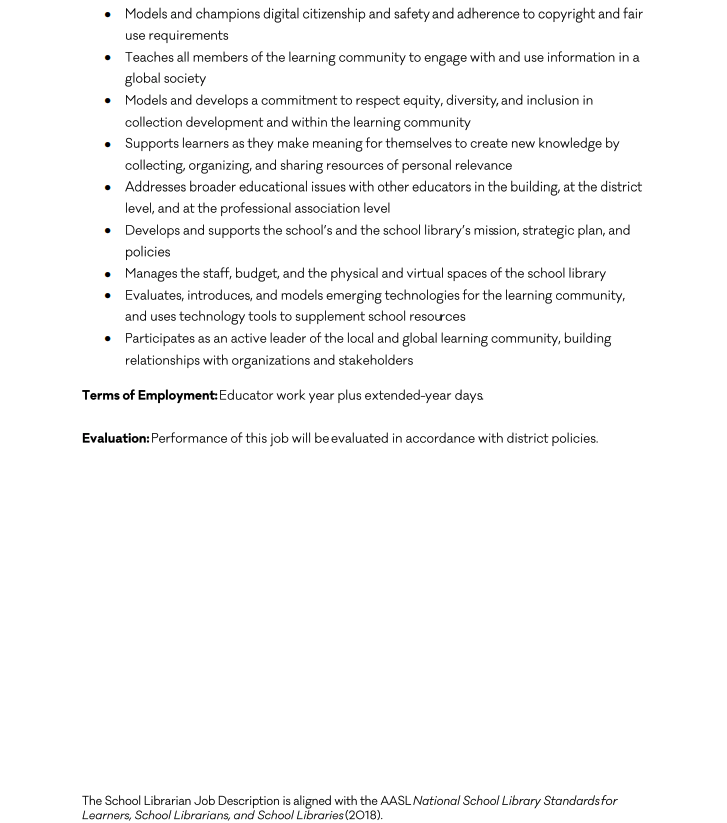
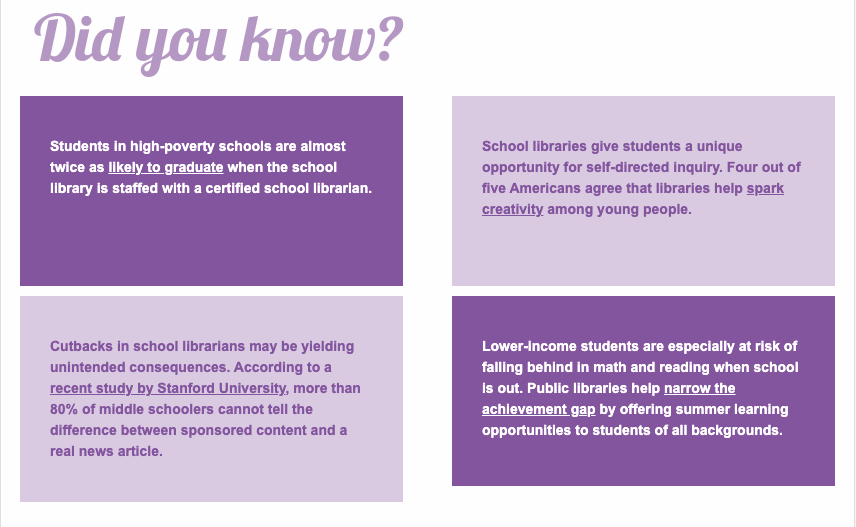
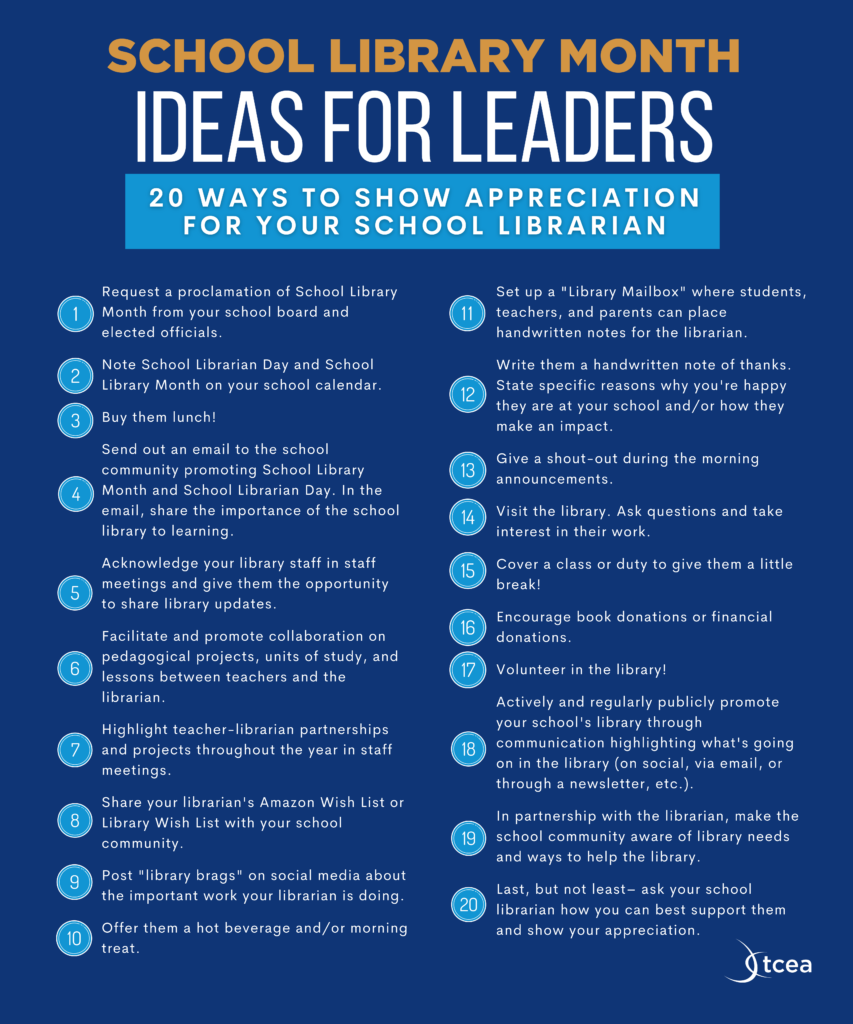
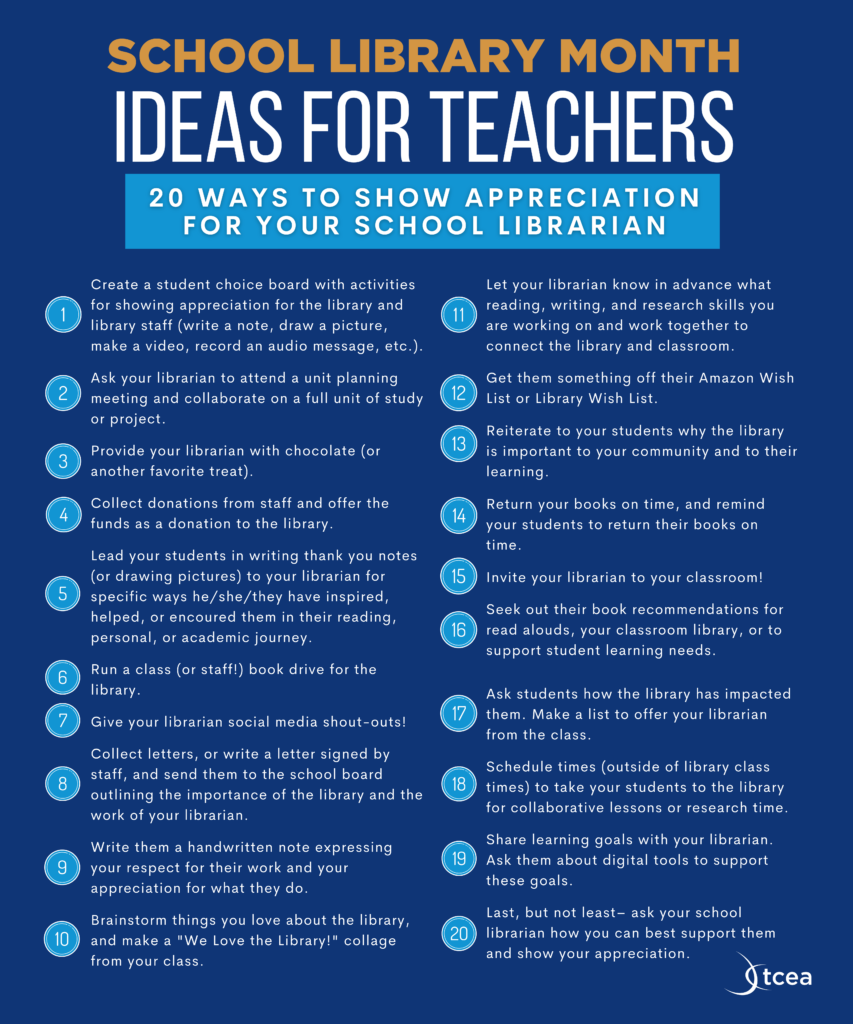
I turned Shirley’s advice into a LIBRARIAN acrostic infographic highlighting just a few of the many roles librarians take on each day.
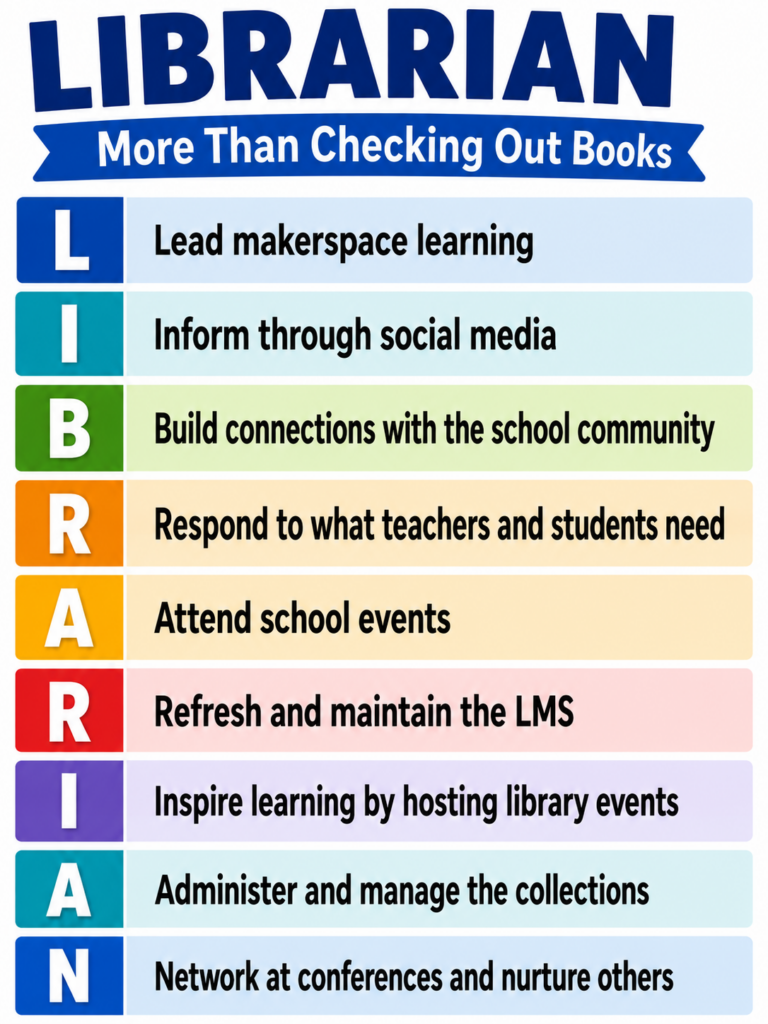
Of course, nine letters cannot cover everything. Librarians are resource finders, technology helpers, program planners, collaborators, and problem-solvers. They create spaces where students can read, build, research, explore, ask questions, and sometimes simply take a breath.
A Personal Thank-You to Librarians
To school librarians everywhere, thank you for keeping the books moving, the programs growing, the technology working, and the library doors open.
You find the perfect book for the student who insists they do not like reading.
You help a teacher track down a resource five minutes before class begins.
And somehow, you still make time for clubs, research projects, technology questions, and all the unexpected requests that land at the circulation desk.
Your work matters, even when much of it happens quietly behind the scenes. To support the work you do, I have gathered six resources I have created for the past two TCEA online LibCons (plus a couple of other events) that you are welcome to use in your library with fellow librarians and students.
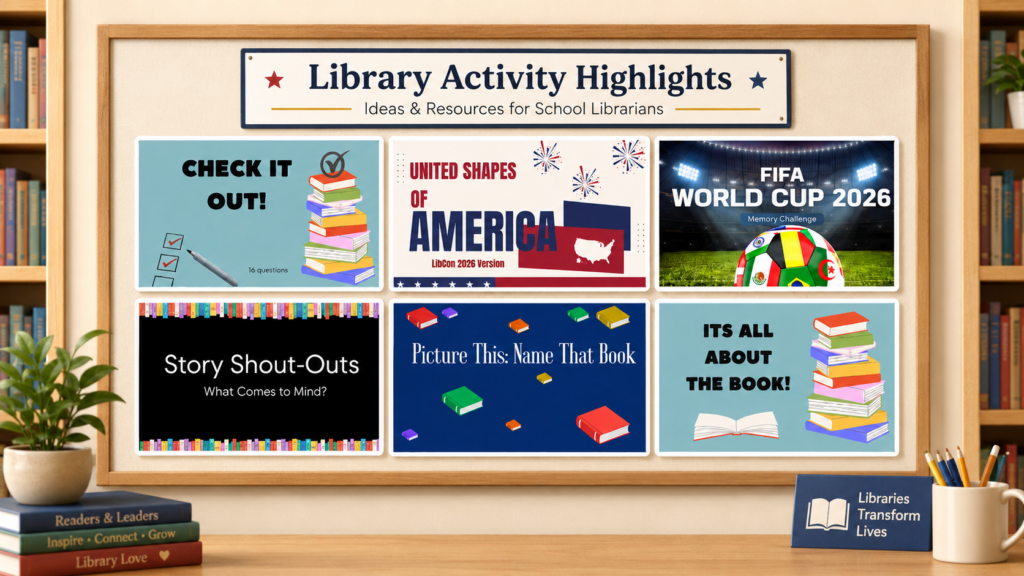
📘 Check it Out!
This library-themed phrase game puts the word check in the spotlight! Each clue leads to a phrase or saying that includes the word check. For example:
- Classic red-and-black Board game with jumping = checkers
- A tool that finds mistakes in writing = spellcheck
📘 It’s All About the Book
Another library-themed phrase game. Each clue leads to a word or a phrase that includes the word book. For example:
- A person who loves to read = bookworm
- Do not form an opinion based only on appearance = don’t judge a book by its cover
📘 United Shapes of America
Participants look at each clue and identify the U.S. state being described. Each clue highlights something distinctive about the state’s shape. Students are welcome to use a map for a little geographic backup along the way.
📘 FIFA World Cup 2026 Memory Challenge
The 14-question 2026 World Cup Memory Challenge trivia game tests the knowledge of tournament history, host cities, and fan traditions. Project it on a screen in your library and see what happens.
📘 Story Shout-Outs
Students are given a word and challenged to name a book title that comes to mind. They can work solo, in pairs, or as teams to see who can think of the most titles. This activity is a quick way to spark book conversations, activate prior knowledge, and introduce students to new reading choices.
📘 Picture This: Name That Book
Participants look at a set of image clues and try to figure out the book title they represent. Each puzzle uses pictures placed inside letters to give visual hints, and one uses those clues to make their best guess. I have organized the activity into elementary, middle school, and high school book titles so it can work with different age groups.
Whether you use one resource for a quick library program or save the whole collection for later, I hope something here earns a spot in your librarian toolbox. And to the librarians keeping students curious, teachers supported, and libraries buzzing, a BIG thank you.
Peggy