
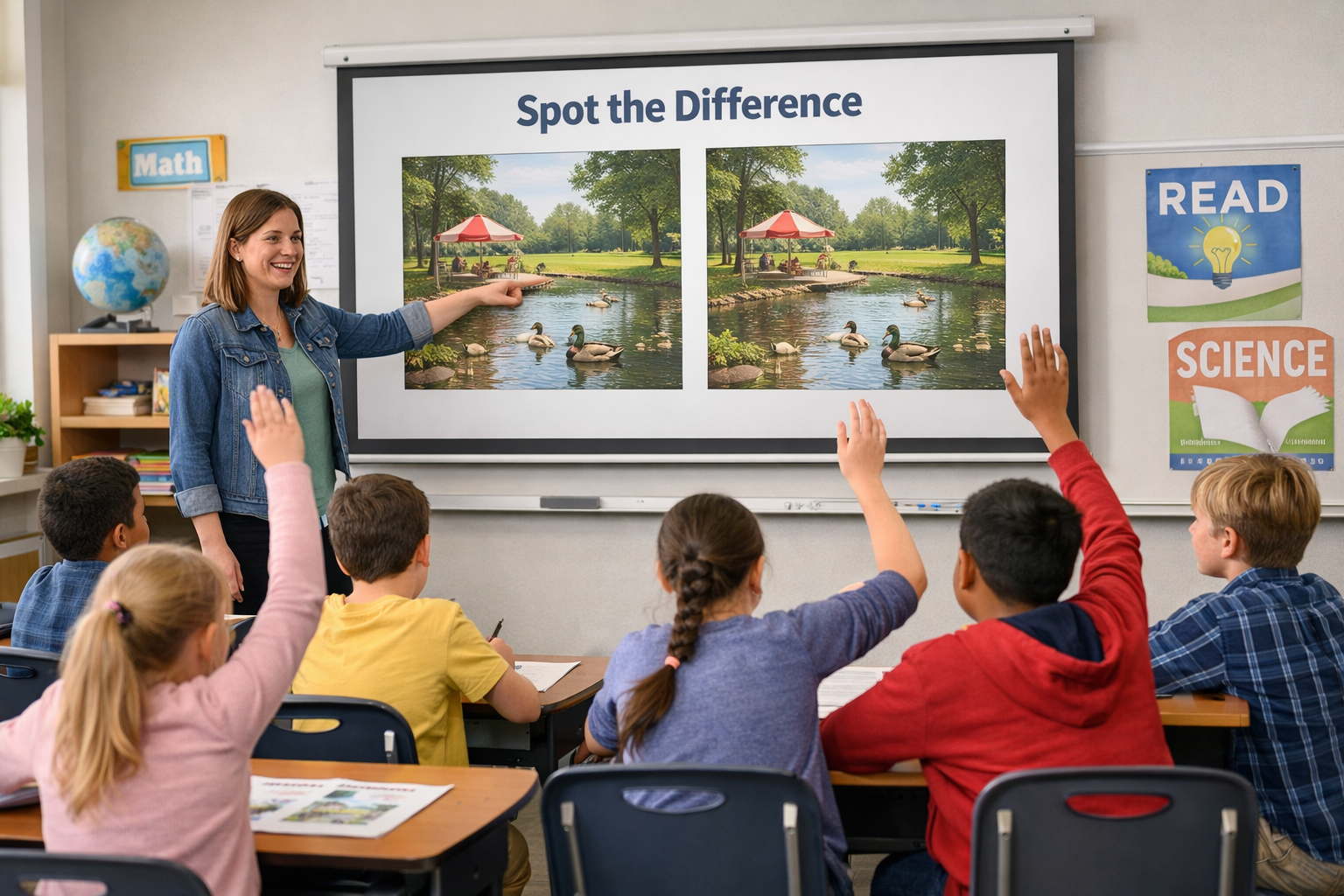
If you’re looking for a quick, engaging way to get students thinking, talking, and paying attention to details, try using a classic Spot the Difference activity.
At first glance, it feels like a simple puzzle. Students compare two nearly identical images and try to find what has changed. But with a little intention, this activity becomes a powerful instructional tool that builds skills students need across all content areas.
What Is Spot the Difference?
Spot the Difference is a visual puzzle where students must identify small changes between two similar images. Students are typically challenged to find a set number of differences in each image. Some puzzles can be more difficult to solve as opposed to others.
Why This Works in the Classroom
Spot the Difference activities naturally develop:
- Attention to detail
- Visual perception
- Focus and persistence
- Comparing and contrasting
- Evidence-based thinking
These are the same skills students use when analyzing texts, solving math problems, or evaluating sources Even better, students can participate regardless of reading level, making it a great entry point for all learners.
Simple Ways to Use It with Students
1. Bell Ringer or Warm-Up
Project an image as students enter the room.
Ask:
- “What do you notice?”
- “What’s different?”
- “Which difference was hardest to find?”
Bell ringers gets students thinking immediately without needing directions.
2. Turn and Talk
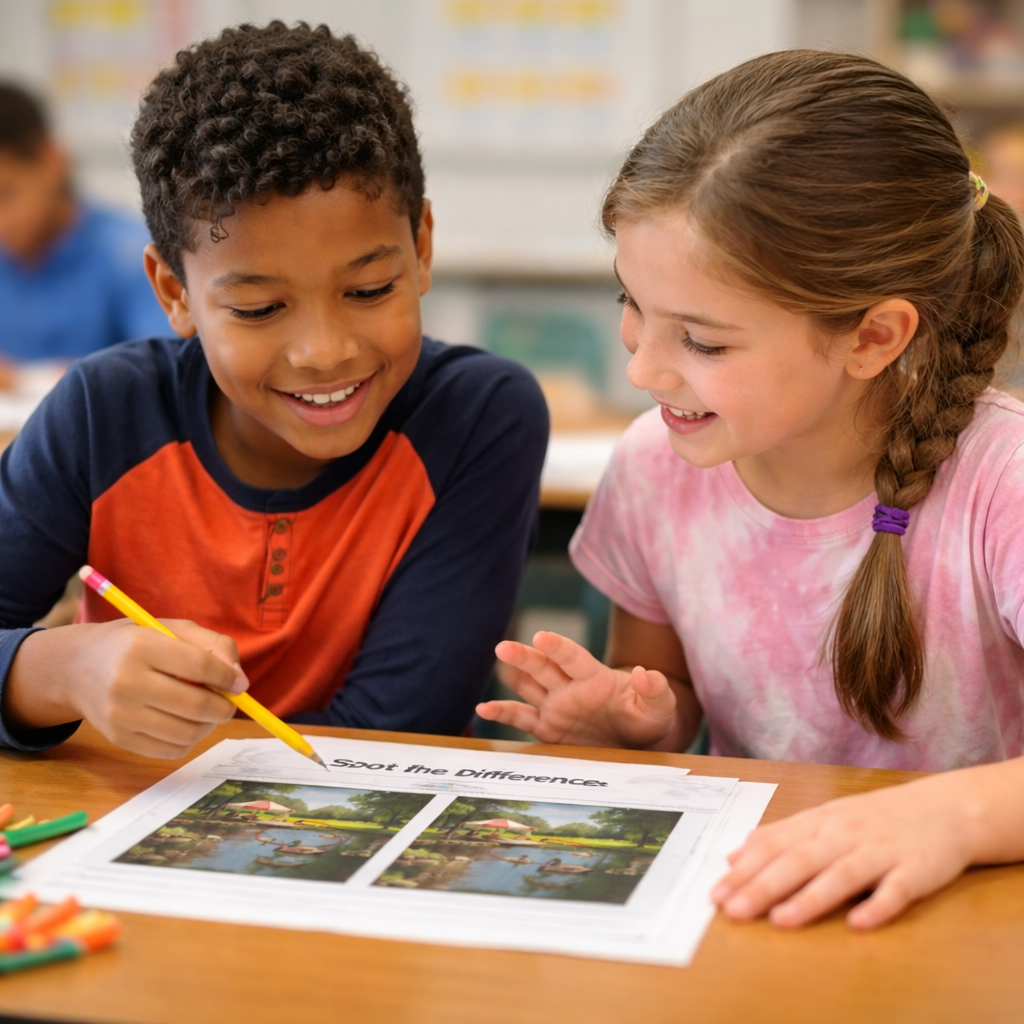
Have students work in pairs:
- One student identifies a difference
- The partner confirms and explains
- Switch roles
This builds academic conversation and encourages students to justify their thinking.
3. Connect It to Your Content
You can easily tie this strategy into your subject area:
- Science: Observing changes in experiments
- Math: Finding errors or differences in problem-solving steps
- ELA: Comparing two passages or perspectives
- Social Studies: Analyzing historical images over time
You’re teaching students how to look closely, which is a skill they need everywhere.
4. Writing Extension
After the activity, ask students to:
- Describe one difference in a complete sentence
- Explain how they found it
- Use specific vocabulary (position, color, shape, size)
This turns a visual task into a literacy opportunity.
5. Quick Formative Assessment
Use it to gauge understanding:
- Who found all the differences?
- Who found some?
- Who struggled?
You’ll quickly see who may need support with focus or observation skills.
Take It a Step Further
Want to increase the rigor?
- Add a time challenge
- Require evidence-based explanations
- Have students create their own puzzles
- Turn it into a team competition
Student-created versions are especially powerful because they require deeper thinking and planning.
Resources
Free Printable Resources
- Just Family Fun – Large collection of printable puzzles
- PJs and Paint – Themed printables
- PrintItFree – Doubles as coloring pages
Simple Online Games
- SpotDifferent.com – A new puzzle is available every day
- MyHomeSchoolMath – Simple and timed
- ESL Kids Games – vocabulary-based spot-the-difference
- NeoK12 – Ask for a clue if you get stuck
Create-Your-Own
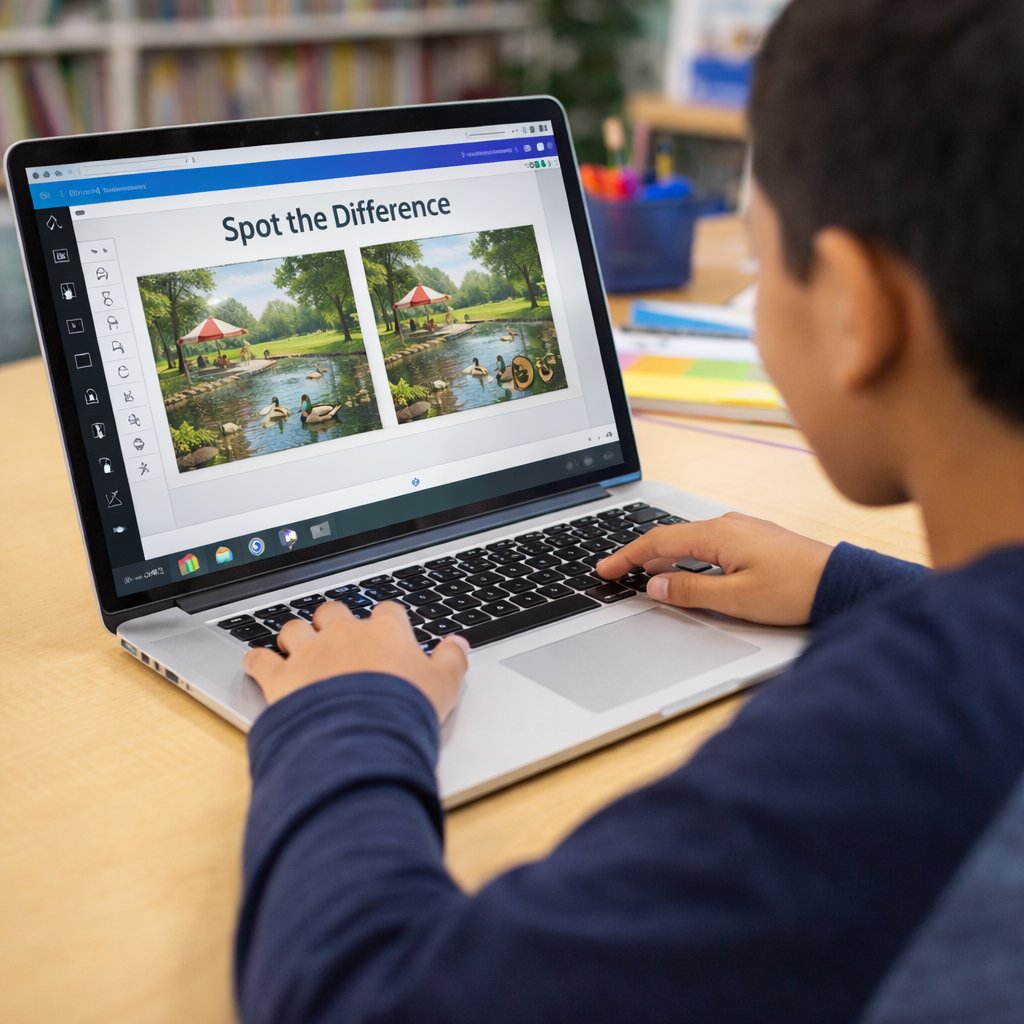
Instead of relying on external sites, create your own images. You could use Canva, Google Slides, or even ask an AI chatbot to generate two similar images with 5 or 10 differences. Check out these Canva templates.
By creating your own, you can avoid copyright concerns and make the images customizable so that it aligns to your lesson content.

Try It
Sometimes the most effective strategies are the simplest ones. Spot the Difference activities are easy to implement, highly engaging, and packed with instructional value. With just a small shift in how you use them, they can move from a fun puzzle to a meaningful learning experience.
