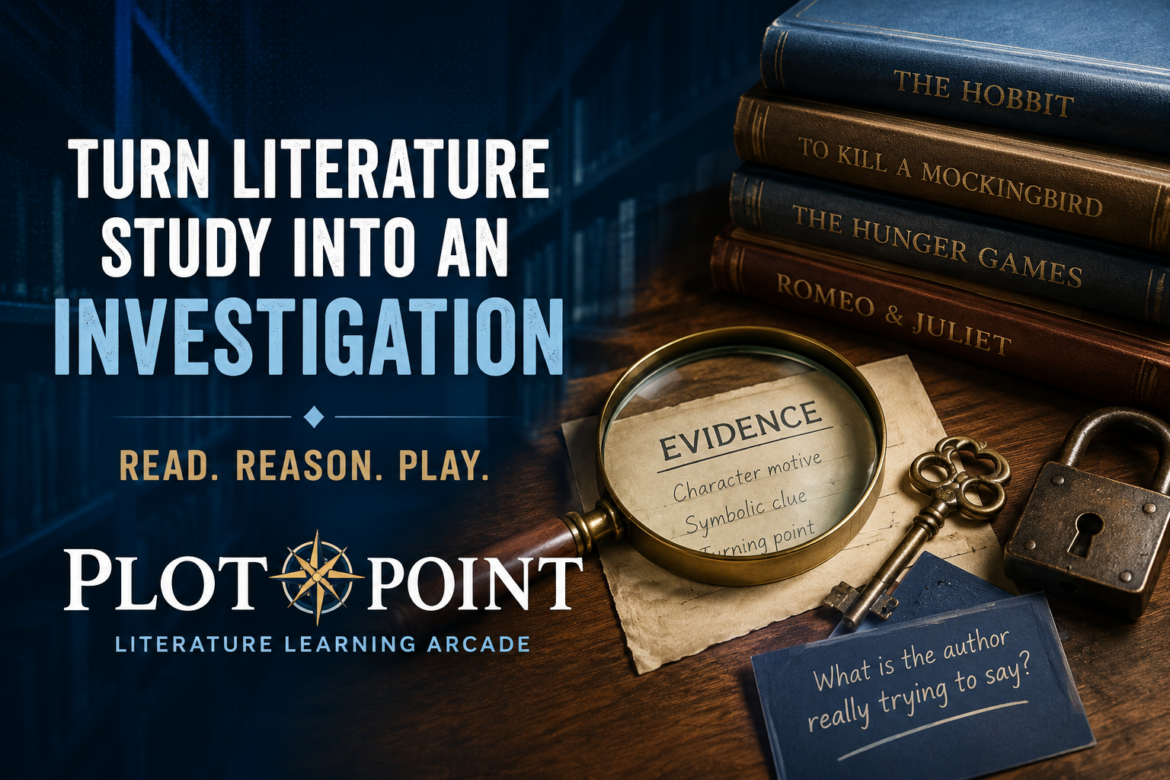
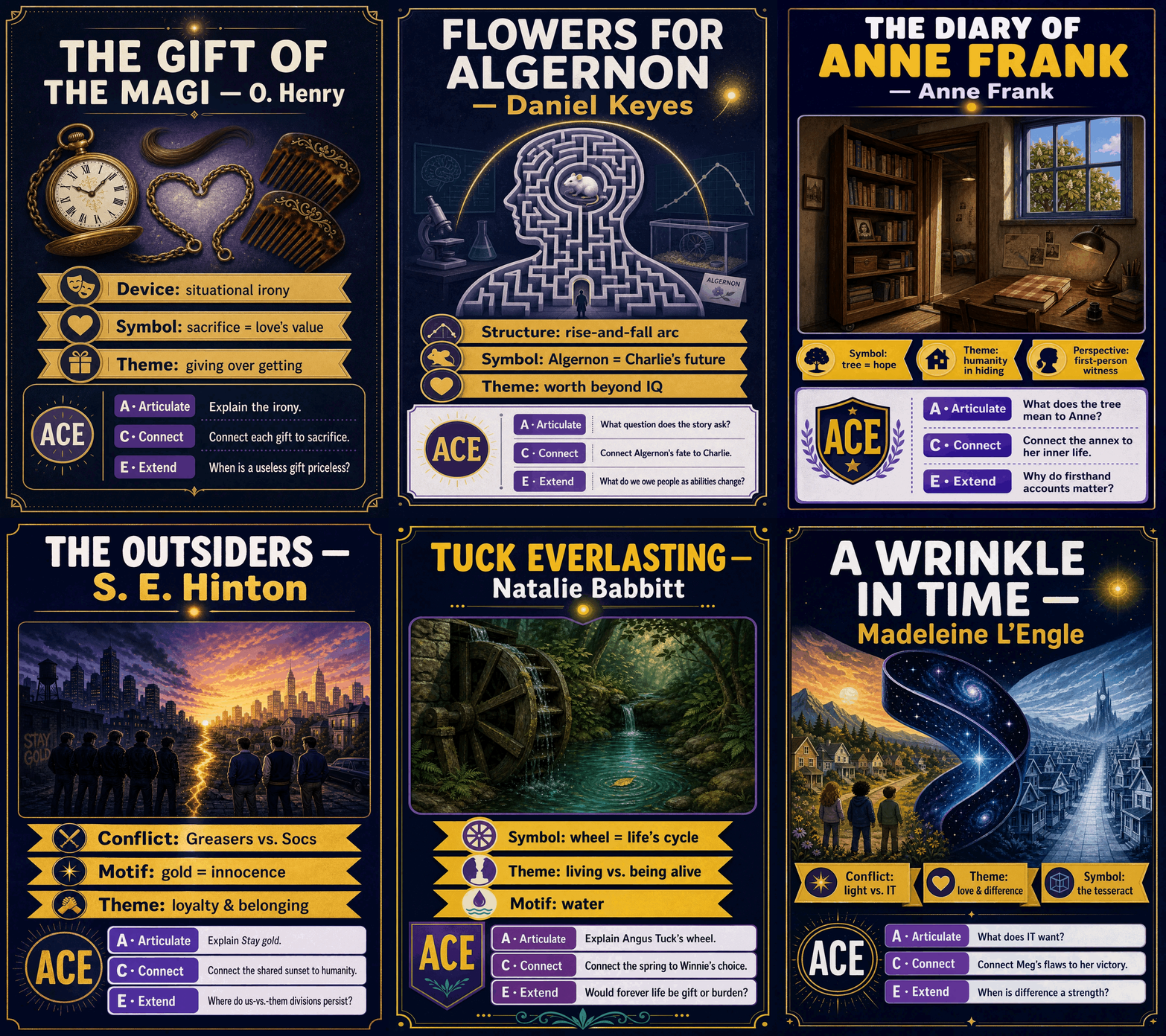
Looking for a way to engage students with literature? Consider PlotPoint, a literature learning arcade featuring 100 titles. The goal of PlotPoint is to turn reading into an investigation. It offers interactive learning opportunities for students and stories appropriate for grades six through twelve. Students examine artifacts, solve evidence-based breakouts, play short literary games, and explain the thinking behind their choices. What’s more, you also get 35 classroom poster images for popular texts in grades 6-12, Texas classrooms (not all posters reflect titles explored in PlotPoint, however).
I like activities that make students return to the text without making the return trip feel like punishment. PlotPoint does that by wrapping close reading and reasoning inside a room built around a specific book. In addition to classical tales, I’ve also incorporated a few short stories from my days in school, like The Lady, or the Tiger?
A Quick Reminder: Allow me to point out that these reading rooms are available in SEVEN different languages, including English, Spanish, Vietnamese, Chinese, Arabic, Hindi, and Urdu. Finally, efforts have been made to make it A11Y friendly. PlotPoint is built to widen access for emergent bilingual students, supporting all four ELPS language domains.
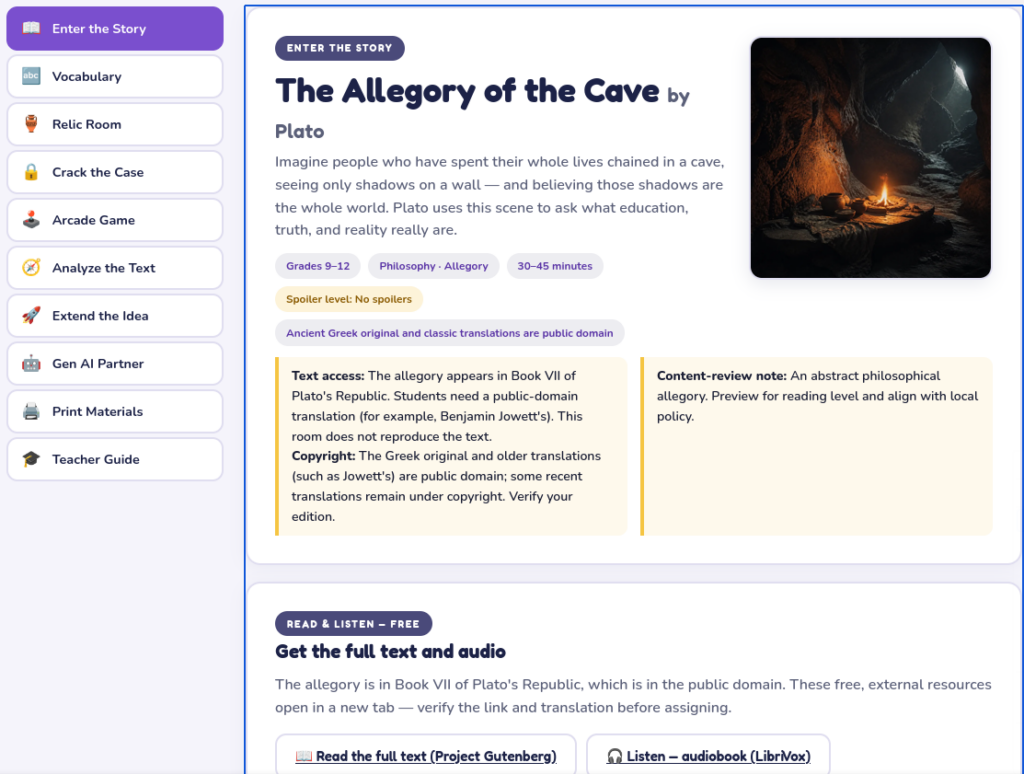
For example, most texts are linked to Project Gutenberg full text, as well as either or both the LibriVox or Project Gutenberg Audiobooks version.
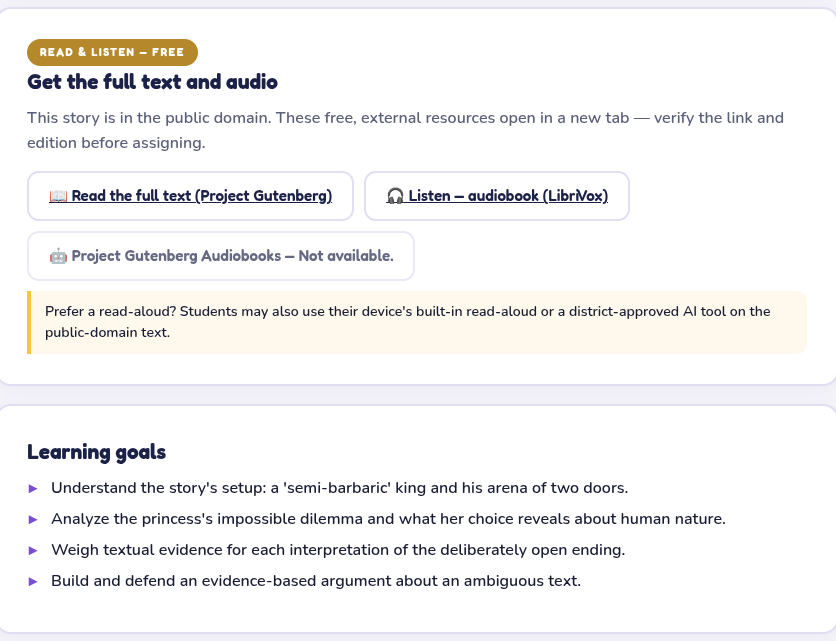
What’s more, each comes with a series of activities.
Become a CyberSmart Educator with a practical, self-paced course designed to help you protect sensitive data, secure accounts and devices, recognize social engineering attacks, respond appropriately to cybersecurity incidents, and build stronger digital safety habits. Or, learn AI Essentials for Educators. Each course is $49 at full price or $34 at the discounted rate. Register online through TCEA Courses.
Read, Reason, and Play
Each title room is designed around three simple actions: read, reason, and play. Students may need to study a clue, connect details, test an interpretation, or use evidence to open a lock. The game elements add a reason to keep looking, but guessing alone will not carry the day.
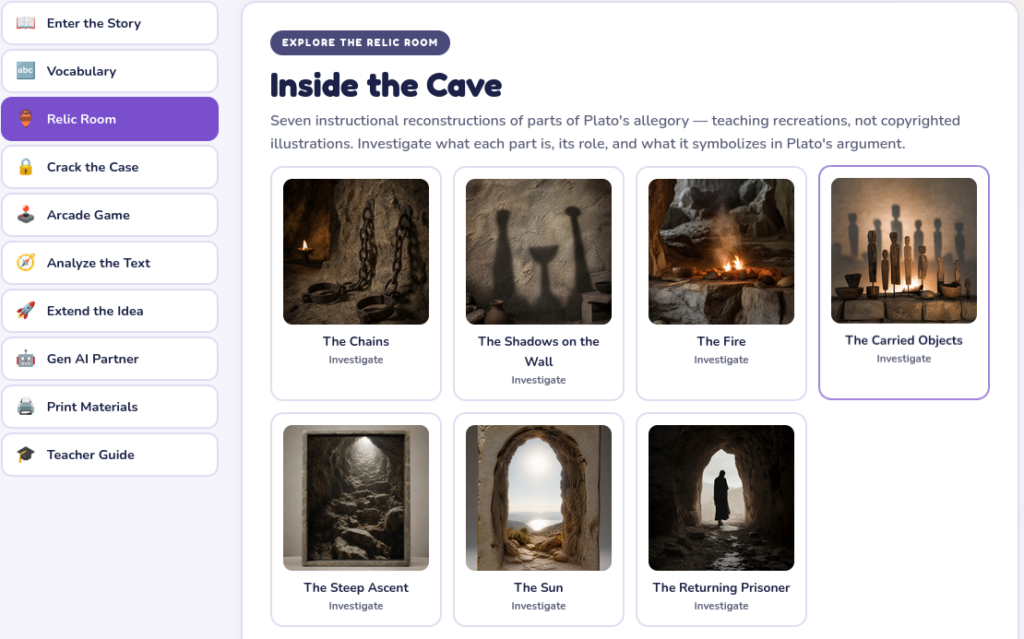
These elements assist students who may remember a plot point, but miss the larger pattern. PlotPoint asks them to slow down, notice what matters. Then, students explain why their answer makes sense.
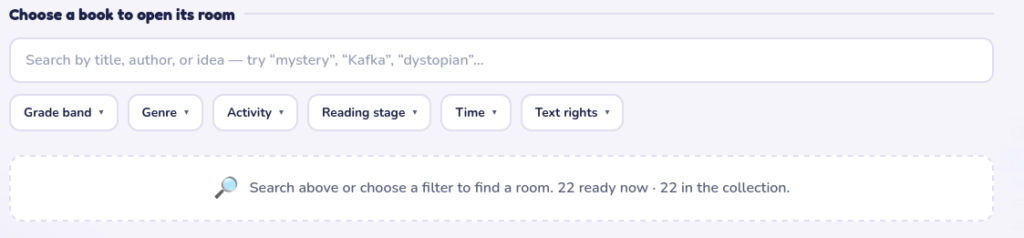
The collection currently lists 100 title rooms and there are more on the way. Teachers can search by title, author, or idea, which should make the growing library easier to navigate. Every effort has been made to address Texas’ specific texts, as well.
Make Student Thinking Visible
PlotPoint also includes a teaching companion built around the ACE Framework:
- Articulate the idea in your own words
- Connect it to evidence and prior knowledge
- Extend it into a new question, situation, or interpretation
That sequence moves students from recalling pieces of a story toward building and applying an interpretation. It also gives teachers a practical check on student understanding, especially when Gen AI may have helped with part of the work.
Optional Gen AI use is built around accountability rather than answer production. Students think first, then use the tool where appropriate, and remain responsible for explaining their reasoning. PlotPoint does NOT employ ANY Gen AI tools whatsoever.
Open a Room
PlotPoint works in the browser, requires no login or account, collects no student data, and supports seven languages. That makes it easier to use for a class activity, small-group station, extension task, or literature review.
Visit PlotPoint and open the first title room with your students.
Classics Reading Room
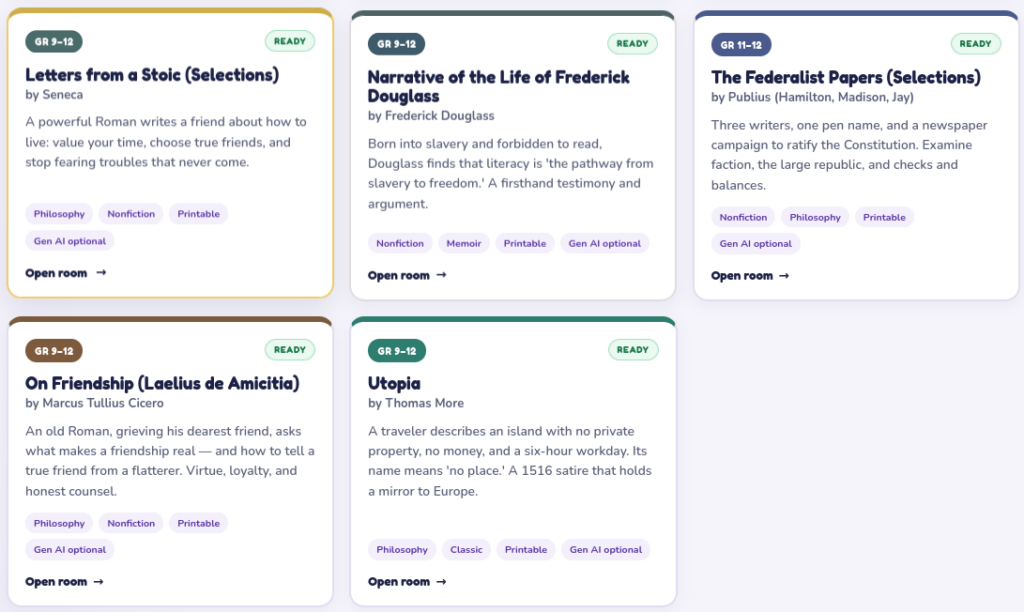
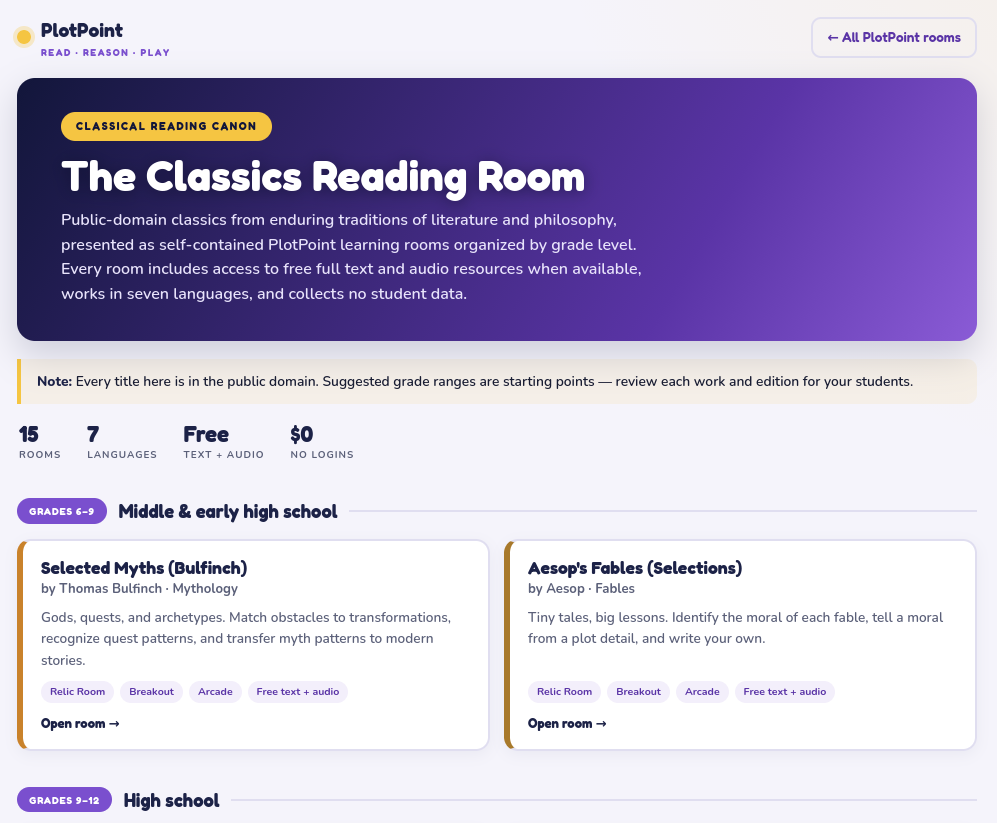
Public-domain classics come from the classical reading canon. These classics appear as self-contained PlotPoint learning rooms, organized by grade level. Every room includes the free full text and an audiobook, works in seven languages, and collects no student data. When possible, Project Gutenberg text, audiobooks, and/or LibriVox recordings have been included.
Here are a few titles:
Copyrighted Works Included
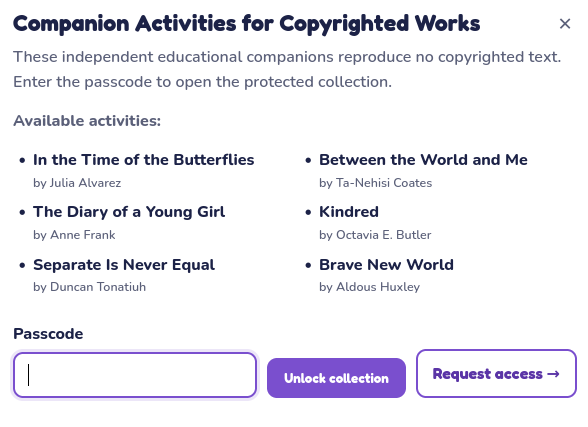
There are also activities available for selected copyrighted works. These activities are independent educational companions to the available titles. Students will need lawful access to the book. The activity does not reproduce or replace the book.
Furthermore, the activities are not affiliated with or endorsed by the author or publisher. The copyrighted texts, and any paraphrased or quoted passages, remain the property of their respective copyright owner. Educational companion activities appear for these titles:
Future companion activities for additional texts will be added in the future. Those include some favorites from high school, such as Maya Angelou’s I know Why the Caged Bird Sings, John Steinbeck’s Of Mice and Men and The Grapes of Wrath, Mark Twain’s Adventures of Huckleberry Finn (and other works), and Alice Walker’s The Color Purple. These are books and poems read across the United States.
How To Access Educational Companion Activities to Copyrighted Works
You, as teacher or librarian, can request the passcode to access the companion learning activities to copyrighted works via this online form. These are passcoded to prevent casual access in states where some texts are not permitted to be studied.
👤 Human-directed (Miguel Guhlin) · 🤖 Gen AI-assisted (Claude, ChatGPT)