
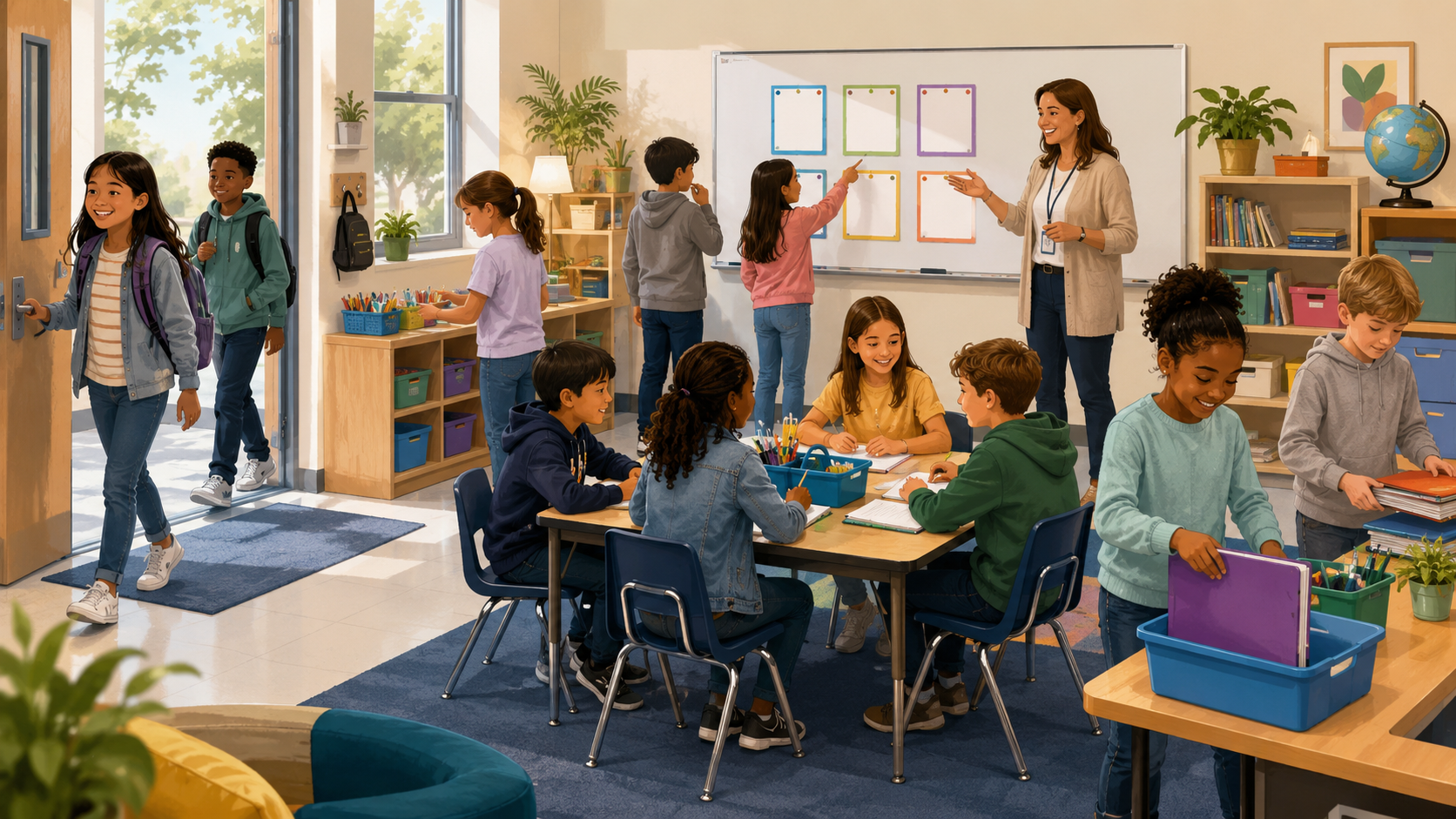
The first few days of school can feel a little like directing traffic while answering 14 questions at once. Students are trying to remember their schedules and figure things out. This is where classroom routines come in.
Clear routines help students know what to do without waiting for directions every few minutes. They also give teachers more time to teach, connect with students, and handle the unexpected moments.
The goal is not to create a classroom that runs like a robot factory. It is to build predictable systems that help students feel comfortable, capable, and ready to learn.
Start with the Routines Students Use Most
It can be tempting to introduce every classroom procedure on the first day. That usually results in a long list of directions students forget before lunch.
Instead, begin with the routines students will use right away. You might start with:
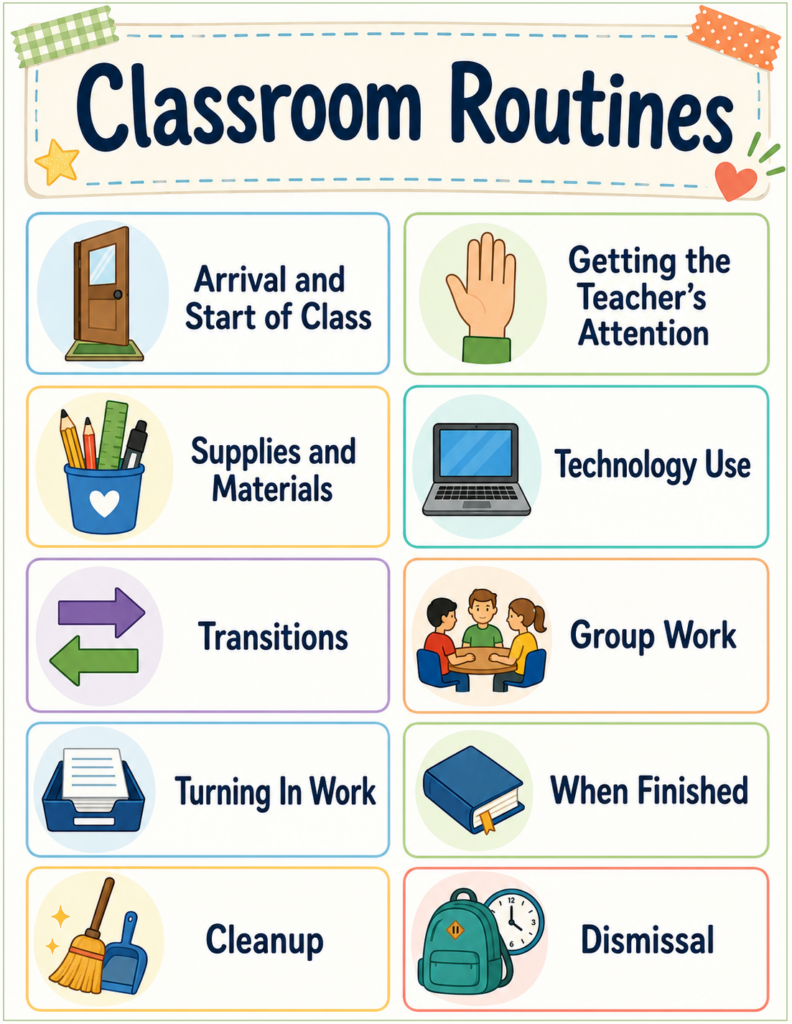
- Entering the classroom
- Beginning class
- Asking for help
- Getting supplies
- Moving between activities
- Turning in work
- Cleaning up
- Leaving the classroom
Think about the moments when students are most likely to pause and wonder, “What do I do now?” Those are the routines to teach first.
Arrival and Beginning Class
A consistent arrival routine sets the tone for the day or class period. Elementary students might unpack and begin a morning activity. Secondary students might pick up materials, check the board, and complete a warm-up. Post the steps where students can see them. Visual reminders are especially helpful during the first few weeks.
A beginning-of-class routine can also include a quick review. Students might complete a brain dump, answer two questions from the previous lesson, or explain a concept to a partner. The task should be short and predictable so students can get started without waiting for directions.
Getting the Teacher’s Attention
Students need a clear way to ask for help, but not every question requires an immediate interruption.
You might use:
- A raised hand
- A help card placed on the desk
- A question parking lot
- A designated help station
- A three before me routine
With three before me, students check three possible sources before asking the teacher. They might reread the directions, look at an example, or ask a classmate.
Be sure to explain when students should skip the routine and speak to you immediately. Safety concerns, personal needs, and urgent problems should never wait behind three questions and a sticky note.
Materials, Technology, and Common Needs
Create simple systems for supplies, devices, water, and restroom requests. Students should know where materials are located, when they may get them, and how to return them. Assigning a materials manager or creating supply bins can prevent 25 students from searching for scissors at the same time.
Technology routines can stay simple. Teach students how to pick up and return devices, log in, access assignments, and report a problem. You might also post a short troubleshooting checklist that includes refreshing the page, checking the connection, and restarting the device.
Transitions and Group Work
Transitions can quietly consume a surprising amount of instructional time. Use a consistent signal, such as a timer, hand signal, music clip, or verbal cue. Then teach students exactly what to do when they hear or see it.
For example:
- Stop working.
- Put materials down.
- Face the teacher.
- Listen for the next direction.
Group work also needs routines. Students should know how to form groups, share materials, take turns, and ask for help. Simple roles such as facilitator, recorder, materials manager, and reporter can provide helpful structure. Do not assume students already know how to collaborate. It is a skill, and skills need practice.
Turning In Work and Finishing Early
Choose a consistent system for submitting paper and digital assignments. Students should know where paper assignments go, how digital files should be named, and how to confirm that an assignment was submitted.
It also helps to create a routine when students finish their work early. Students might read, complete unfinished work, practice vocabulary, or choose from an enrichment board.
Cleanup and Dismissal
A strong cleanup routine saves time and helps students take responsibility for the classroom. Students should know what needs to be put away, who is responsible for each task, and what to do when finished. Use the same signal each day and give students enough time to complete the routine.
The final minutes of class might include an exit ticket, homework reminder, materials check, or quick review of tomorrow’s expectations.
Teach Routines Like Any Other Skill
Explaining a routine once is rarely enough. Teach it. Model it. Practice it. Give feedback. Practice it again.
You can even show a nonexample and let students identify what went wrong. When a routine breaks down, students may need a reminder, more practice, a visual cue, or fewer steps.
Adjust Routines When Needed
Not every routine will work perfectly for every class.
Ask yourself:
- Are the steps clear?
- Is the routine age-appropriate?
- Have students practiced it enough?
- Are there too many steps?
- Is the routine creating a bottleneck?
You can also ask students for feedback. They may notice a problem you have not seen.
Changing a routine is not a failure. It is classroom problem-solving. Keep the routines simple, teach them clearly, and adjust them when needed. Over time, those small systems add up to smoother transitions, greater independence, and fewer questions. Which classroom routine saves you the most time during the school day? Share your favorite routine in the comments.
