

The start of the school year is extremely important for an instructional coach. The relationships you begin building now can shape how teachers view coaching for the rest of the year. Starting strong does not mean arriving with a long list of initiatives or trying to solve every problem before the first bell rings. It means being present, listening carefully, offering practical support, and showing teachers that coaching is something done with them, not to them.
Here are a few ways instructional coaches can start the school year strong while building a positive coaching culture from day one.
Start by Building Trust
Trust is the foundation of every successful coaching relationship. Without it, even the best resources, strategies, and ideas may go unused.
Begin by getting to know teachers as people. Ask about their goals, their students, and what they are looking forward to this year. Listen without immediately jumping in with advice. Keep early conversations informal and low pressure. You might ask:

- What are you most excited about this year?
- Is there anything you would like support with during the first few weeks?
- What is one classroom routine you are hoping to strengthen?
- How do you prefer to receive feedback or ideas?
Be clear about your role, too. Teachers may not know whether you are there to evaluate, observe, troubleshoot, or provide resources. Understanding why some teachers resist instructional coaching can also help you clarify their role and reduce concerns about judgment. In addition, if you promise to send a resource, stop by a classroom, or help create an activity, make sure you do it. Trust often grows through small, consistent actions. For more ideas, explore these strategies for building trust in instructional coaching.
Be Visible Without Being Overwhelming
Teachers are more likely to ask for support when they regularly see you and know how to reach you. Therefore, spend time in hallways, the cafeteria, team meetings, and shared planning spaces. Greet teachers during arrival, check in during conference periods, and visit classrooms when appropriate. These brief interactions can make you feel more approachable and less like someone who only appears when there is a formal observation.
Visibility does not mean hovering. No one wants to feel like the instructional coach has set up camp outside their classroom door. Instead, look for natural opportunities to connect. You could:
- Join a grade-level or department planning meeting.
- Leave a short note celebrating something you noticed.
- Offer help during classroom setup.
- Share a quick resource connected to a teacher’s current need.
- Hold informal office hours before or after school.
- Create a simple form teachers can use to request support.
You might also send a short weekly coaching update. Keep it useful and easy to scan. Include one practical tip, one helpful resource, and a reminder of how teachers can work with you. The goal is simple. Teachers should know who you are, what you do, and how you can help.
Look for Ways to Lighten the Load
The beginning of the year brings plenty of big ideas, but it also comes with plenty of small tasks. This is a great time for instructional coaches to provide practical support. You might want to ask, “What is taking up the most time right now?” The answer might be creating a first-week activity or finding a better way to check for understanding.
Look for quick wins that make a teacher’s day easier. You could help:
- Create a classroom routine slide deck.
- Design a student interest survey.
- Set up a digital exit ticket.
- Find a read-aloud or lesson resource.
- Plan a team-building activity.
- Develop a simple formative assessment.
These may not feel like major coaching moves, but they demonstrate that you are responsive and dependable. They can also open the door to deeper instructional conversations later. Once teachers see that coaching is useful, they are more likely to invite you into planning, modeling, observation, and reflection.
Make Support Easy to Access
Teachers should not need to complete a seven-step process just to ask for help. Offer several ways for them to connect with you. Some teachers may feel comfortable stopping by your office. Others may prefer email, a quick message, or a simple coaching request form.
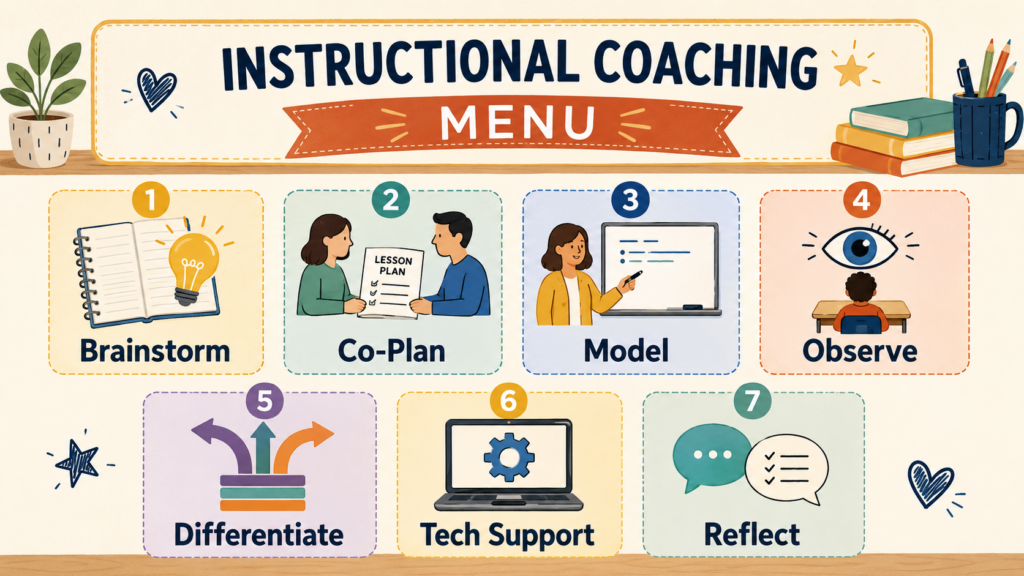
You could create a coaching menu that explains the types of support available. Possible options might include:
- Brainstorm a lesson.
- Co-plan an upcoming unit.
- Model a classroom strategy.
- Observe students and collect data.
- Find technology tools or resources.
- Help differentiate an activity.
- Reflect after a lesson.
- Work through a classroom challenge.
A coaching menu helps teachers understand that coaching is not limited to formal cycles. It also gives them a starting point when they know they need help but are not sure what to ask for. Be careful not to make the menu feel like one more form that teachers must complete. The goal is access, not paperwork.
Celebrate What Is Already Working
Coaching should not begin from the assumption that something needs to be fixed. During the first few weeks, make a point to notice what teachers are doing well. Maybe a teacher has created a welcoming classroom environment. Perhaps students quickly learned a new transition routine. Maybe a team developed a creative way to communicate with families.
Name those successes. Then, send an email, leave a handwritten note, or share a compliment during a conversation. Be specific about what you noticed and why it mattered. Specific feedback feels genuine and helps teachers recognize practices they can continue building on.
Celebration also contributes to a positive coaching culture. Teachers begin to see the coach as someone who notices strengths, not just problems.
Create a Culture of Invitation
Teachers should feel invited into coaching, not assigned to it. During the beginning of the year, share a few low-pressure ways teachers can work with you. Offer to co-plan one lesson, model a strategy, brainstorm an activity, or visit a classroom to gather student feedback.
You could also host a short drop-in session around a timely topic, such as:
- First-week relationship-building activities
- Classroom routines that save time
- Quick formative assessment ideas
- Strategies for active student participation
- Family communication tools
- Digital organization tips
Keep these sessions short and practical. Teachers are more likely to attend when they know they will leave with something they can use right away. As teachers become more comfortable, you can introduce longer coaching cycles and deeper professional goals. The early focus should be on building positive experiences with coaching.
Listen for Patterns
Individual conversations can also help you understand what the campus needs as a whole. As you meet with teachers, pay attention to recurring questions and challenges. Are several teachers struggling with classroom routines? Do teams need help with planning? Are teachers asking for support with a new curriculum or technology platform?
Keep notes about the themes you hear. This can help you plan future resources, professional learning, and coaching opportunities. However, avoid rushing to create a training session every time two teachers mention the same problem. Sometimes teachers need a resource, a conversation, or time to settle into the year. Listen first. Then decide what type of support will be most helpful.
Start Small and Stay Consistent
You do not need to start every coaching initiative during the first week of school. Start with relationships. Be visible, listen carefully, and offer support that solves real problems. Celebrate teachers’ strengths, follow through on what you promise, and keep showing up.
A positive coaching culture is not created through one meeting, one resource, or one perfectly planned coaching cycle. It grows through small interactions that help teachers feel supported, respected, and comfortable asking for help.
