
Educators today face the challenge of ensuring every student, regardless of background, ability, or access, has a meaningful opportunity to learn. While equity has always been a goal in education, technology now offers new ways to turn intention into action. When used purposefully, technology can remove barriers, personalize learning, and address persistent instructional gaps.
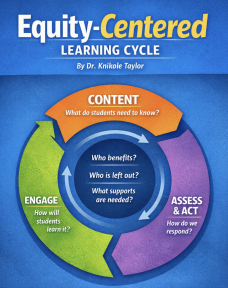
As an assistant principal and former instructional technology leader, I have seen that equitable classrooms are defined not by the number of devices or programs, but by how intentionally technology supports learning, instruction, and relationships. To help you apply the “Equity-Centered Learning Cycle” effectively, consider specific strategies for each phase—Content, Engage, and Assess & Act—especially in classrooms with diverse needs. This guidance ensures you can translate the framework into actionable steps that address common challenges in promoting equity.
Content: Make Learning Accessible for All Students
Equity begins with access to grade‑level learning for every student.
Today’s classrooms serve students with diverse needs, including those receiving special education services, language support, or accommodations. Technology can enhance accessibility by enabling students to engage with content in flexible ways, such as listening to text, adjusting how information is displayed, or responding in various formats. Recognizing the impact of these tools can empower educators to create more inclusive learning environments that truly support all students.
When instruction allows students to access content without lowering expectations, more learners can participate meaningfully. Accessibility is not about making learning easier; it is about making learning attainable.
Engage: Incorporate Student Voice and Choice
Equity also means honoring the many ways students think, learn, and express understanding.
Some students communicate best through writing, while others express themselves verbally, visually, or through creative work. Engagement is equitable when students have structured choices in how they explore content, collaborate, and demonstrate learning.
Embedding voice and choice into instruction through open-ended tasks, performance-based learning, and creative responses validates students’ identities and strengths. This approach increases engagement and affirms that there are multiple valid ways to demonstrate mastery.
Assess and Act: Use Data to Respond in Real Time
Equity is not just about access—it’s about outcomes.
Responsive instruction depends on timely information about student learning. When teachers collect ongoing evidence of understanding and analyze group patterns, they are better prepared to intervene early and effectively. This approach can help you feel more confident in your ability to support each student’s growth and address challenges as they arise.
The value of assessment lies not in the data itself, but in the actions that follow. Should we reteach, offer additional support, adjust pacing, or provide enrichment?
Equity is reflected in these instructional decisions. When educators act promptly and intentionally, fewer students fall behind and more experience success.
Bridge the Home‑School Gap with Inclusive Communication
Families are essential partners in achieving equity, yet communication often presents a barrier.
Language differences, work schedules, and access gaps can limit family engagement. Inclusive communication ensures families receive timely, clear, and accessible information about learning, expectations, and progress.
When schools use flexible communication methods and provide transparent access to learning resources, families are better equipped to support students. Equity grows when learning is a shared responsibility between home and school.
Equity Requires Personalized and Sustained Teacher Learning
None of this is possible without educators who are supported in their own learning.
Traditional professional development often mirrors the inequities we seek to address: it is one-size-fits-all, disconnected from practice, and lacks follow-up. Equitable change requires professional learning that is personalized, reflective, and sustained.
Teachers need opportunities to:
- Choose learning aligned to their classroom goals,
- Reflect on and document instructional shifts,
- Collaborate with peers and coaches, and
- Revisit and refine practice over time.
When professional learning reflects the active, flexible, and responsive experiences we want for students, teachers are more likely to implement practices that support equity.
A Word of Caution—and of Encouragement
Technology alone does not create equity. Without intentional use, it can reinforce existing gaps. Educators must therefore continually ask:
- Who benefits from this approach?
- Who might still be left out?
- What supports are needed to ensure access and success?
Adopting a mindset that asks “What’s needed?” instead of “What’s new?” transforms technology into a tool for equity.
Equity is not a destination; it is a daily practice.
Small, intentional actions such as making content accessible, listening to student voice, responding quickly to data, and strengthening family partnerships lead to meaningful change.
When we center students’ needs and use technology to amplify, rather than replace, strong instruction and relationships, we create classrooms where every student has a genuine opportunity to succeed.
Let’s move from access to action and design learning that truly works for all.