
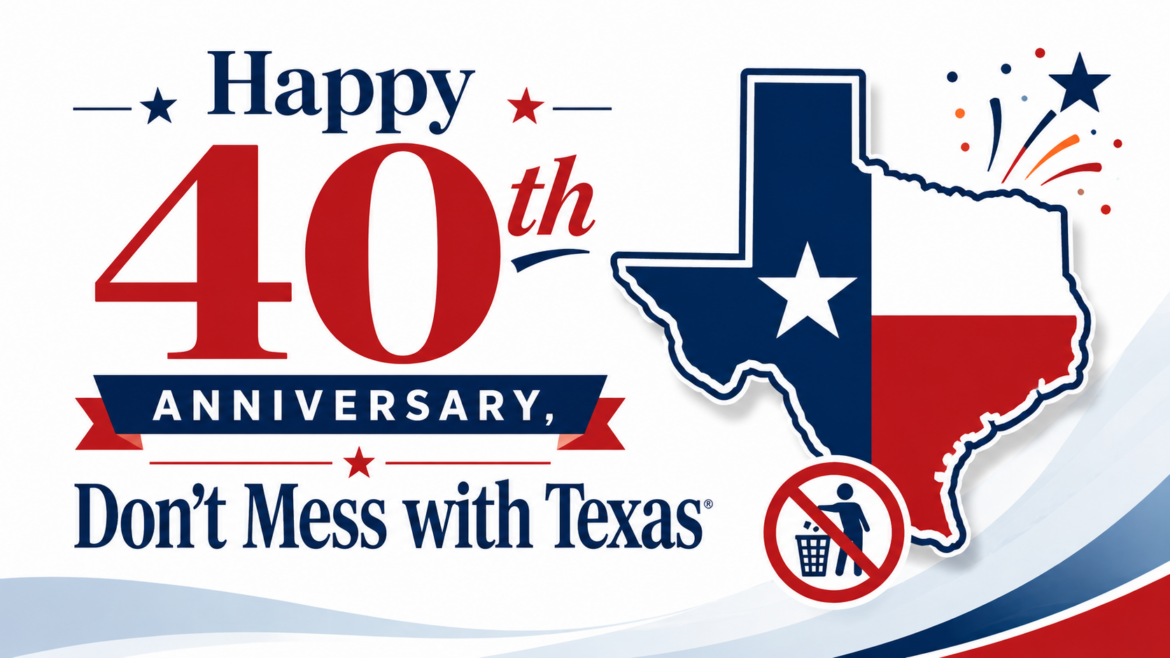
Most Texans know the phrase.
Don’t mess with Texas.
You’ll find it on bumper stickers, T-shirts, road signs, mugs, murals, and probably at least one cousin’s truck. The phrase sounds like a warning, feels like state pride, and somehow belongs to Texas as much as bluebonnets and barbecue.
But here is the part many students may not know.
Don’t mess with Texas means don’t litter.
The slogan was created as part of an anti-litter campaign for the Texas Department of Transportation. The goal was simple: reduce trash on Texas roadways. But the message was anything but ordinary.
Quick Facts About Don’t mess with Texas
- The campaign began in 1985.
- The first television ad aired in 1986 during the Cotton Bowl. It featured Texas blues musician Stevie Ray Vaughan performing “The Eyes of Texas” with the anti-litter message added at the end.
- Post Malone helped celebrate the campaign’s 40th anniversary.
- Texas roads collect about 362 million pieces of litter every year, and beverage containers are one of the biggest offenders.
- Many famous Texans have appeared in the campaign, including Willie Nelson, George Strait, Matthew McConaughey, Joe Jonas, Eva Longoria, Erykah Badu, LeAnn Rimes, Jennifer Love Hewitt, and Ethan Hawke.
- Large litter on Texas roads dropped 63.2 percent from 2013 to 2023.
Classroom Connections
The 40th anniversary of Don’t mess with Texas gives teachers a ready-made way to connect advertising, media literacy, persuasive writing, civic responsibility, and Texas pride. You can view the full collection of Don’t mess with Texas commercials in the video repository on their website.
Media Literacy
Students can analyze how public service announcements use music, celebrities, visuals, humor, and emotion to influence behavior.
Discussion question: What makes a message more persuasive: facts, humor, pride, fear, music, or famous people?
Persuasive Writing
Students can study how a short slogan can carry a powerful message. Don’t mess with Texas is direct, memorable, and easy to repeat. “Please do not litter on Texas highways” just does not have the same bumper sticker energy.
Discussion question: Why is “Don’t mess with Texas” more memorable than “Please do not litter on Texas highways”?
Audience and Tone
The original campaign was designed for a specific audience. Students can explore how word choice changes depending on who you are trying to reach.
Discussion question: Would this slogan work for elementary students? Parents? Tourists? Why or why not?
Civic Responsibility
At its core, this is a lesson about taking care of shared spaces. Students can connect the campaign to their own school, neighborhood, park, or community.
Discussion question: Why do people litter, and what kind of message might actually change that behavior?
Rank the Slogan
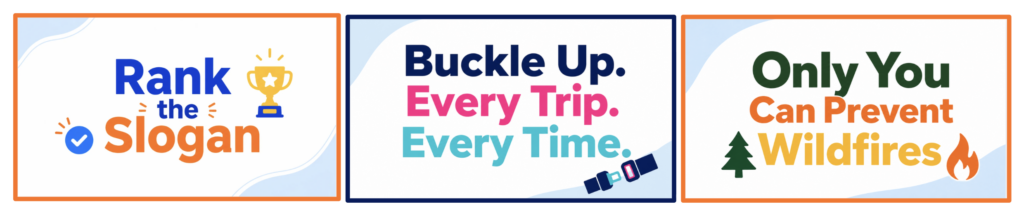
In this extension activity, students use the Rank the Slogan slide deck to compare well-known public service slogans and rank them from most effective to least effective.
As they discuss each slogan, students look for:
- clear messaging
- strong word choice
- memorable rhythm
- emotional appeal
- audience fit
- a clear call to action
The goal is not to find one right answer. The goal is to help students defend their rankings with evidence and think more deeply about what makes a message stick.
Free Classroom Resources from Don’t mess with Texas
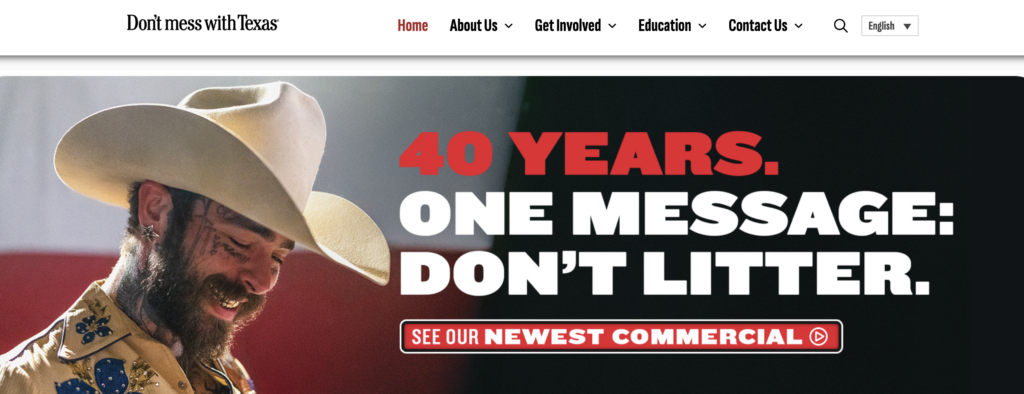
The Don’t mess with Texas website also includes an education section with ready-to-use classroom materials for teachers. These resources help students connect the campaign’s message to science, writing, citizenship, and everyday choices.
Teachers can find:
- Texas litter facts
- lesson plans by grade level
- digital games
- classroom activities
The Pre-K lesson helps students understand the difference between litter and non-litter and includes a classroom commercial activity.
The elementary lesson focuses on identifying litter, understanding how it affects the environment, and creating a Don’t mess with Texas-style campaign for school.
The middle school lesson asks students to brainstorm ways to reduce litter on campus and write a persuasive letter to a school leader.
The high school lesson challenges students to think about why keeping Texas litter-free matters and write persuasively to political or business leaders who could help put ideas into action.
Students can also try the digital games Litter Launcher and Lone Star Cleaner for a quick interactive connection.
A Small Message with a Big Lesson
Not bad for four little words.
Don’t mess with Texas teaches a lot in a small package: word choice, audience, pride, responsibility, and purpose. It is a great reminder that the right message can stick for decades.
And if students finally realize it means don’t litter, I call that a classroom win.
Looking for more Texas-sized learning? I have several Texas resources you can use with students, including classroom activities plus digital breakouts, and Willie Nelson resources that bring a little Lone Star State fun into the day.