
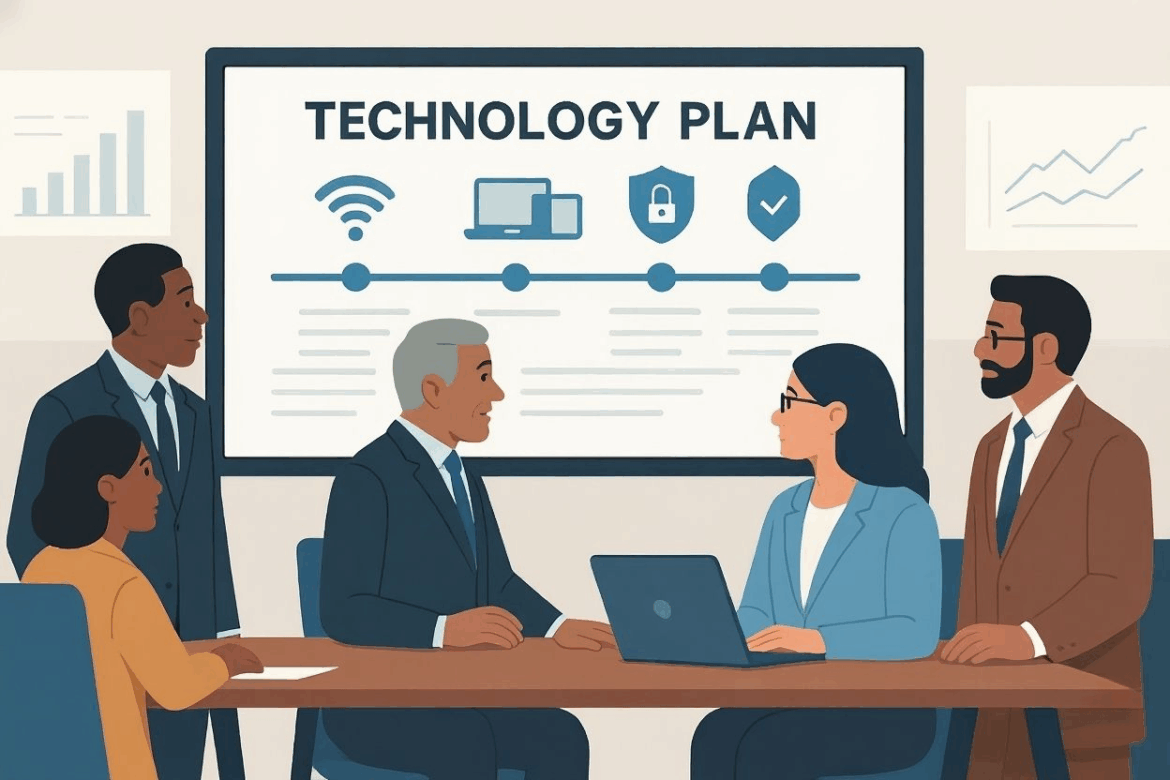
Technology is no longer a side project in education —it’s foundational to almost every instructional and operational goal. When the network fails, teaching halts. When digital learning tools aren’t aligned with instruction, initiative fatigue sets in. When cybersecurity isn’t funded or monitored, the entire organization is at risk. That’s why strong, proactive leadership is essential in shaping and sustaining a meaningful technology plan.
Consider a district that approved a 1:1 device initiative without updating its infrastructure plan. Two years in, bandwidth is insufficient, devices aren’t being repaired on schedule, and teachers have stopped using half the digital tools because they’re unreliable. The problem isn’t the devices—it’s the absence of integrated planning.
Many district leaders find themselves facing at least one of these realities: there isn’t a current technology plan, a plan exists but no one uses it, the plan is outdated and doesn’t match district priorities, or responsibility has shifted to a new leader who didn’t help write it.
The good news? No matter where you’re starting, there is a path forward.
Recognize the Warning Signs
If any of the following feel familiar, your technology plan needs work:
- Technology purchases don’t align to instructional goals – This leads to tool sprawl: dozens of platforms with low usage, wasted licenses, and workarounds that fragment data and create security gaps.
- Decisions are reactive instead of proactive – When every request becomes an emergency, resources get allocated to whoever asks loudest, not to what matters most.
- Funding isn’t connected to a multi-year lifecycle – Without planned replacement cycles, districts face expensive emergency purchases and inequitable access across campuses.
- Success (or failure) is undocumented – Without measuring outcomes, you can’t make evidence-based decisions or justify continued investment.
The biggest risk isn’t an outdated plan—it’s invisible drift. Misalignment grows quietly until the gap between operations and learning feels impossible to close.
Focus on What Matters Most
A strong technology plan keeps everyone moving in the same direction. To strengthen yours, concentrate on four leadership priorities:
🏋️ Clarify Your District’s Purpose for Technology
Start every decision with two questions: What problem does this solve? How does this support student learning or staff success?
Use a simple filter for new requests: Does this directly support a current instructional priority? Does it replace something less effective? Can we support it beyond year one? If the answer to all three isn’t yes, the timing may not be right.
💼 Build Shared Ownership
People support what they help shape. Building shared ownership means meeting people where they are. For principals, frame technology through the lens of instructional leadership. For teachers, focus on workflow improvements. For business officers, emphasize sustainability and ROI. The plan stays the same, but the conversation adapts.
Create a standing technology advisory group that includes classroom teachers, campus leaders, parents, and students. Meet quarterly to pressure-test assumptions and surface concerns early.
📆 Break the Plan Into Doable Work
Make progress visible by defining milestones (Year 1: infrastructure audit; Year 2: LMS rollout; Year 3: cybersecurity protocols), assigning clear roles, and checking progress on a predictable schedule.
Leaders don’t need perfect—they need momentum.
🔹 Track Both Action and Impact
Monitor implementation (Are we doing what we said?), impact (Is it improving teaching and learning?), and sustainability (Can we maintain this?).
Pick 3–5 indicators that matter most to your district: Are teachers spending less time on logistics? Are students accessing learning outside school hours? Has IT response time improved? Monitor them consistently and adjust when needed.
If You’re Starting From Scratch (or Starting Over)
You’re not alone. Here’s how to begin:
- 🔍 Audit what exists – Inventory every contract, platform, device, and infrastructure component. Identify redundancies and risks. This reveals you’re likely already spending more than you realized — just not strategically.
- 🧭 Map responsibilities – Clarify who owns curriculum integration vs. infrastructure vs. purchasing vs. professional learning. When responsibility is unclear, initiatives stall.
- 🎯 Prioritize high-leverage strategies – Start with foundational elements: reliable infrastructure, standardized communication tools, and baseline cybersecurity. Then layer in instructional initiatives. Sequence matters.
- 📣 Communicate clearly and often – Create a communication calendar with monthly leadership updates, quarterly campus newsletters, and annual community reports. Repeat key messages. Assume people need to hear things three times before they register.
Small wins fuel trust and open doors for bigger changes.
Leadership Isn’t About Owning the Plan
Your role is to set direction, preserve alignment, remove barriers, celebrate progress, and support the people doing the work. A strong technology plan should make leadership easier, not heavier.
A Plan Is a Leadership Tool, Not a Compliance Document
The value of a technology plan isn’t in its existence—it’s in how it shapes daily decisions. When a teacher asks for a new app, the plan helps you say yes or not yet. When budget cuts loom, the plan protects priorities. When stakeholders question direction, the plan provides shared language and evidence.
Districts without strong technology plans don’t stop spending on technology. They just spend reactively, inconsistently, and often inefficiently. The work of planning is an investment that pays dividends in focus, confidence, and results.
Take the Next Step
Before you dive into implementation or planning, start with clarity.
One of the most overlooked aspects of technology planning is communication. Even the best plan will struggle if staff and stakeholders don’t understand it. To help you build trust and confidence from the start, we’ve created an extensive free Technology Plan FAQ template for districts who already have a plan in place.
This resource includes common questions your staff, board members, parents, and campus leaders are likely to ask—questions about timelines, funding, training, support, and how technology decisions align with instructional goals. Download the FAQ, remove any questions that aren’t relevant to your district, and work with your team to develop clear, articulate answers.
Download the Free Technology Plan FAQ Template
When leadership can confidently answer stakeholder questions, implementation becomes smoother and trust grows stronger.
If you have a technology plan—or just inherited one—but aren’t sure how to turn it into real progress, the TCEA Technology Plan Implementation Guide is your next step. This 140-page practical companion walks you through five years of implementation with ready-to-adapt frameworks, timelines, and checklists. It’s built for busy directors and CTOs who balance daily demands with districtwide goals.
Whether you’re just getting started or midway through a long-range plan, you’ll find clear first-30-day actions, annual priorities, and strategies that keep your work moving without burnout.
Use it to:
- Build buy-in across departments with strategies that create shared ownership.
- Organize complex initiatives into manageable phases, roles, and milestones.
- Monitor progress using simple yet powerful implementation and impact metrics.
- Document evidence for compliance, reporting, and audits without extra paperwork.
- Communicate clearly with boards, staff, and families using editable templates and reporting rhythms.
What’s Inside
- Chapter 1 – Getting Started with Your Technology Plan: Define your role, understand your plan’s structure, and identify key players and early actions.
- Chapter 2 – Building Buy-In and Ownership: Engage stakeholders and turn assigned responsibilities into shared commitment.
- Chapter 3 – Organizing the Work: Set up systems, calendars, and collaborative tools to manage multiple strategies effectively.
- Chapter 4 – Ongoing Assessment and Monitoring: Measure implementation and impact to keep progress on track and evidence-based.
- Chapter 5 – Documentation and Evidence Collection: Create sustainable routines that make audits and reporting effortless.
- Chapter 6 – Communication and Reporting: Share progress with clarity through templates, visuals, and regular updates.
- Chapter 7 – Supporting Strategy Owners: Coach and equip the people leading initiatives while maintaining your own balance.
- Chapter 8 – Year-by-Year Implementation Focus: Follow a detailed five-year arc with priorities and pacing guides for each year.
- Chapter 9 – Troubleshooting Common Challenges: Handle roadblocks like staffing changes, budget cuts, and resistance with confidence.
- Chapter 10 – Resources and Tools: Access templates, forms, funding sources, and professional networks curated by TCEA.
- Chapter 11 – Self-Care and Leadership Development: Sustain your energy and focus through practical leadership and wellness strategies.
Bottom line: This guide helps you turn your plan into a living initiative—one that strengthens infrastructure, supports instruction, and builds district capacity year after year.
You can find this guide in the TCEA Store at https://ly.tcea.org/ImplementationGuide currently for $29.00 USD.
If you don’t have a current technology plan (or if your existing plan needs fundamental development to reflect your district’s technical and learning goals) TCEA can work directly with your leadership team. We help districts build plans that are strategic, realistic, and connected to what matters most in your community.
You don’t need to have all the answers, just the clarity to lead with purpose. A strong technology plan isn’t just a document. It’s your compass. Start small, stay aligned, and trust that every step forward is a step toward lasting impact.