
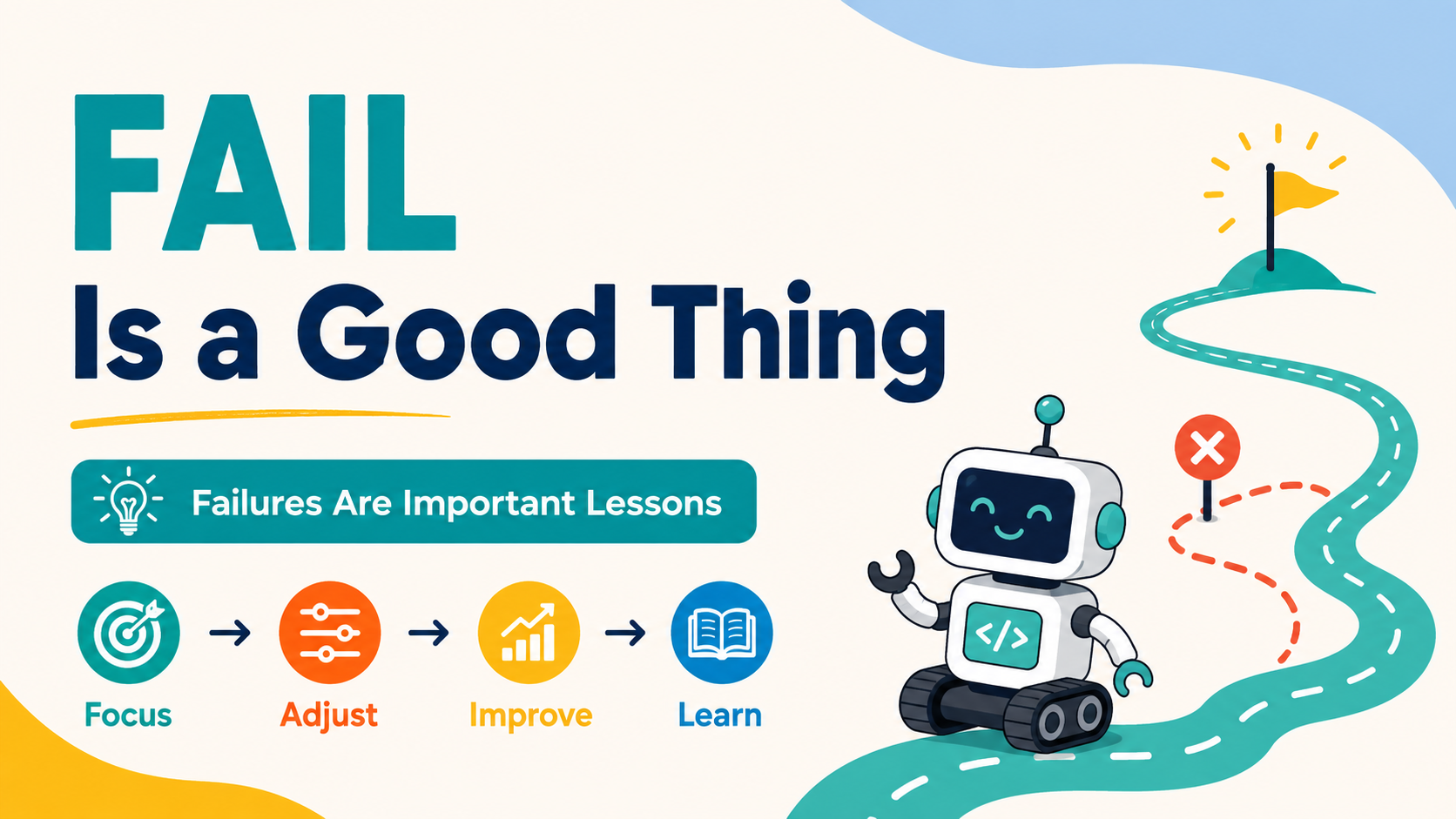
When I teach robotics workshops, I always tell participants, “You will remember your mistakes more than your successes when it comes to working with a robot.”
And I mean it 100 percent!
If the robot turned left instead of right, ran straight into a wall, or refused to do what you thought you programmed it to do, that mistake usually stuck with you. More importantly, you figured out why it happened and what to change the next time.
I actually liked when things did not run perfectly during a workshop. If it happened there, chances were pretty good it could happen in the classroom, too. Better to troubleshoot it, learn from it, and have that experience tucked away for later.
That is why I think failing can be a very good thing.
And Michael Jordan seems to agree.
His 30 second message about missing shots, losing games, and failing over and over is a good reminder that success usually has quite a few failures mixed in along the way.
Free Posters
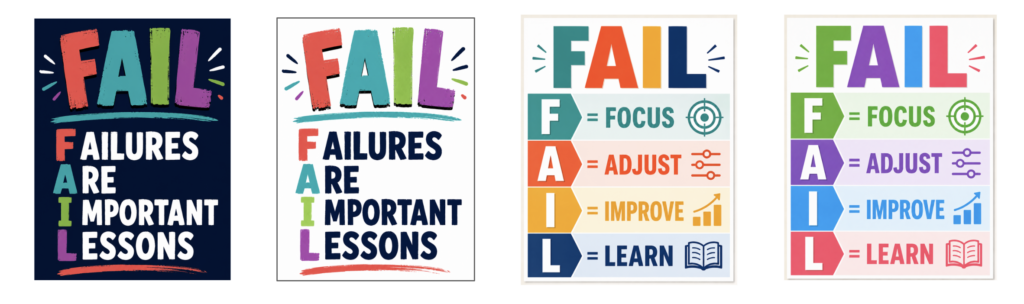
So I created a couple of simple FAIL posters as reminders for educators and students:
Failures
Are
Important
Lessons
and
Focus
Adjust
Improve
Learn
All the posters are free to download, print, and use in your classroom, library, makerspace, or wherever a little reminder about the value of failure might come in handy.
This is not the first time I have celebrated failure. Back in 2019, I shared Jenifer Wells’ Epic Failure Bucket, where mistakes became something students could study, learn from, and even be proud of. If you are 3D printing in your classroom, this is a must read.
Helping Students Learn From Failure
- Model your own mistakes. If something goes wrong during a lesson, say what happened and talk through how you are going to fix it. Students need to see adults troubleshoot, too.
- Give students another try. Whenever possible, let students revise, rebuild, recode, or rethink instead of treating the first attempt as the final answer.
- Ask “What did you learn?” Move the conversation away from “Did you get it right?” and toward what the mistake revealed.
- Praise the adjustment, not just the success. Notice when a student changes a strategy, asks for help, or tries something different.
- Do not rescue too quickly. A little productive struggle can be a good thing. Give students time to figure out what is not working before jumping in with the answer.
- Make failure normal. Whether students are coding a robot, solving a breakout, building a STEM challenge, or working through a math problem, remind them that the first attempt does not have to work.
From One Failed Stitch to a Full Blanket
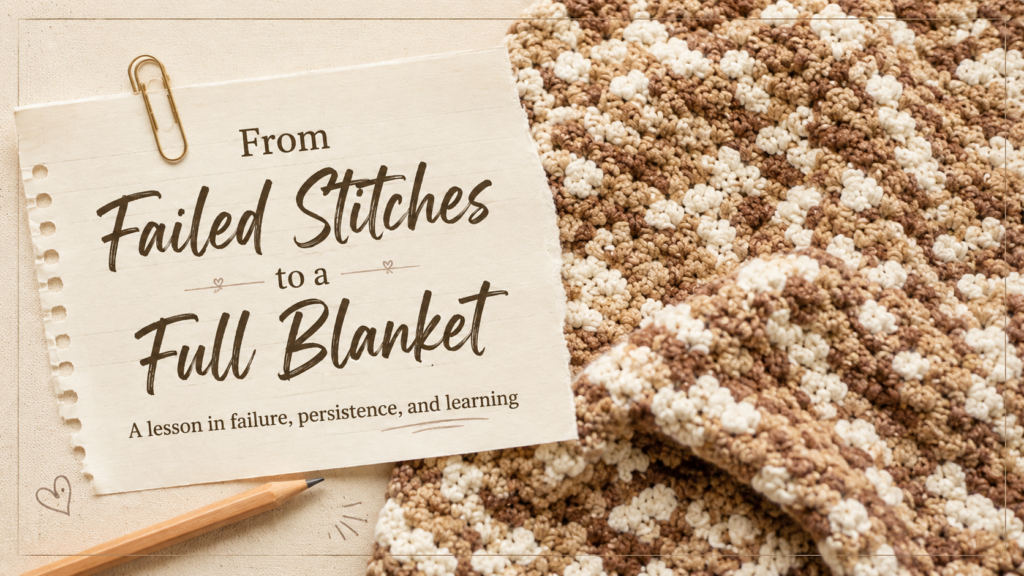
For this blog, I asked TCEA staff members to share a time when something did not go as planned. Jeannine really stepped up with a personal story that I especially loved because it also happens to involve TCEA and me.
Years ago, I had set up a makerspace precon at our summer Elementary Technology Conference with a room full of hands-on stations. Jeannine was not on TCEA staff then. She was attending as a participant, and she headed straight for the yarn.
She had crocheted a little as a child and confidently chose a pattern for a round potholder. But as a left-hander trying to follow right-handed instructions, she quickly became frustrated. The potholder became a fancy bookmark, then a basic bookmark, and after three hours, she had produced just one chain of stitches. She added a paper clip and jokingly turned it into a hairpiece, but she left feeling defeated.
Jeannine did not leave it there. She bought crochet hooks and yarn, found left-handed tutorials, slowed videos down, unraveled plenty of mistakes, and kept trying.
A few months later, she showed up at another TCEA event carrying a full-sized blanket she had crocheted herself. She had brought it to show me. And yes, she still has the blanket. She also keeps that very first row of stitches at her desk as a reminder that failure can be the first step toward figuring something out.
From one lonely chain of stitches to an entire blanket, read Jeannine’s full fail-to-finish story here.
I simply close with this: A failed attempt is information. What students and adults do with that information is the important part.
