

One of my top priorities as a writing teacher has been getting students writing as soon as they step into my classroom. That first ten minutes goes fast. As a new teacher, having a daily write activity was something I really enjoyed. Less fun, daily oral language activities (and probably, less effective). Still, engaging new writers at a time when writing seems so yesteryear remains important. That’s why I’m happy to share the Daily Writing a Day. It’s a free classroom resource I built for grades K–2, 3–5, and 6–8. Each school day gives students two short tasks: Fix It and Write.
Note: Efforts have been made to align it to the Texas Essential Knowledge and Skills (TEKS), English Language Proficiency Standards (ELPS), Universal Design for Learning, and Student Success Tool (SST). That said, I didn’t give this the multilingual treatment I’ve done for other projects. I will probably do those individually based on feedback you leave in comments.
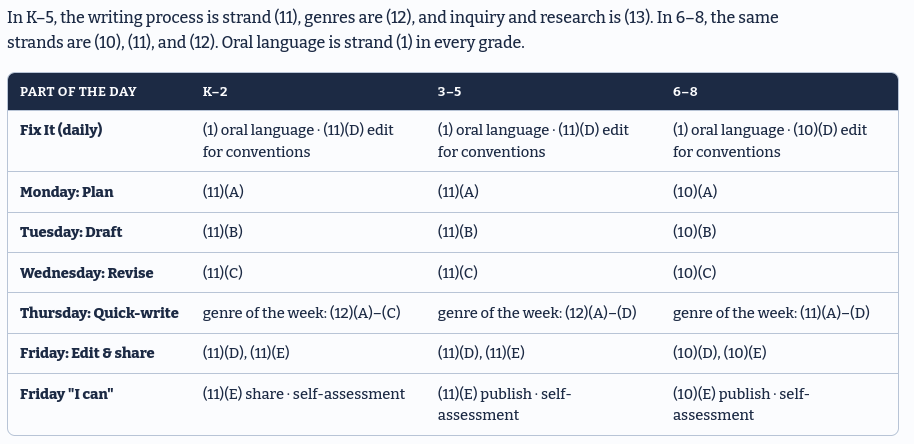
Start With Fix It
Fix It is a quick Daily Oral Language activity. Students see a sentence with a few errors, correct it, and explain what needed fixing. The activity takes about three or four minutes. More important, the conventions practice connects to the writing work students are doing that week.
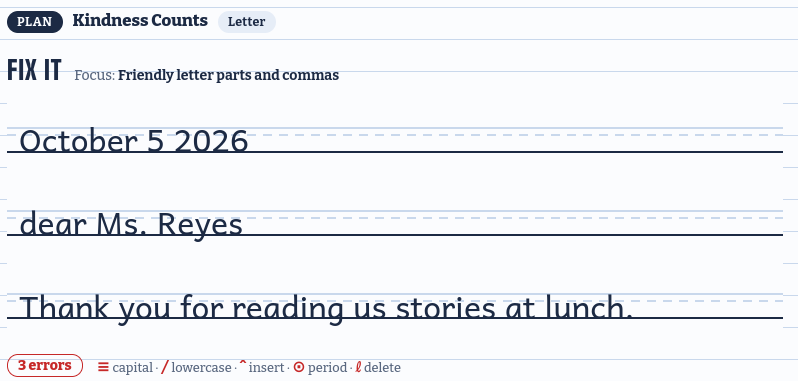
Then students write.
Write a Little Every Day
The writing prompt takes about five to eight minutes. It’s intended to follow a simple rhythm:
- Monday: Plan
- Tuesday: Draft
- Wednesday: Revise
- Thursday: Quick-write
- Friday: Edit and share
The goal is to encourage repeated practice generating ideas, drafting, revising, editing, and sharing.
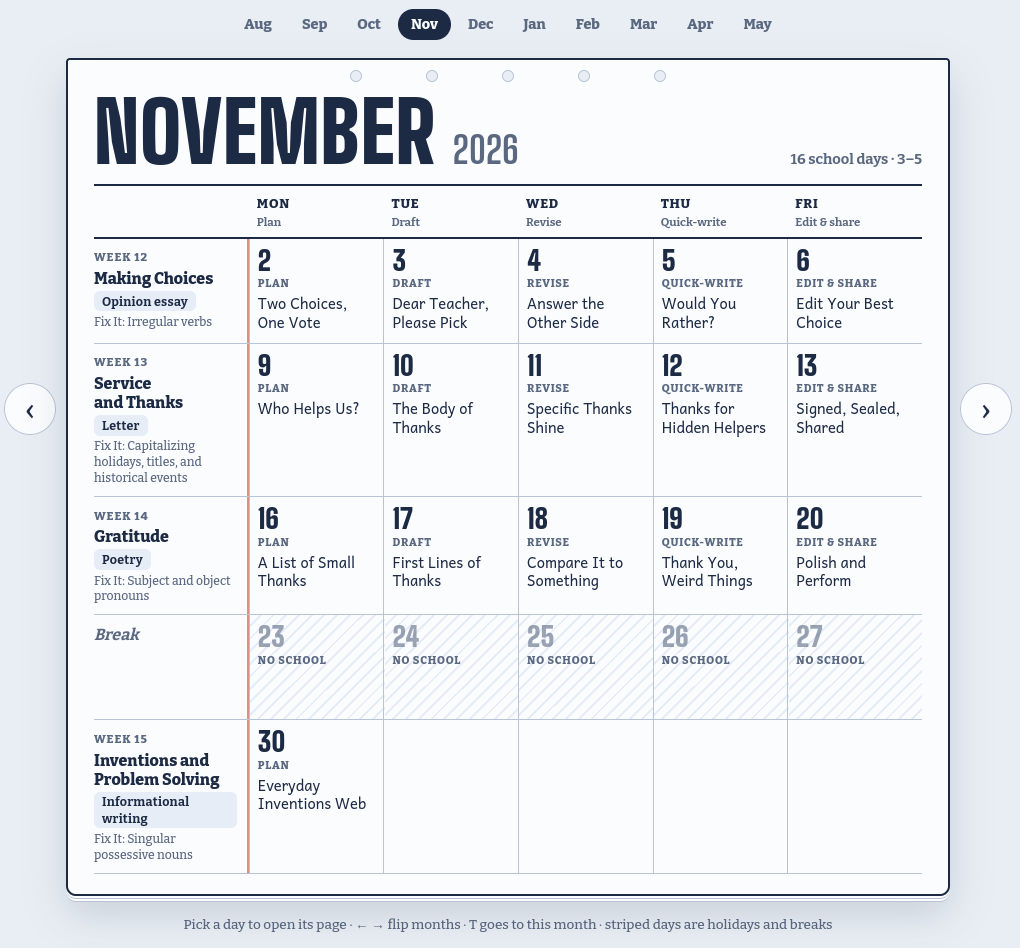
You can view prompts by grade band and connect to Texas ELAR TEKS writing strands. You can switch among K–2, grades 3–5, and grades 6–8 from the calendar.
And, you don’t need to print anything, create student accounts, or hand students another device. Project the prompt, read it aloud, or put it on the board. Students can write in notebooks or on paper.
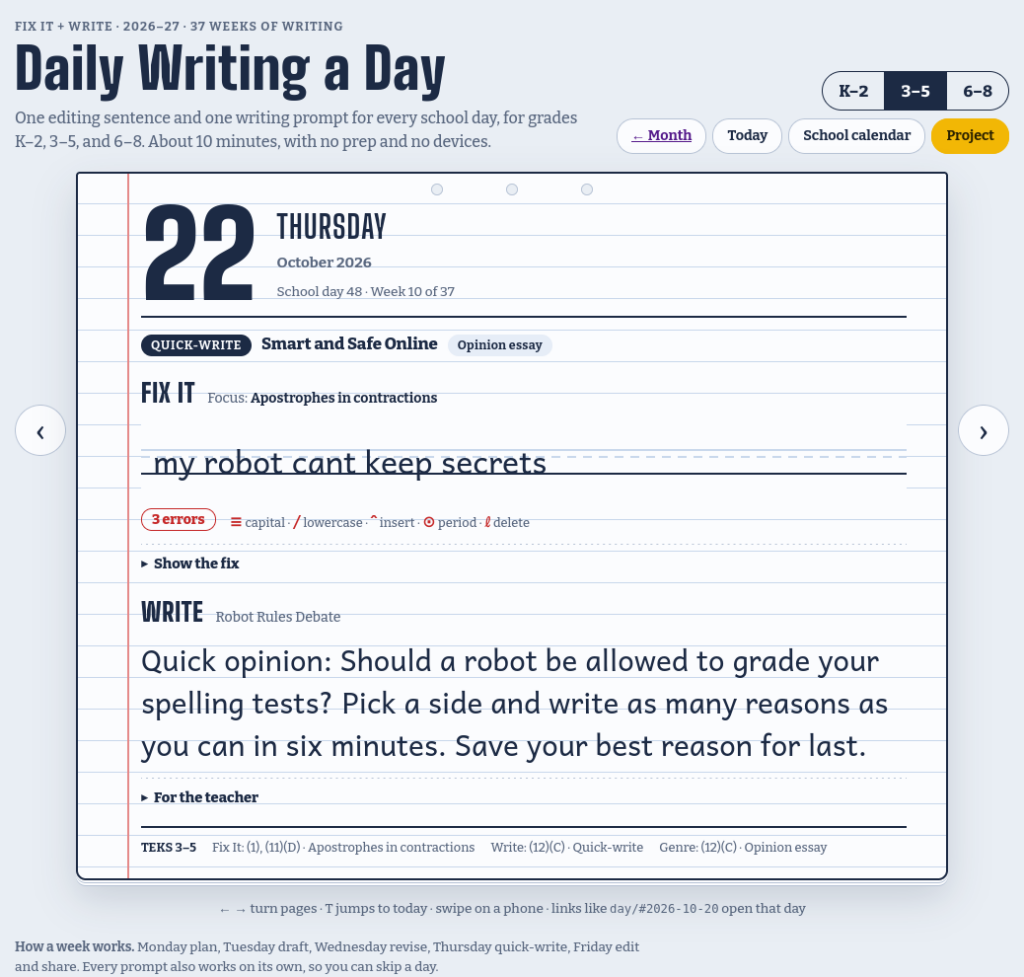
The calendar covers the school year, skips typical school holidays, and lets you adjust the starting date for your own calendar. If you want students to become better writers, give them more chances to write. Ten minutes today is a good place to start.
Question to Ponder
What do you think about the Fix It component? Effective or not?
See an infographic on this question.


2 comments
Miguel, I appreciate that you’re focusing a blog post on daily writing.
In regards to your question on the “Fix It” component: I’d actually push back on keeping DOL in the mix, especially given what your own infographic highlights! As your graphic notes, DOL warm-ups have “limited and mixed evidence” for transferring to stronger writing, whereas “grammar taught in context” is much “more promising.”
If we only have ten minutes, we get far more mileage by swapping out isolated error-hunting for the strategies listed under your “What works better” section: like a quick 3-minute mentor sentence or sentence combining exercise that students immediately apply to their own drafting.
Travis, first, thanks for commenting! Second, I agree with your remark about DOL. I admit that I “grew up” doing DOL (e.g. not to mention, diagramming sentences, teaching X words (that’s an instructional strategy having nothing to do with bad words)) so I found myself including the DOL in spite of the research. My thinking was that Fix It could still serve a purpose when tied directly to students’ own writing and a specific language need, especially for multilingual learners. I agree that isolated error-hunting isn’t the best use of limited instructional time.
What a great comment, Travis, and I’m delighted you left it. I’ll definitely take it into account when refining this resource in the future.
With appreciation,
Miguel