Discover tips and resources to secure funding for education. Explore grants, strategies, and tools to support schools and classroom initiatives.
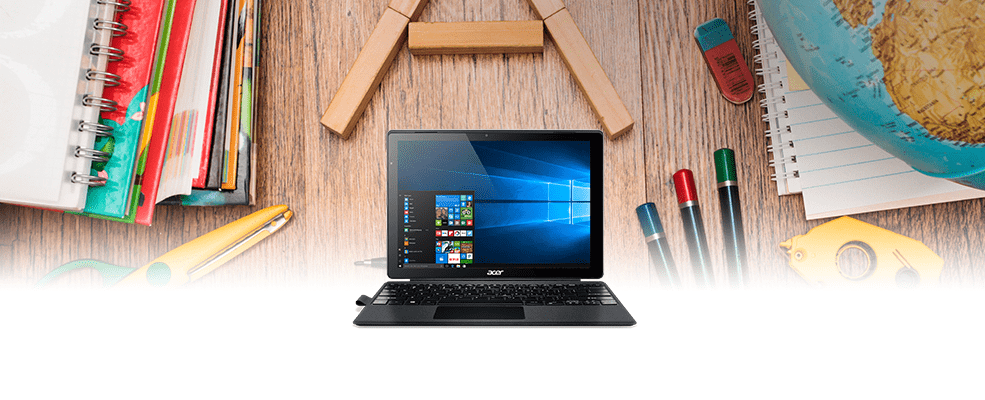
Acer is offering K-12 schools across the country a chance to transform a classroom with the gift of technology. One lucky educator will receive a set of Switch Alpha 12 laptops with Windows 10—a powerful tool for students in the classroom and beyond. The approximate retail value of this classroom makeover grant is $20,970.
Acer has partnered with education influencer and #EdChat founder Steven Anderson (@Web20classroom) to get the word out about this amazing makeover. Steven, along with a panel of industry experts, will help decide the winner.
The Purpose of the Grant
What makes your classroom unique? What would a classroom full of devices mean to your school? Acer wants to hear from you! Submit your story through video, images, or text. Tell them what this makeover would mean for your school and how these devices would help your students get excited about learning.
How to Enter
Only one entry per school is allowed. Additional rules and the nomination form can be found here. The deadline for entry is March 31 and the winner will be announced by April 30. Get your entry submitted today!
 You might be thinking, why weren’t the teachers using the textbooks? Aren’t they aligned to the state objectives? Why wouldn’t a teacher want to use a “free” resource that is aligned to the objectives? Those are great questions, and there are probably multiple answers. But my theory is that districts slowly began to move away from a heavy dependence on textbooks as the state accountability system began to gain prominence. In order to ensure their students would do well on the state tests, districts began to build their teaching curriculum around the testing standards, especially in the areas in which their students struggled. This led many districts to begin using textbooks as a resource and not the resource. The districts began to purchase additional resources to supplement the textbooks to match their teaching curriculum. This resulted in waste as many textbooks went unused while districts spent their local money to purchase materials to supplement the state-approved textbooks.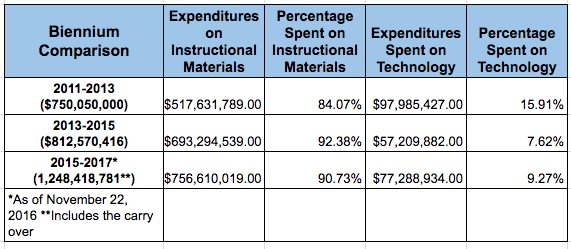
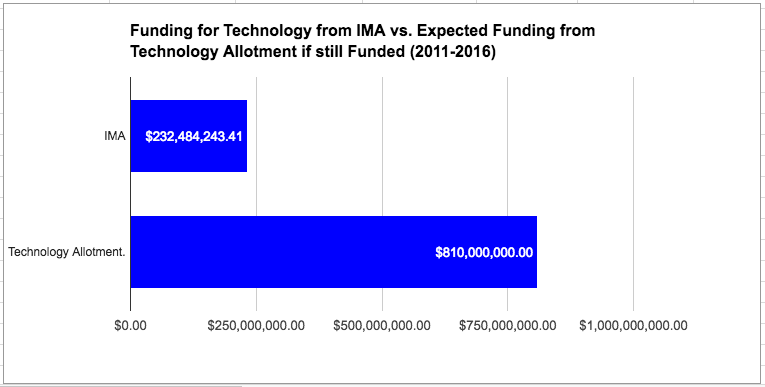
 School districts now live with the uncertainty of not knowing the cost of the next proclamation nor how much funding will be in the IMA. Prior to SB 6, the SBOE would establish a maximum price for any textbook that would be placed on their approved list. As expected, every textbook submitted for SBOE review came under that maximum price. Because the state was doing the purchasing, publishers could afford to offer the books at these prices because they knew they had a chance of selling a large number of books. SB 6 eliminated the maximum price because it was assumed that, with the new flexibility afforded in SB 6, business would decrease for the major publishers, which might mean that they would need to adjust their prices to remain profitable. The result is that the price of textbooks has increased and so has the uncertainty. Districts have no way of knowing how much the next proclamation is going to cost, so they often save whatever they don’t spend on the current proclamation to make sure they have enough for the next one.
 Since TCEA’s mission is to help districts implement a digital learning environment, the reduction in funding for technology is a grave concern. We have supported the structure of the IMA because we believe that technology should always be purchased within an instructional context. Because technology should support the instructional goals of a district, it is healthy for district personnel that support both to work together to determine how best to use district resources to meet the district’s strategic goals. This includes the IMA.


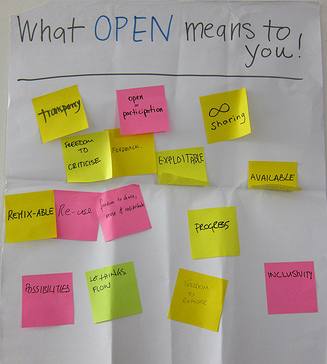 How does a district get started? In order to support districts who are interested in developing some openly licensed educational resources, the #GoOpen campaign has developed a network of states and districts to serve as models and provide support and assistance. A great place to start is by downloading the
  dedication of the instructional staff who have led the process throughout. He noted that the teaching staff has been empowered by the curation process and that the students have positively responded to the change. So far, there have been around 100 teachers involved in the curation process, and he expects that number to grow to more than 200 by the end of this year. He feels that what these teachers have created is a better product than what they could purchase. Their initiative started at the secondary level and, because of their success, the elementary instructional staff is beginning to curate open educational resources as well.
 El Paso ISD is a #GoOpen Launch district. They have