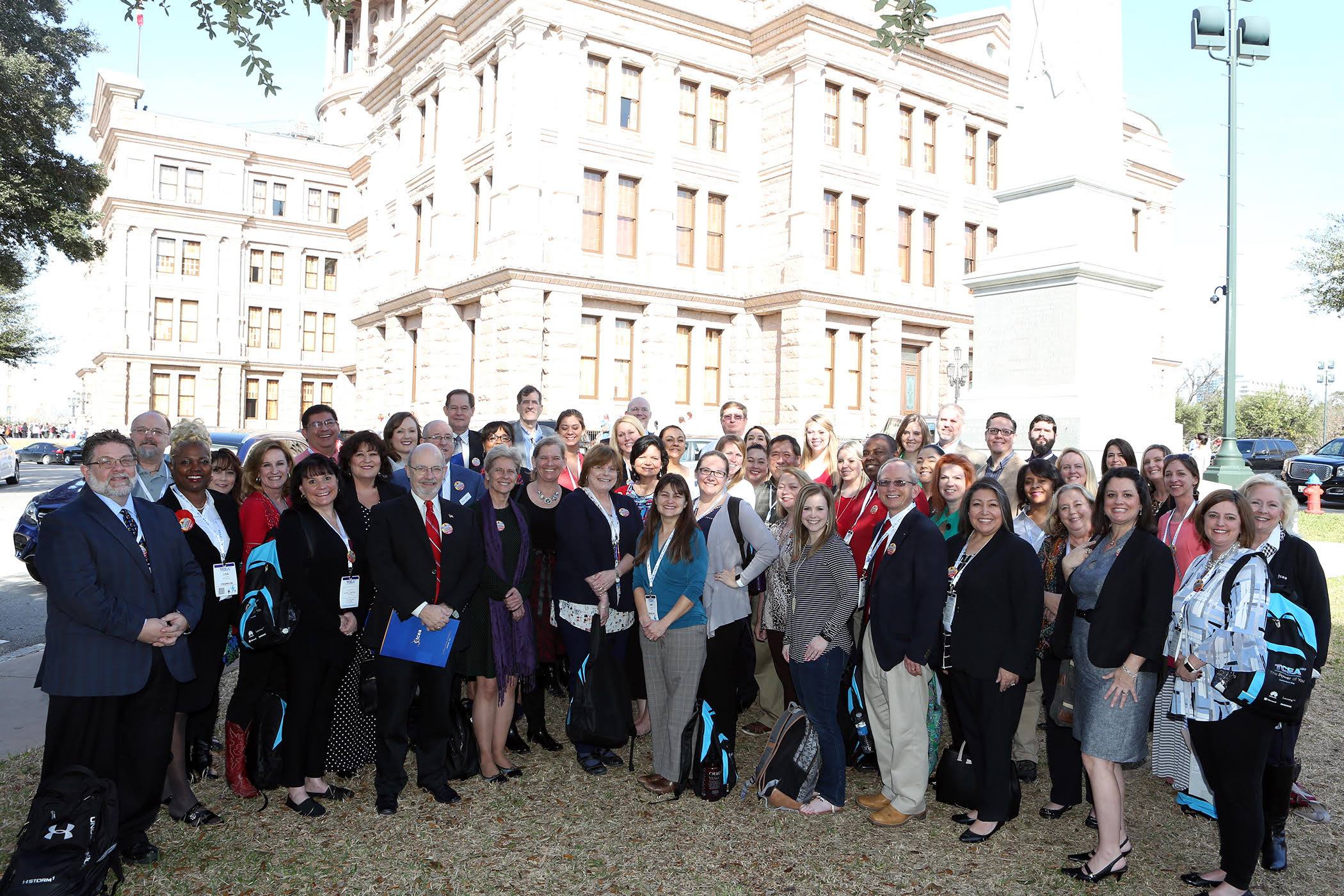
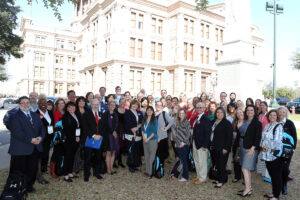
On December 4, 2017, students came to the Texas State Capitol for the first Hour of Code held on the floor of the Texas 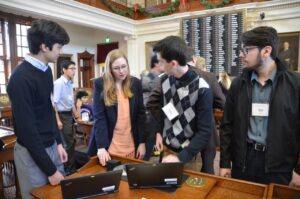 House of Representatives. Students from Richardson, San Antonio, Austin, Pflugerville, Spring Branch, Leander, Hays County, and Lufkin came to the Capitol to demonstrate the different ways students gain coding experience in their elementary, middle, and high schools. They also came to teach state legislators and their staff members how to write their first line of code.
 The Hour of Code is a national effort to help demystify computer coding and broaden participation in the field of computer science. The official Hour of Code takes place each year during Computer Science Education Week, which is held December 4-10. The Hour of Code at the Capitol was hosted by the University of Texas at Austin’s WeTeach CS project, TCEA, TechNet, and CS4TX to help promote the need for more support for computer science education in Texas schools.
Hands On Coding
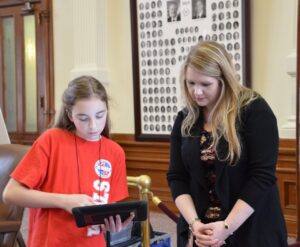
The legislators and their staff had great fun learning how to program a robot from Pflugerville ISD middle school 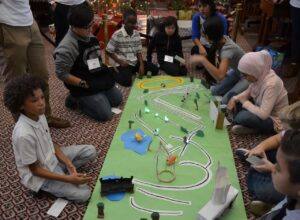 students and listened to some San Antonio elementary students read a story they wrote, as their pre-programmed robots acted out the plot line. In fact, there were a variety of different robots roaming about the floor of the chamber, including: Lego, Sphero, Dot and Dash, Makeblock, Mircobits, and Ozobots. One of the participant’s favorite activities was test driving the code written for a virtual reality experience by the Richardson ISD high school students.
Several teachers who brought students to the event had recently participated in the University of Texas’ We Teach CS program which is aimed at assisting inservice teachers in obtaining a computer science teaching certification. These teachers currently teach science, view computer science as a natural complement to their curriculum, and are looking for ways to help students learn to code as they learn science.
Exploring the Job Market
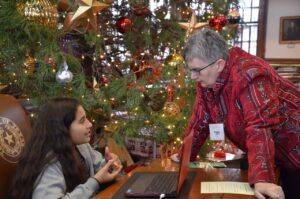 The students also got to hear what it takes to work at Facebook, Google, and Uber. Representatives from these companies spoke to the students over pizza and soft drinks. They highlighted the benefits of working in the tech industry and what it takes to land a job at one of these three companies. It won’t be long before these students will be polishing their resumes and knocking on their doors. The likelihood of these students getting jobs is strong since there are currently over 40,000 unfilled high-tech jobs in Texas. And yet, only 3 percent of high school students took a computer science course last school year.
Strategies to Increase Enrollment in CS
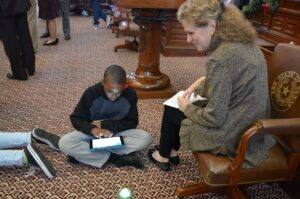 This is why this day was so important. Educating policy makers on the benefits of computer science is critical to enacting policies that can effectively change the dismal statistics. Some of the strategies to increase the opportunities for students to gain computer science skills are:
- Develop a comprehensive plan to expand K-12 computer science education statewide.
- Incentivize school districts to offer computer science courses. Computer science and technology applications courses should be placed under the umbrella of Career and Technical Education (CTE) to unlock weighted funding through the CTE allotment.
- Invest in professional development programs to train a corps of teachers to lead these courses. The key to this effort will be providing additional funding for computer science certification grant programs.
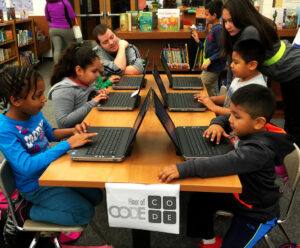
For more information about hosting an Hour of Code at your school or district (or city hall, county court house, etc.), check out this blog post. You can host an Hour of Code anytime. Happy coding!







 If this sounds like the goal of your district and you haven’t taken the
 This blog post is not meant to be exhaustive. The Future Ready initiative is not a one and done type of effort. They have proven over time that they are committed to their mission and are willing to adapt and grow. This is why TCEA is proud to be considered one of their partners. Hopefully I have whet your appetite to know more. Start by checking
 prepared to be tomorrow’s innovators, leaders, and engaged citizens of the world.” The
  You have complete flexibility with the implementation of the survey. If this is your first time, you could start small by targeting one school or one grade level. You could decide to only survey students and staff this year and add parents and community members the following year. Just remember, the more data collected, the more information you will have for your strategic planning. This brings us to the best part. After the data is collected, Project Tomorrow analyzes it and provides you with your own data in an extremely easy format to read and manipulate. They even have a PowerPoint template that you can use to easily import your district’s data.
 people through a dramatic shift in their professional practice. The types of change require different kinds of leadership skills. Changing a teacher’s planning period takes different skills than telling them every student is going to have a device and most of their lessons and materials will be delivered over that device. First order change usually deals with cosmetic changes, while second order change deals with the paradigms and philosophies. Research indicates that the leadership team should approach the management of these two types of change differently.
  training, and support they will need. Organizations adopt change, but individuals are the ones that implement change. District leadership might have decided to enact the change, but it is the people at the school level that actually make it happen. The change process can’t be dictated from central office.
 Success takes time and commitment to strategic action plans, review, and adjustment. It may take several cycles after implementation to determine if the new initiative is working. Expect an implementation dip.
 legislative session and TCEA was working for you. In most instances, all of our hard work in gaining support for our issues came down to the last weekend in May. Most legislation fails to pass largely because there is not enough time for the bills to get passed. The Texas Legislature only meets every other year, and for only 140 days. Our forefathers purposely made it difficult to pass a bill for fear that the government might grow and have too much power. Out of the 6,631 bills that were filed, only 1,089 passed and became law. Fortunately, eight of those bills were supported by TCEA for the benefit of our members.
  learning process is one of TCEA’s strategic goals. Judging by what legislation was passed, we feel good about the progress we made this session. The efforts that many of our officers and members made to email, call, or come to the Texas Capitol to testify or visit their state legislator played a critical role in getting the bills passed. Never underestimate your influence on your elected officials. Thank you for all your hard work, and keep it up!
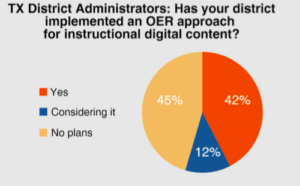
 In addition, the state budget for the next two years includes $20 million for the state to arrange for an outside entity to produce open educational resources for the state’s use. It is expected that TEA will begin with instructional materials that meet the specifications for the English Language Arts adoption that will be implemented in the 2019-2020 school year. This would give districts the ability to use high-quality OER materials for this adoption, which has the potential to save them money.
 outside of school time to be successful in school. The survey also revealed that 75 percent of Texas 6th through 12th graders use the internet at home for school work. Those who do not have internet access at home are at a distinct disadvantage. Not only do they have fewer options in terms of access to content; they are unable to develop the technical skills necessary in an economy driven by technology.