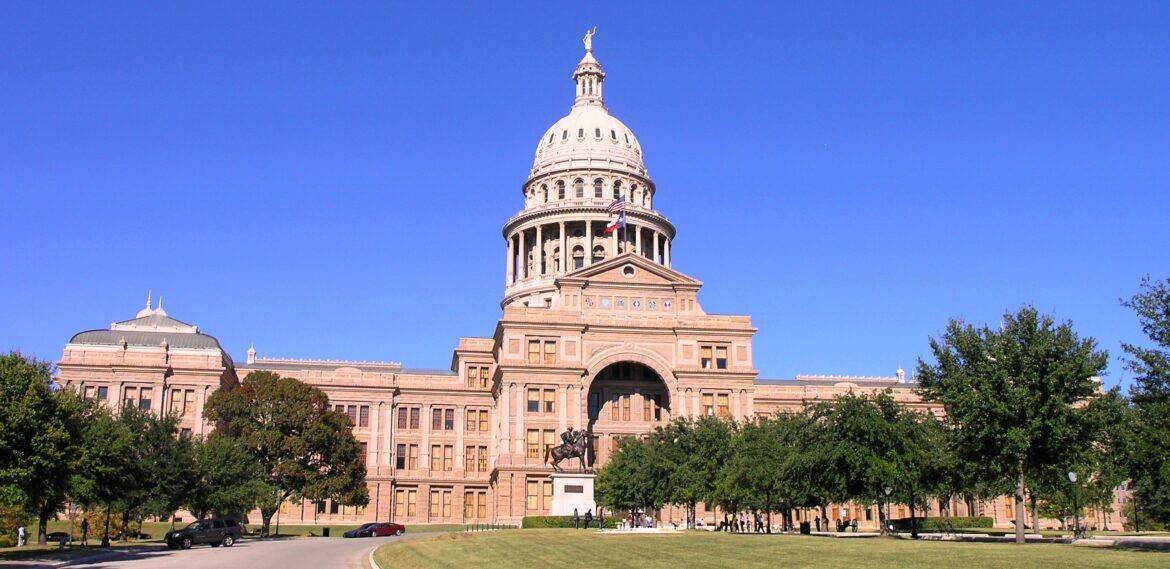
Things are hopping at the Texas State Capitol. The legislature has been in session since January 8, so they only have around 74 days left to get their legislation passed. Getting a bill passed is no small feat. A bill must pass both chambers with the exact same language. This involves hearings, testimonies, possible amendments which change the bill, votes in both the committees and the chambers, and then a trip through a conference committee made up of members from both chambers to negotiate language they think will pass both the House and the Senate. Once the bill passes, it then goes to the governor’s desk for either his signature or veto. In the last legislative session, 6,276 bills were filed and only 1,322 were passed, of which forty-four were vetoed by the governor. Out of 6,276 bills, only 1,278 became law. This means that any bill filed only has about a 20% chance of becoming a law.
Most of the bills that have been filed this session have little to do with digital learning. But those that do will be on TCEA’s radar. March 10 was the last day that legislators could file bills, so I have been carefully making a list to see which bills are naughty or nice. I am trying to determine which bills will promote the use of technology in Texas classrooms and which might establish barriers. I use the legislative priorities approved by the TCEA board to guide my efforts.
If you want to see what bills from the Texas Legislature may have an effect on the use of technology in Texas schools, checkout TCEA’s advocacy page. You can also signup to get Action Alerts if you want to be notified when we need individuals to reach out to their state legislators on important issues.
Digital Learning Bills That Have Been Filed
TCEA has already worked with several House and Senate members to file legislation that we believe will help create an environment for student innovation and mastery of the state standards. Below is a list of the bills that have been filed with our assistance:
SB 1481 (Senator Larry Taylor) and HB – 4140 (Representative DeWayne Bohac) – These bills change the name of the IMA to the Instructional Materials and Technology Fund. They also require the SBOE to update the Long-Range Plan for Technology at least every five years. It will require school districts to create and use a technology plan that is aligned to the state’s plan and requires school districts to consider Open Education Resources (OER) when they adopt new instructional materials.
SB 1482 (Senator Larry Taylor) – This bill will create a 15-member commission to make recommendations for establishing a framework to incorporate digital teaching and learning in public schools.
SB 1483 (Senator Larry Taylor) and HB 4139 (Representative DeWayne Bohac) – These bills resurrect the Technology Lending grants and allow the Commissioner of Education to appropriate up to $25 million from the IMA for these grants.
SB 1484 (Senator Larry Taylor)and HB 3487 (Representative Dan Huberty) – These bills incentivize the creation and sharing of high-quality OER by creating a digital repository for OER and digital materials and a system that will assist districts in the review and selection of instructional materials. The goal is to provide districts with the kind of information necessary to acquire high-quality materials at the best price.
SB 2050 (Senator Larry Taylor) and HB 4064 (Representative DeWayne Bohac) – These bills would require pre-service teachers to take a digital literacy exam while they are in college. It also requires the SBEC to create rules regarding continuing education credits for the purpose of increasing an in-service educator’s technology proficiency.
SB 1685 (Senator Larry Taylor) and HB 395 (Representative Cecil Bell) – These bills will move the Technology Applications courses into the CTE curriculum, which would generate weighted funding for each student who takes these courses. It would also require the SBOE to review the courses and remove any duplicated courses.
SB 1279 (Senator Larry Taylor) and HB 2087 (Representative Gary VanDeaver) – These bills will require technology providers to protect student’s personally-identifiable information.
Make Sure You’re in the Know
These and other bills that will impact the use of technology in Texas classrooms will be monitored as they move through the legislative process. We will provide up-to-date information on our site and will send this information to those who want to receive Action Alerts. Remember that these are YOUR legislators talking about YOUR issues, so stay involved!
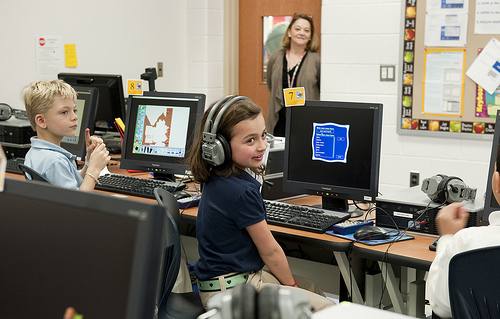 You might be thinking, why weren’t the teachers using the textbooks? Aren’t they aligned to the state objectives? Why wouldn’t a teacher want to use a “free” resource that is aligned to the objectives? Those are great questions, and there are probably multiple answers. But my theory is that districts slowly began to move away from a heavy dependence on textbooks as the state accountability system began to gain prominence. In order to ensure their students would do well on the state tests, districts began to build their teaching curriculum around the testing standards, especially in the areas in which their students struggled. This led many districts to begin using textbooks as a resource and not the resource. The districts began to purchase additional resources to supplement the textbooks to match their teaching curriculum. This resulted in waste as many textbooks went unused while districts spent their local money to purchase materials to supplement the state-approved textbooks.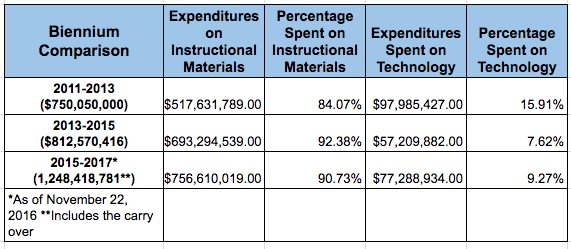
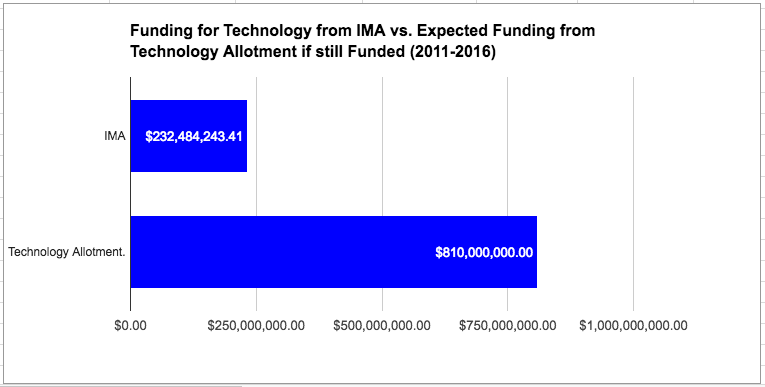
 School districts now live with the uncertainty of not knowing the cost of the next proclamation nor how much funding will be in the IMA. Prior to SB 6, the SBOE would establish a maximum price for any textbook that would be placed on their approved list. As expected, every textbook submitted for SBOE review came under that maximum price. Because the state was doing the purchasing, publishers could afford to offer the books at these prices because they knew they had a chance of selling a large number of books. SB 6 eliminated the maximum price because it was assumed that, with the new flexibility afforded in SB 6, business would decrease for the major publishers, which might mean that they would need to adjust their prices to remain profitable. The result is that the price of textbooks has increased and so has the uncertainty. Districts have no way of knowing how much the next proclamation is going to cost, so they often save whatever they don’t spend on the current proclamation to make sure they have enough for the next one.
 Since TCEA’s mission is to help districts implement a digital learning environment, the reduction in funding for technology is a grave concern. We have supported the structure of the IMA because we believe that technology should always be purchased within an instructional context. Because technology should support the instructional goals of a district, it is healthy for district personnel that support both to work together to determine how best to use district resources to meet the district’s strategic goals. This includes the IMA.
 professionals inventory and image countless devices prior to the first day of school. They ensure that the wireless system is robust enough to enable a multitude of devices to connect simultaneously for online testing. They brainstorm ways to get a reluctant teacher to try something new. They train before school, at lunch, and after school, and often without a break. They work to make sure the network is safe so that student data is never vulnerable. These staff members do this because they believe in their mission. To honor these dedicated school district employees, TCEA is hosting an Educational Technology Appreciation Day on December 7, 2016.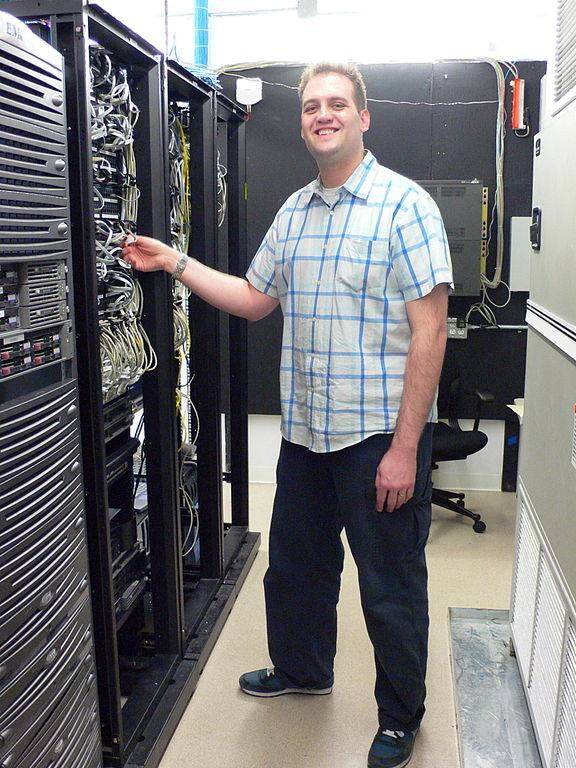

 emails, lesson plans, a list of the survey questions, and press releases. They have made it super simple to get started. As an incentive, if your district participates in the SpeakUp Survey, it will be eligible to win one free


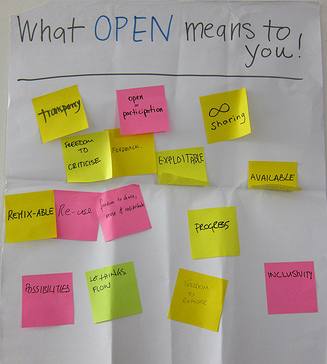 How does a district get started? In order to support districts who are interested in developing some openly licensed educational resources, the #GoOpen campaign has developed a network of states and districts to serve as models and provide support and assistance. A great place to start is by downloading the
  dedication of the instructional staff who have led the process throughout. He noted that the teaching staff has been empowered by the curation process and that the students have positively responded to the change. So far, there have been around 100 teachers involved in the curation process, and he expects that number to grow to more than 200 by the end of this year. He feels that what these teachers have created is a better product than what they could purchase. Their initiative started at the secondary level and, because of their success, the elementary instructional staff is beginning to curate open educational resources as well.
 El Paso ISD is a #GoOpen Launch district. They have
 engine to search for websites that have all three of these words. After the search, click on the word Images at the top of the page. This will produce a page full of images of U.S. monuments.
 Prior to the class, select a group of YouTube videos about different U.S. and Texas monuments. Create a playlist and have your students watch the videos. Here is a
  responses as a group activity. Instead of creating a Slide presentation, have the students draw images illustrating what they learned about the monument on a storyboard. This helps the students make critical decisions about what images best represent their learning and the order the images should be placed to communicate their ideas to an audience. These are necessary skills that will help them when they are older and are able to create a Slide presentation. Learning what to include and exclude is important to know. You could also take photos of their pictures and put them in a Slide presentation.