

You’re not broken—your systems are.
This idea hit home for me a few years ago when I read Atomic Habits.
Dearest, reader. My name is Ashly, and I’m an instructional coach at the high school level. The journey has been interesting, to say the least, and somewhere along the way, I realized I needed a little self-help and a lot of self-grace. Enter Atomic Habits, my holy grail and the book I always find myself coming back to and recommending to others.
As educators, or rather, as people, we are constantly pulled in a hundred different directions and conditioned to believe that the solution to our weight goals, classroom expectations, or dream job is simply to “set better goals.” So we do. We set them, we try, and if you’re anything like me, it’s exciting for a week or two… until fatigue sets in, the shine wears off, and we’re right back where we started. Cue the cycle.
According to James Clear, goals often fail not because of a lack of motivation, but because they’re too big, too vague, or disconnected from our daily habits and systems. Read that again. It’s not you! It’s your system… What a concept!
As a campus coach, I’ve had the unique opportunity to present at the John Jay SEA Summit, a conference-style event for our magnet students focused on STEM, leadership, wellness, and character. Last year, I shared what I’d learned from Atomic Habits in a student session titled “Building Leadership Skills with Atomic Habits.” After all, I wish someone had introduced me to this way of thinking long before I entered my 30s.
The Atomic Habits Lens (Small Shifts, Big Impact)
If you have never read Atomic Habits, let me give you the cliffnotes version. James Clear breaks down a simple but powerful idea: real change doesn’t come from giant goals, it comes from small habits repeated consistently over time. Instead of asking, “What do I want to achieve?” he encourages us to ask, “Who do I want to become?”
This shift matters, especially in education.
Goals are outcomes. Habits are systems. And systems are what we live inside of every single day.
For teachers, this might look like moving away from “I want to be better at classroom management” and toward “I am the kind of teacher who clearly teaches expectations and reinforces them daily.” For students, it’s the difference between “I want better grades” and “I am a student who checks my understanding before turning in work.” Clear mentions that there are 4 laws to make a habit stick.
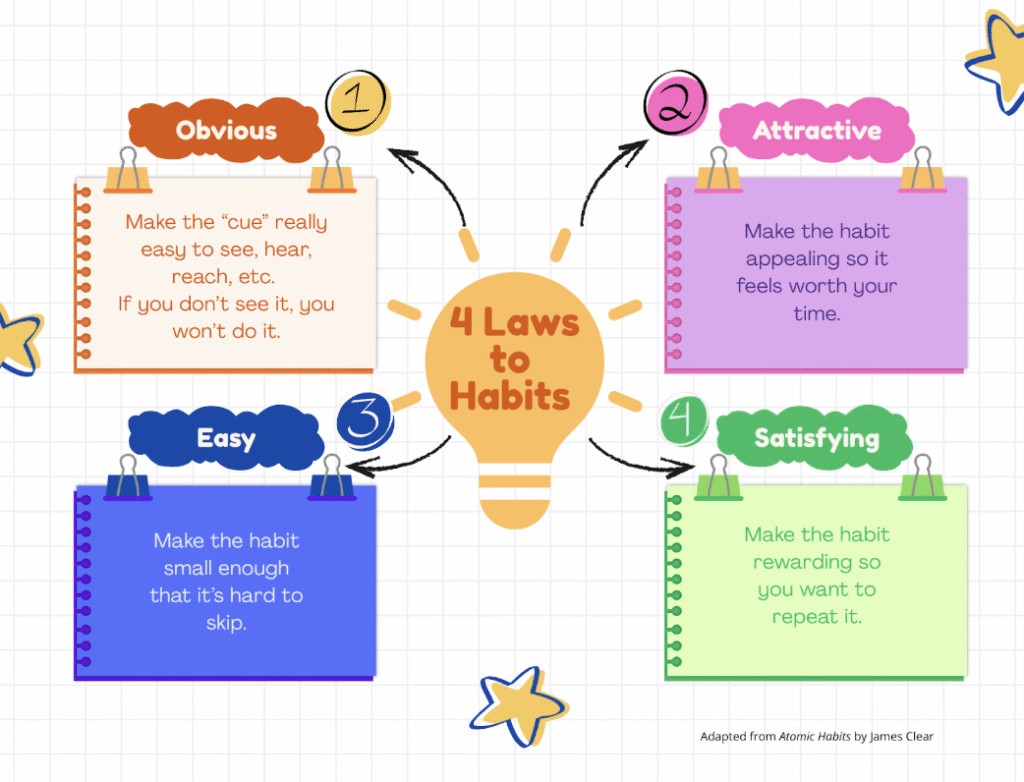
When goals fail in classrooms or personal practice, it’s often because we skip this step. We jump straight to the outcome without designing the habit that gets us there. That’s where frustration creeps in and where many educators (and students) quietly decide they’ve “failed,” when in reality, the system just wasn’t built to support them. But systems can be redesigned. This is where intentional goal-setting and using AI as a thought partner can help us turn good intentions into sustainable routines.
Introducing AI as a System-Builder (Not a Shortcut)
When I decided to bring this concept to students, I knew one thing for sure: I didn’t want goal setting to turn into another worksheet they’d complete, submit, and forget. If habits and systems are what actually lead to change, then students might benefit from some help in building those systems, not just naming a goal and hoping for the best.
That’s where AI came in.
For students, one of the hardest parts of goal-setting is clarity. They know what they want (“better grades,” “less stress,” “stay on top of work”), but they struggle to turn that into something concrete and doable. AI became a way to support that thinking, almost like a coach sitting next to them, asking better questions.
We talked openly about what AI is and isn’t, using Matt Miller’s fantastic graphic. We spent time talking about how it’s not there to do the work for them. It doesn’t replace effort, reflection, or ownership. Instead, we framed AI as a thought partner, a tool that can help them, almost like a coach, to:
- Clarify vague goals
- Break big ideas into smaller habits
- Reflect on what’s working and what isn’t
Using Gemini Gems (how to), I set up a Gem that would specialize in only this topic so that students could securely begin brainstorming their systems. Here are the instructions I used within the Gem. This can also be done using Canva Magic Write, Gemini, etc., by providing students with a list of prompts to choose from.
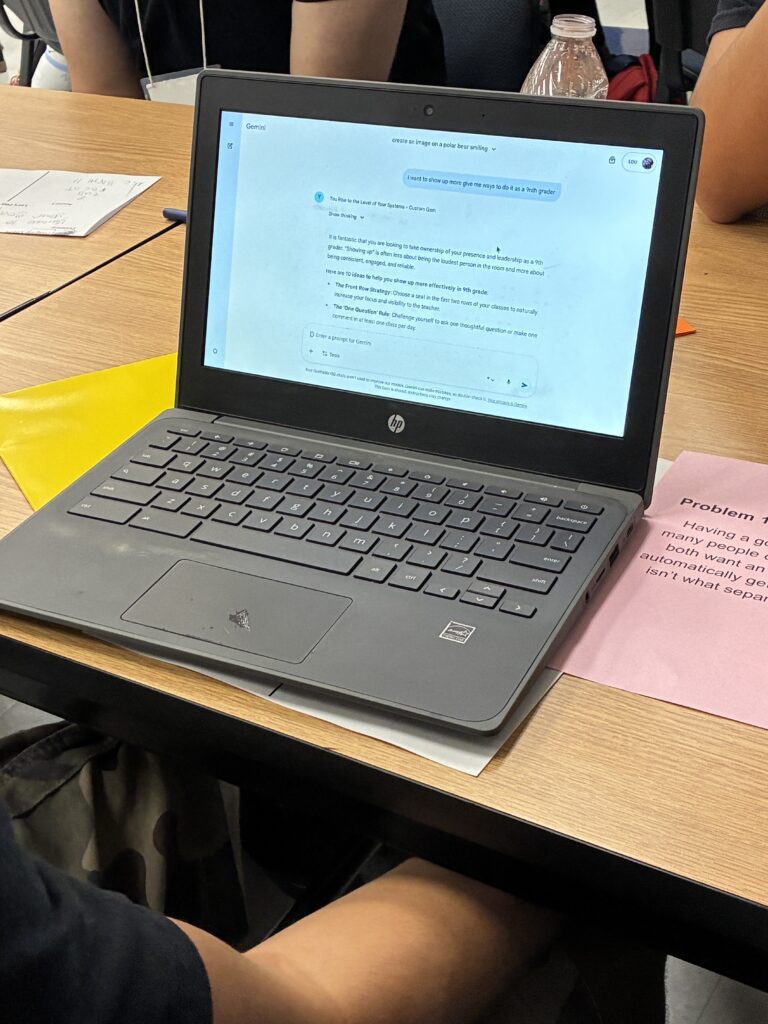
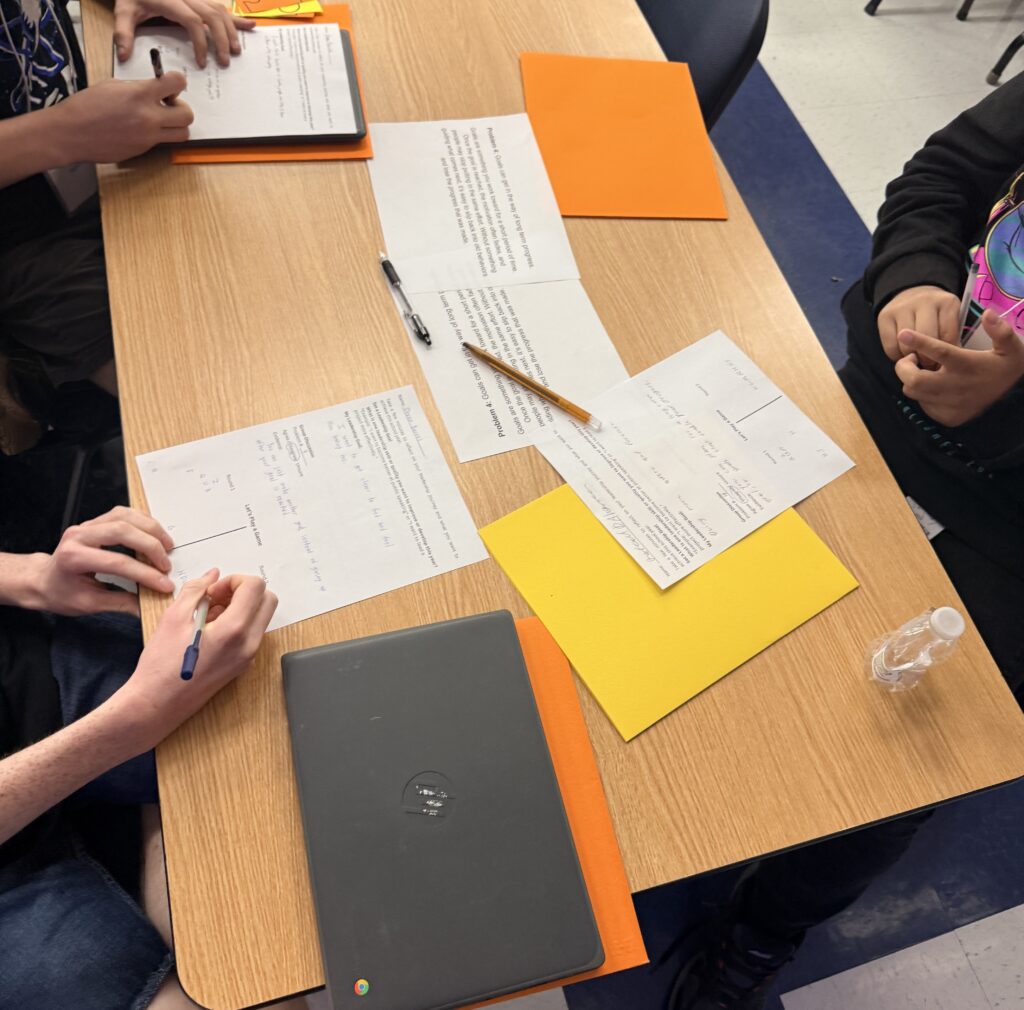
Students started by sharing their identity-based goal (who they wanted to become), then asked AI to help them turn that identity into small, repeatable habits. For example, a student who identified as “someone who wants to be more responsible with schoolwork” didn’t walk away with a generic goal. Instead, they left with a short list of habits tied to their actual school day, for example, checking grades every Friday, previewing assignments before class, or setting a reminder to ask one question each week. Here is the full lesson.
After running this lesson throughout the day, I think what stood out most wasn’t the technology, it was the ownership. Students weren’t copying answers. They were revising, questioning, and adjusting what the AI suggested until it felt realistic for them. The system wasn’t handed to them; it was built with them.
By pairing Atomic Habits with AI, students weren’t just learning how to set goals; they were learning how to design systems they could actually stick to. And that’s a skill that reaches far beyond the classroom.
Small Habits, Smarter Systems, Real Change
Remember, goal setting doesn’t fail because students or teachers lack motivation. It fails when we expect big change without building the systems that support it. Atomic Habits reminds us that identity and small, repeatable actions matter more than lofty outcomes. AI gives us a modern way to help students design those systems with clarity and intention.
When students use AI as a thought partner, they aren’t giving up ownership of their goals. They’re learning how to ask better questions, reflect more deeply, and revise their approach when something isn’t working. Those are skills that extend far beyond academics.
For educators, this approach offers a shift in mindset. Instead of asking students to “set better goals,” we can help them build better systems that fit their real lives, schedules, and challenges. The same is true for us as professionals. Small habits, supported by thoughtful tools, can lead to meaningful and sustainable growth.
Try This Tomorrow
- Ask students to complete the sentence: “I am a student who…”
- Have them identify one habit that takes less than five minutes
- And then when you are ready introduce them to this idea of using AI to help refine that habit into something realistic and repeatable
No overhaul required. No perfect plan needed. Just a small step in the right direction.
When we stop blaming ourselves (or our students) and start designing better systems, goal setting becomes less about willpower and more about growth that actually sticks. Cheers to you and your journey!