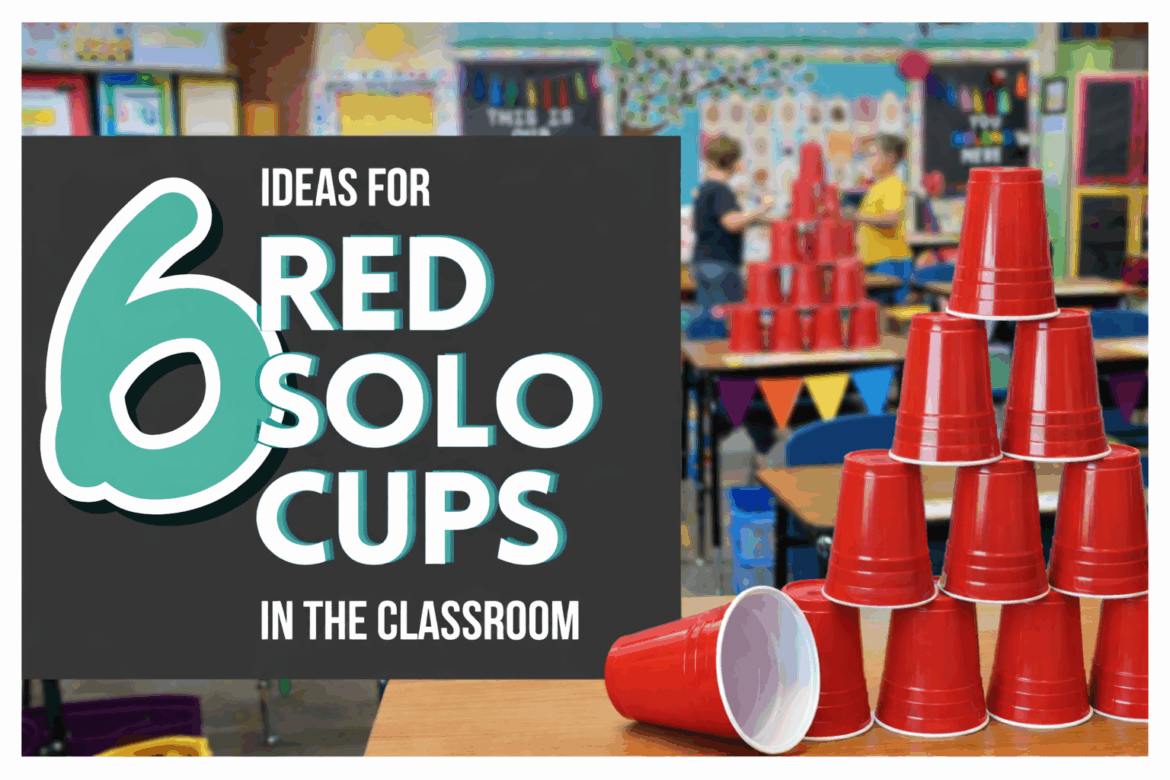
Pool noodles are wonderful. They are inexpensive, versatile, and colorful, and yes, I still put up with my colleagues joking about throwing mine away. Totally worth it. For all the same reasons, the red Solo cup earns a permanent spot in my classroom staples list. It is simple, sturdy, inexpensive, and wildly underrated as a classroom tool. With nothing more than a stack of cups, you can create activities that build problem solving, collaboration, and creativity, often with a lot of laughter mixed in. If pool noodles had their moment, it is only fair that the red Solo cup gets its turn in the spotlight.
Red Solo Cup Fun Facts
- The red cup was created in the 1970s by the Solo Cup Company.
- The bright red color was chosen on purpose. It helps hide stains and makes cups easy to spot in a crowd.
- Those lines around the cup are not decorations. They help make the cup stronger, easier to hold, and easier to stack.
- A regular red Solo cup actually holds 18 ounces, not 16 like many people think.
1. Solo Cup Engineering Challenge
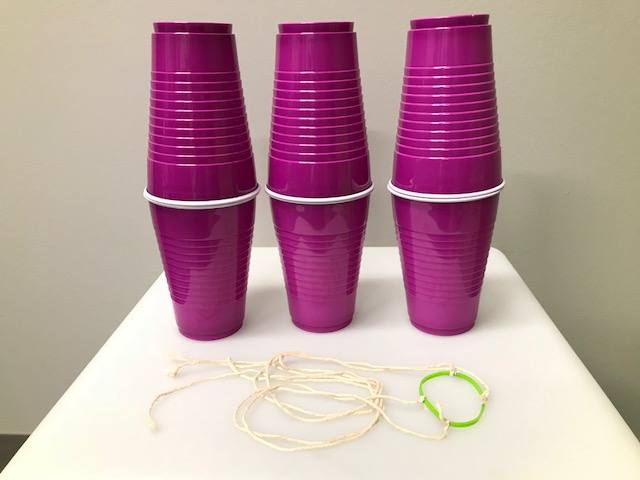
This is not a new obsession. I have proof that my love for Solo cups goes way back. In a blog I wrote back in 2018, I shared the Solo Cup Engineering Challenge, a hands-on STEM activity that has stayed in my favorites list for years. In this challenge, teams work together to build a pyramid using six Solo cups, string, and a rubber band without ever touching the cups with their hands. It is a great teamwork activity that keeps materials simple and engagement high.
2. Solo Cup Tree Stack
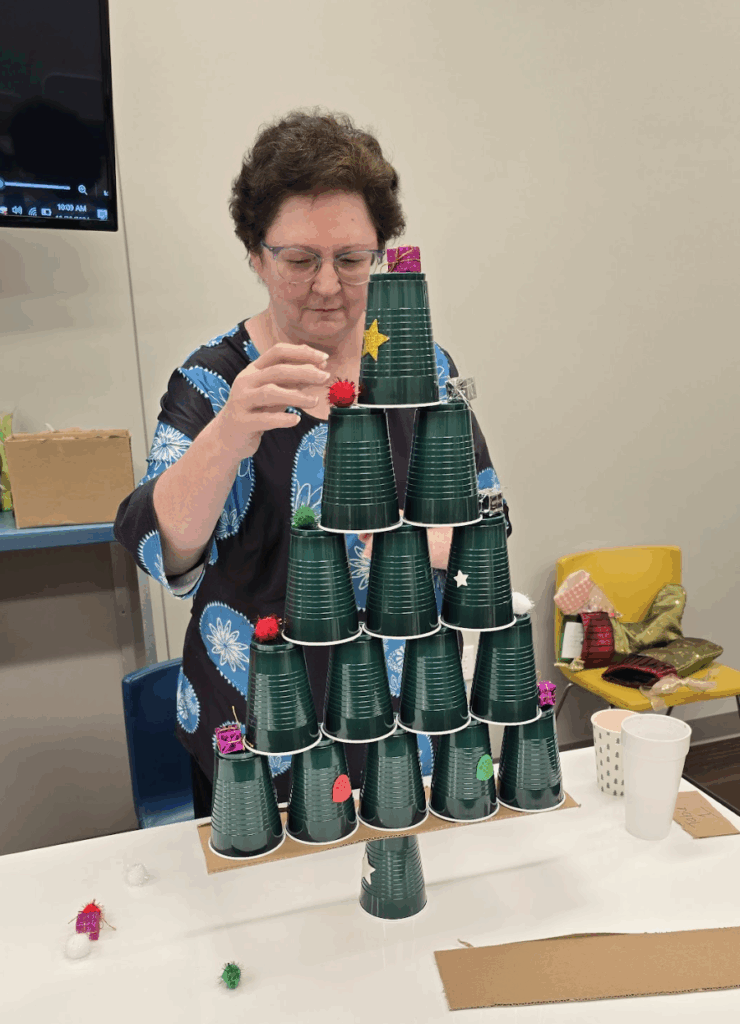
This game started as a holiday staff party favorite and quickly earned a permanent spot in my Solo cup rotation. Over time, it has shown up as Summer Stack for ETC, and a Valentine’s Day Stack for TCEA 2025 and 2026. While the theme changes, the core challenge stays the same. Players race to build and decorate a Solo cup pyramid as quickly and carefully as possible. It is fast paced, hands on, and a great way to add friendly competition while keeping materials simple and engagement high. For complete details and photos, check out the resource housed here.
3. Blow and Stack Showdown
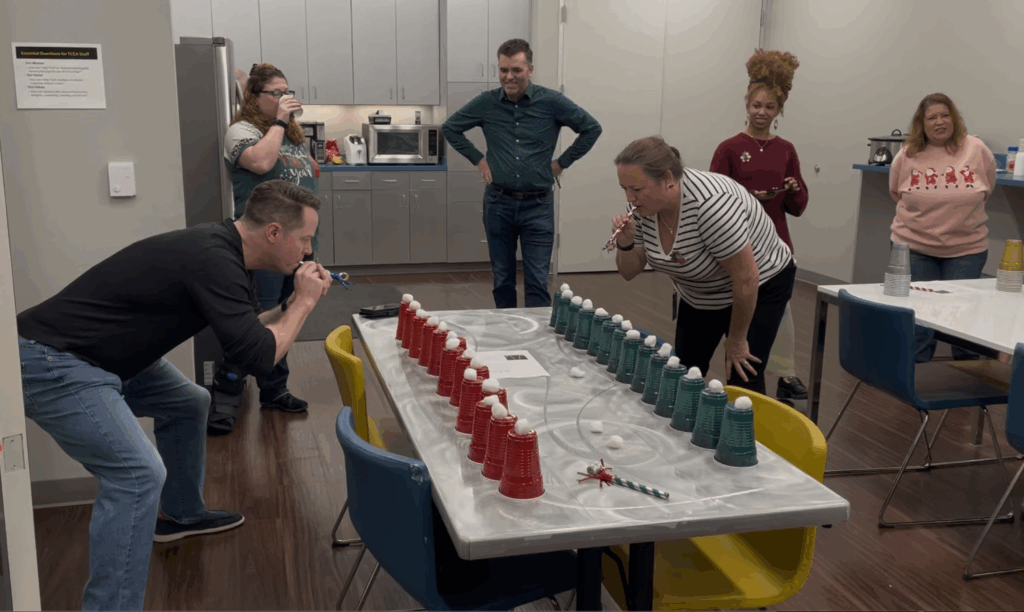
This Solo cup challenge leans into speed, focus, and just enough chaos to keep everyone smiling. Players race to clear cotton balls from inverted cups using only a New Year’s blower before shifting into a fast stacking challenge. It is silly on the surface, but requires control and concentration, making it a fun face-off game that works well for classrooms, staff events, or family game night. For details and rules, please check out this resource here.
4. Knock Out Challenge
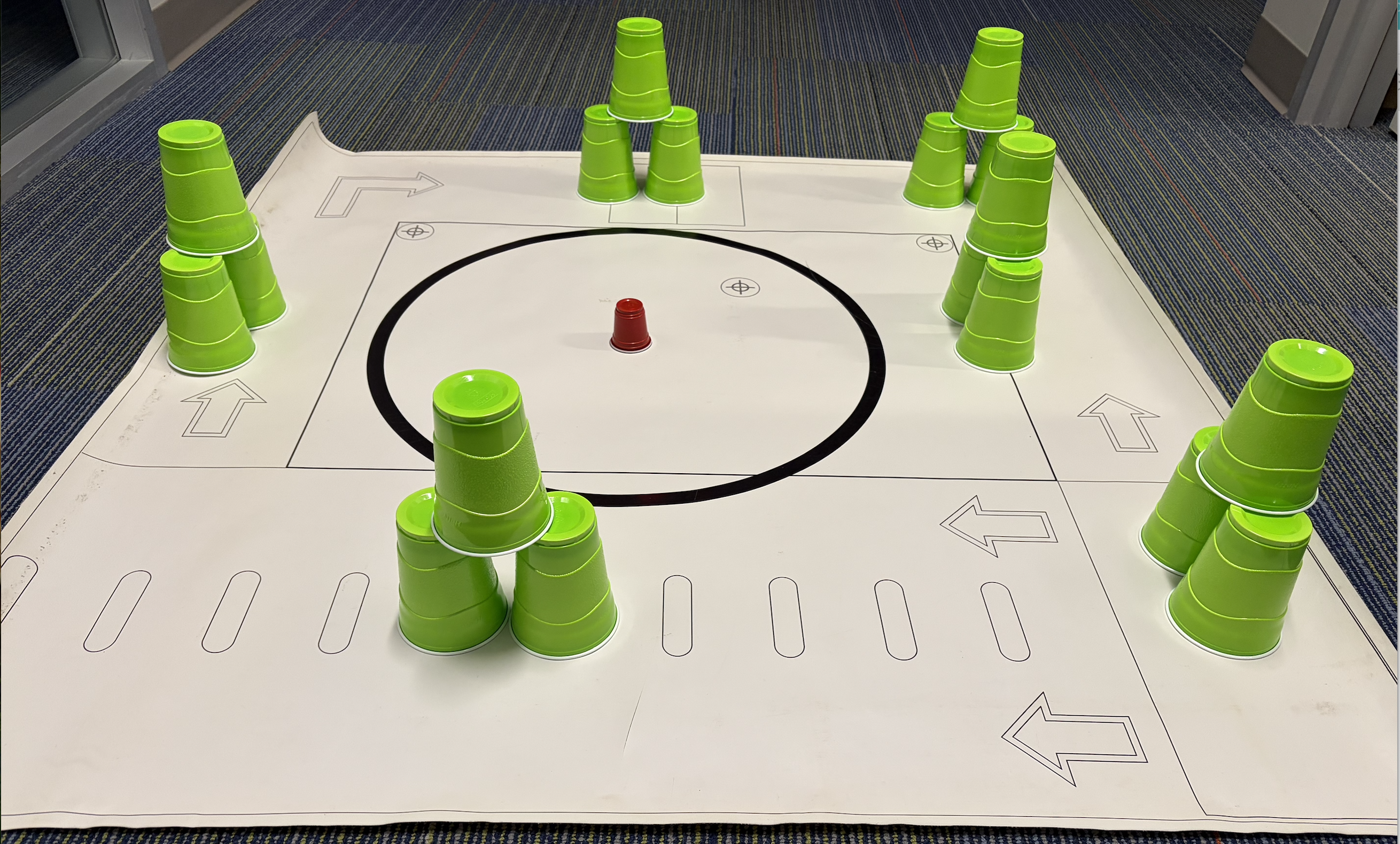
This robotics challenge puts teams’ driving skills to work as they use simple robot movements to knock regular and mini Solo cups out of a defined zone. The focus is on movement, timing, and teamwork, with just enough strategy to keep things exciting.
Teams of three or four take turns sending robots into the Knock Out Zone, aiming to knock out as many cups as possible within a set time. An optional open-ended version allows teams to design their own cup structures and placement for an added layer of challenge.
For full setup, rules, and scoring details, check out the complete Knock Out Challenge linked here.
5. Solo Cup Games for Indoor Recess Days
As a former elementary teacher in Montana, I learned that we could take students outside until the temperature dropped below zero. Most winter days, that meant sledding down a huge snowbank behind the school, which my first and second graders absolutely loved. Because of that, indoor recess was never anyone’s favorite, especially when the kids would much rather be outside.
On the rare days we had to stay inside, I wish I had known about Solo cup games. They are inexpensive, quick to set up, and easy to reset, making them perfect for indoor recess. They work well for small groups, partner challenges, or whole-class rotations, and they give students a chance to move, compete, and laugh when going outside is not an option.
The following games come from the YouTube video “5 Quick Cup Games in 3 Minutes,” which showcases fast and simple Solo cup activities for small groups. See the outline here.
1. Stack Attack
A fast-paced, competitive race where players try to stack all their cups as quickly as possible.
2. Tic-Tac-Toe
This game blends classic tic-tac-toe strategy with the added challenge of cup flipping.
3. Tug of Cup
A tabletop tug-of-war where successful flips move a center cup closer to victory.
4. Cup Stacking Pyramid
A classic speed challenge where players build and then break down a cup pyramid.
5. Race to the Top
A sequencing and speed challenge that requires cycling a marked cup through an entire stack.
6. Solo Cups as Silent Signals
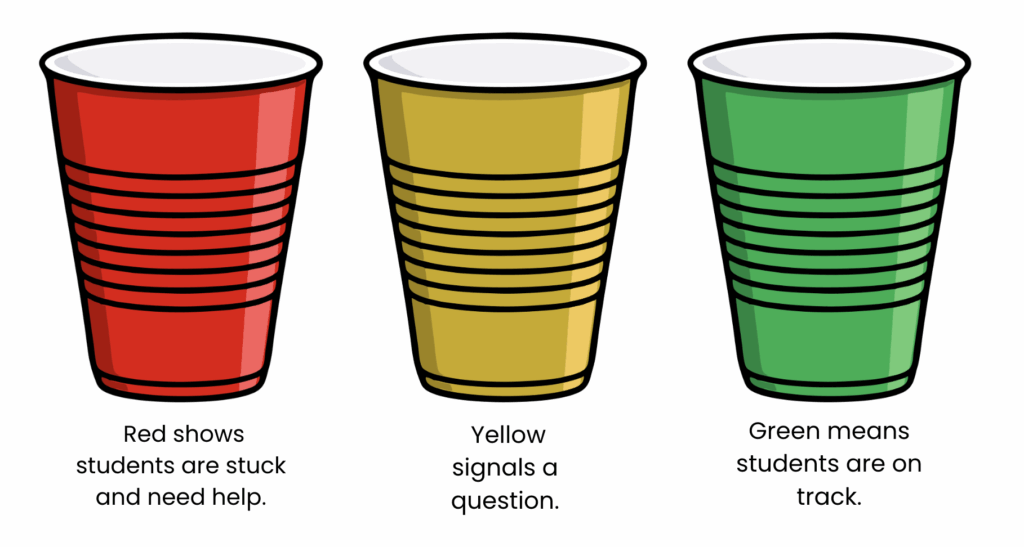
Teachers also use colored cups as simple classroom management signals. Students or groups place a cup on their table to show how they are doing during independent or group work. Green means they are on track, yellow signals a question, and red shows they are stuck and need help. This lets teachers scan the room quickly and prioritize support without interrupting learning.
The same color system can double as a visual noise meter. Teachers set the cup color to match the expected volume, helping students self-monitor discussion levels during partner or group work. It is a low-prep, low-tech strategy that keeps communication clear and avoids constant call-outs.
Pro Tip: Best Times to Buy Solo Cups
- After Major Holidays
Party supplies are often discounted after big celebrations like New Year’s, Valentine’s Day, St. Patrick’s Day, the 4th of July, Halloween, and Christmas. - Early Spring
As stores clear winter inventory, spring and summer party supplies go on sale. It’s a great time to stock up ahead of warm-weather activities. - Late Summer and Back-to-School Sales
Some retailers include party supplies in back-to-school deals, making it easy to grab Solo cups along with classroom materials. - Bulk Purchase Events
Warehouse stores like Costco and Sam’s Club sell large packs year-round at a lower per-cup cost. - Brand Consistency Matters
Brands like Hefty, Dixie, Great Value, and Member’s Mark all make red plastic cups, but designs vary. If your activity depends on stacking or balance, stick with one brand for consistent results.
Whether you are building pyramids, running robotics challenges, managing noise levels, or surviving an indoor recess day, red Solo cups prove that great classroom tools do not have to be fancy or expensive. Like pool noodles, they earn their keep by being flexible, reusable, and surprisingly powerful in the hands of creative educators. If you have your own favorite Solo cup ideas, drop them in the comments. And if pool noodles and red cups have had their moment, I have to ask… what everyday classroom staple should we tackle next?