

You know the look: students are physically in class, but mentally far away. They don’t misbehave or disrupt—they just… check out. This quiet disengagement has become more common, especially post-pandemic, leaving teachers wondering how to bring their classrooms back to life through stronger classroom management practices that foster inclusive participation.
If you’re seeing less energy, fewer hands raised, and more passive compliance, you’re not alone—and you’re not powerless. “Quiet quitting” in class participation isn’t a sign that your students don’t care; it’s a sign that our traditional engagement structures might not be working.
Let’s look at how to recognize academic quiet quitting, rethink what participation really means, and try out four practical strategies—ranging from chat tools to inclusive cold-calling—that help bring more voices into the room.
Recognizing Academic Quiet Quitting
Academic quiet quitting doesn’t always look like apathy. More often, it shows up as quiet compliance: students attend, sit through the lesson, maybe take notes—but rarely speak, contribute, or take initiative. They’re present, but not participating in ways that signal engagement or ownership of learning.
It’s easy to confuse this with laziness or shyness, but often, it’s a result of deeper issues: fatigue, fear of being wrong, or simply feeling like their voice doesn’t matter in the class dynamic. Unlike disruptive behavior, this kind of disengagement flies under the radar—especially in well-behaved classrooms.
Traditional participation models may unintentionally fuel this silence. If participation means only raising your hand and answering correctly on the spot, it rewards speed, confidence, and verbal processing. That leaves behind students who think more slowly, prefer to write, or need social cues to feel safe speaking.

🧠 Value Block: Analogy
Think of classroom participation like a group hike. Some students rush ahead, eager to lead the way. Others hang back—not because they’re uninterested, but because they’re cautious, observant, or unsure of the path. If we only measure progress by who gets to the top first, we miss the rich insights of those who walk at a different pace.
Rethinking Participation: Beyond the Hand Raise
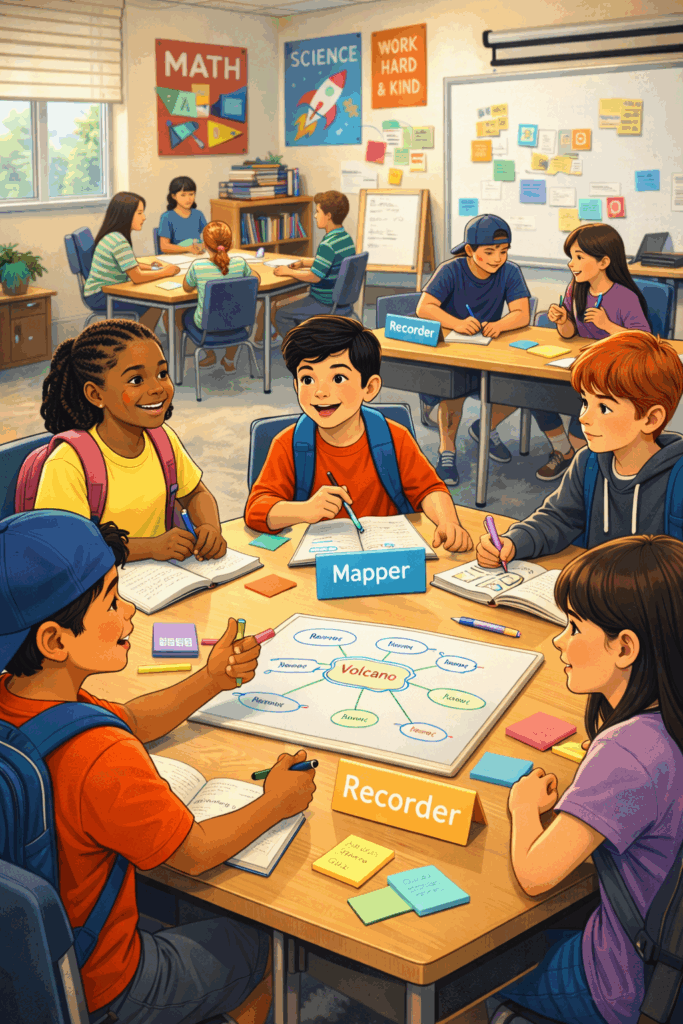
It’s time to broaden what “participation” actually means. If we only define it as students speaking out loud during whole-class discussions, we miss the many other ways they engage: taking notes, whispering insights to a partner, reacting in real time, or jotting questions in the margins.
Participation can be quiet, visual, written, or collaborative. Some students contribute by organizing group materials, synthesizing others’ ideas, or asking a single clarifying question that shifts the whole conversation. These are valuable forms of engagement—just often invisible under traditional models.
Reframing participation as a shared responsibility helps shift the tone from “perform for points” to “build understanding together.” When students see that contributing in different ways is not only allowed but encouraged, more of them are likely to step forward—on their own terms.
🧠 Value Block: Quick Implementation Idea
Try starting a lesson by saying: “There are many ways to participate today. You can speak up, jot notes in the shared doc, react with emojis in the chat, or help your group organize ideas. All of that counts.” Not using tech? You can also invite students to:
- Use simple hand signals (e.g., thumbs up for agreement, two fingers for a question)
- Write responses on sticky notes and post them on a board or wall
- Contribute silently during a “gallery walk” of group ideas posted around the room
This signals to students that there’s more than one right way to show up.
Alternative Participation Structures
Sometimes students want to participate but don’t know how—or don’t feel safe doing so in the usual formats. By redesigning participation structures, you create new pathways for students to engage with the content and with each other.
Use low-pressure, high-engagement tools like chat or backchannels. In classrooms with tech access, apps like Padlet, Google Jamboard, or a shared class chat can let students contribute anonymously or asynchronously. Even a “silent conversation” where students write responses on chart paper can reduce the pressure to speak aloud.
Collaborative whiteboards or physical stations can also spark involvement. Whether digital or analog, shared spaces invite more input from more students. Think: a rotating whiteboard question during group work, or a chart paper “brain dump” that captures diverse voices without needing one student to speak for the group.
Assign rotating participation roles. Instead of open calls for volunteers, give each student a defined way to contribute. Roles might include:
- Discussion Mapper – tracks who says what and draws connections
- Connector – links ideas to prior lessons or real-life examples
- Challenger – respectfully questions assumptions or adds a new perspective
These roles make participation feel purposeful—not performative.
🧠 Value Block: Real-Life Teacher Tip
One middle school teacher starts group tasks by assigning roles like “question asker” and “note catcher.” Students switch roles weekly, which gives everyone a chance to try different forms of engagement—and helps quieter students ease into contributing without pressure.
Building Routines for Inclusive Cold-Calling
Cold-calling doesn’t have to feel like a trap. When used with care and consistency, it can actually decrease anxiety and increase equity—especially when students know what to expect.
The key is to normalize participation, not spotlight it. Instead of calling on students randomly and occasionally, build it into the classroom rhythm. Let them know that everyone will be asked to think and contribute at some point—not to catch them off guard, but because their voice matters.
Make it predictable, supportive, and low-stakes.
- Give thinking time before asking for responses.
- Use prompts that have no single “right” answer.
- Allow students to “phone a friend” or build on someone else’s idea.
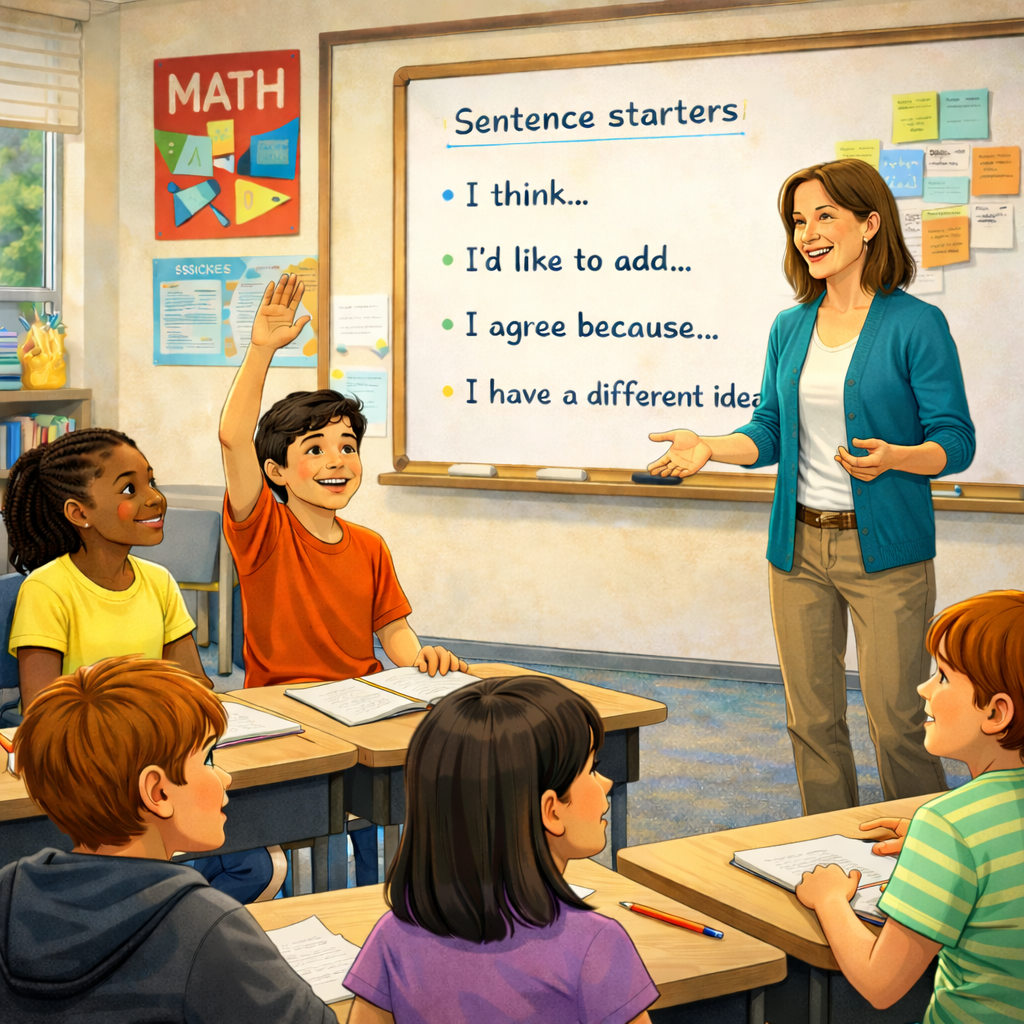
Use scripts and scaffolds to reduce fear. Even confident students can freeze when put on the spot. Help by offering sentence starters (“One thing I noticed was…”, “I’m wondering if…”) or allowing written responses first, then verbal share-outs.
🧠 Value Block: Language Shift Example
Instead of: “Let’s see who knows the answer… Emma?”
Try: “I’d like to hear a few different takes on this. Emma, what are your thoughts? Then we’ll hear from Jordan and Maya.”
This sets the tone for curiosity over correctness.
Final Thoughts: Participation as a Learning Mindset
Participation isn’t just about speaking up—it’s about showing up. When we redefine what it means to engage, we make space for more students to be seen as contributors, not just spectators.
Our job isn’t to force participation—it’s to build systems that invite it. With clear structures, rotating roles, and supportive routines, you help students move from passive compliance to active ownership of their learning.
Quiet quitting is often a response to a system that hasn’t worked for every learner. But with a few shifts in how we define, invite, and value participation, we can start bringing more voices into the room—and keeping them there.
Key Takeaways
- Quiet quitting in the classroom often looks like quiet compliance—not disruption.
- Traditional participation models may unintentionally exclude quieter or slower-processing students.
- Redefining participation to include written, collaborative, and nonverbal contributions opens new doors.
- Alternative structures like roles, whiteboards, and chat tools diversify how students engage.
- Inclusive cold-calling routines can make participation feel safer, expected, and more equitable.
- Participation should be framed as a mindset, not just a moment of speaking.