
Reading is one of the most powerful tools students have to build knowledge, improve writing, and explore new ideas. On our campus, we have been using Whooo’s Reading to help track reading progress, encourage comprehension, and reward students for putting in the work. Like any tool, however, it works best when it’s used honestly.
Lately, a few of our “super readers” have gotten a little creative with their entries by logging books they haven’t read or adding a few (or 1,000) extra pages here and there. Whooo’s cheating has become a great teachable moment about honesty, motivation, and what real growth looks like.
What Is Whooo’s Reading (and why use it)?
Whooo’s Reading is a free interactive platform that helps students log the books they are reading and answer comprehension questions about them. Instead of just tracking pages, it focuses on understanding what is read and has a great writing piece that is self-graded with AI. It’s very similar to the way writing is being scored on the STAAR assessments across the state. Students can earn points for writing thoughtful responses, using good grammar, and demonstrating comprehension.
Why Cheating Hurts More Than It Helps
When a student logs 1,000 pages for “Cat in the Hat,” it’s blatantly obvious that they are not being honest with their reading. The fact that they thought they would get away with it is even more concerning. After realizing the wide-spread dishonesty amongst students, we shifted classroom discussions towards honesty and why being dishonest will actually hurt you in the long run. We talked about how:
- You’re not really helping yourself. The prizes may be fun, but they are not worth missing out on the growth that comes from honest reading. The real reward is becoming a better reader and writer.
- You’re hurting others. Students who are working hard and logging truthfully may feel discouraged when they are passed by someone who did not play fair.
- It’s easy to get caught. Teachers can tell quickly when a student has hundreds of pages logged when the books they read are only a few pages long. It’s not a good feeling to be confronted about dishonest work and it makes your teacher disappointed in you for not being truthful.
How to Use Whooo’s Reading the Right Way
Here are five simple strategies that help keep reading fun and fair:
- Promote Accountability Partners
Have students pair up to check each other’s logs, discuss books, and share summaries. Peer accountability builds trust and enthusiasm along with encouraging positive social interactions. Several hours each day are spent on various online educational programs, so pairing it with face-to-face interactions can increase learning and accountability. - Emphasize Quality Over Quantity
Reward thoughtful responses, not inflated numbers. Model what strong, detailed writing looks like and let students revise their answers for higher scores. We had several teachers who were vocal opponents of the “hard grading” of the Whooo’s Reading AI grader. As we sat down together and looked answer by answer, they quickly realized how much subjective grading they were doing. As educators, we love to see students make progress, but the progress still needs to be graded objectively. - Use the Feedback Features
Point out how Whooo’s Reading highlights grammar, vocabulary, and content improvements. Show students that it is more than a score and that the feedback can make them stronger writers. Several students made significant improvements in their writing using the feedback provided by the AI. Their teacher told them the same improvement information, but the students were more open to the automatic feedback from the program than from their teacher. - Set Personal Growth Goals
Encourage students to compete against their past selves, not just each other. Celebrate milestones like finishing a tougher book or trying a new genre. Several students were visited by their previous teacher who brought stickers or suckers to reward them for their growth from the previous year. This helped make our goals a full campus experience. - Celebrate the Joy of Reading
Celebrate “best effort” awards or “most improved reader,” not just the top spot for most pages read or most quizzes passed. We had great conversations with the students about the purpose of reading for comprehension versus skim reading to try and pass a test.
What to know about the AI-grader
- The autograder uses rubrics that vary by academic level. It’s helpful (and important) to know the rubric so you can discuss their scores. The program will explain why the student scored what they did on each individual question. It will even give you a confidence score of whether the student read the book or just said they read it and tried to pass the questions without reading.
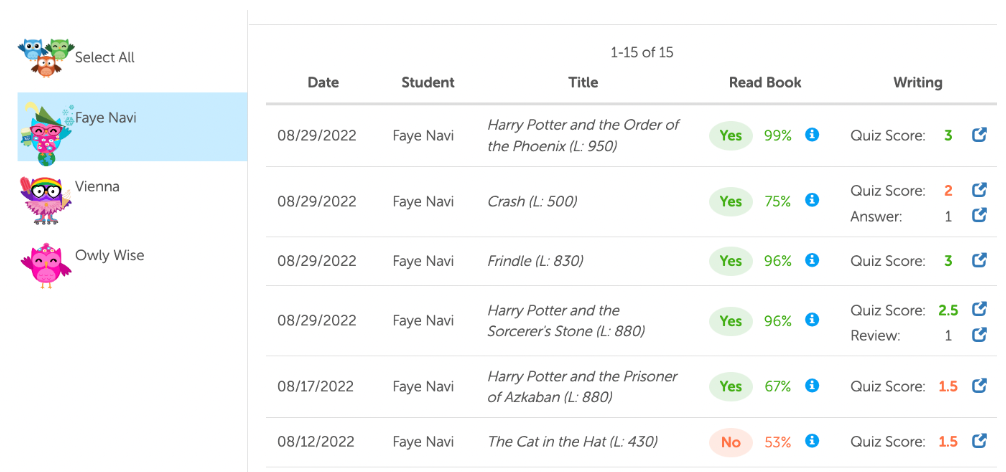
*Picture courtesy of Whooo’s Reading Help Center.
- Customizability: You can edit the reading level (lexile), number of questions, and various other options per student to individualize learning.
- Setting expectations & fidelity: Since the AI scores based on specific criteria (number of sentences, details from text, restatement of question, etc.), it’s useful to explicitly teach those expectations (e.g., “for your answers you need at least three sentences and two details from the text to aim for full credit”) so students aren’t “beating the system” but genuinely improving.
- Transparency with students: Let students know how their responses are being evaluated (at least in terms of the rubric categories) so they understand what good work looks like and why their feedback says what it does.
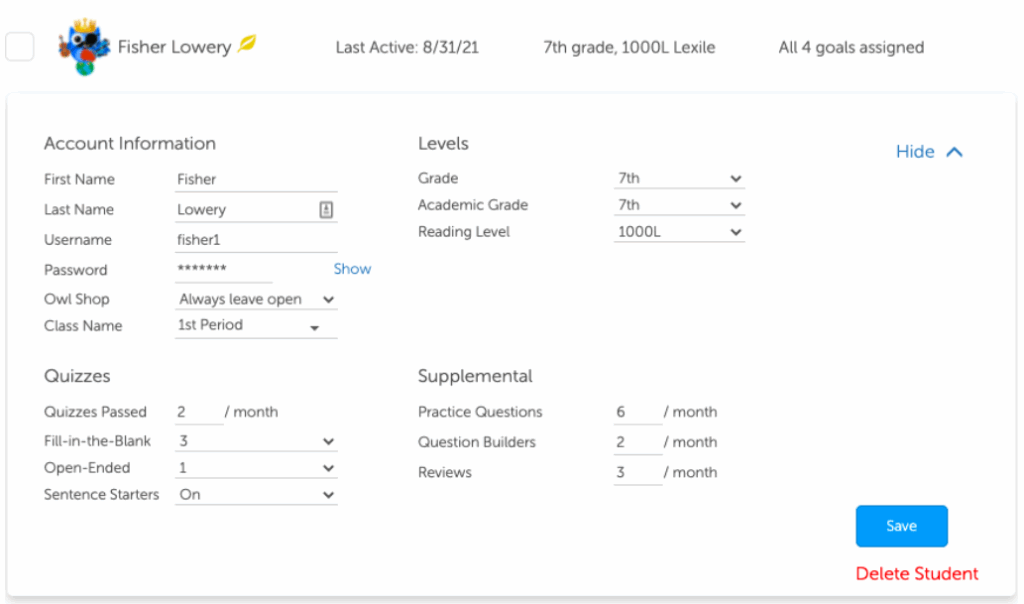
*Picture courtesy of Whooo’s Reading Help Center.
Whooo’s ready to get started?
As with any tool, how you use it determines the effectiveness. We’ve enjoyed using the free program of Whooo’s Reading to encourage our students to read for enjoyment, as well as for comprehension. Check it out and let me know what you think in the comments below!