
How Educators Can Use AI to Tell Stories, Spark Conversations, and Build Community
Artificial intelligence has become one of the biggest topics in education. Many educators are exploring how AI can save time by helping them write lesson plans, create quizzes, or draft emails. AI can also be a powerful creative partner that helps teachers tell meaningful stories, build community, and inspire conversations.
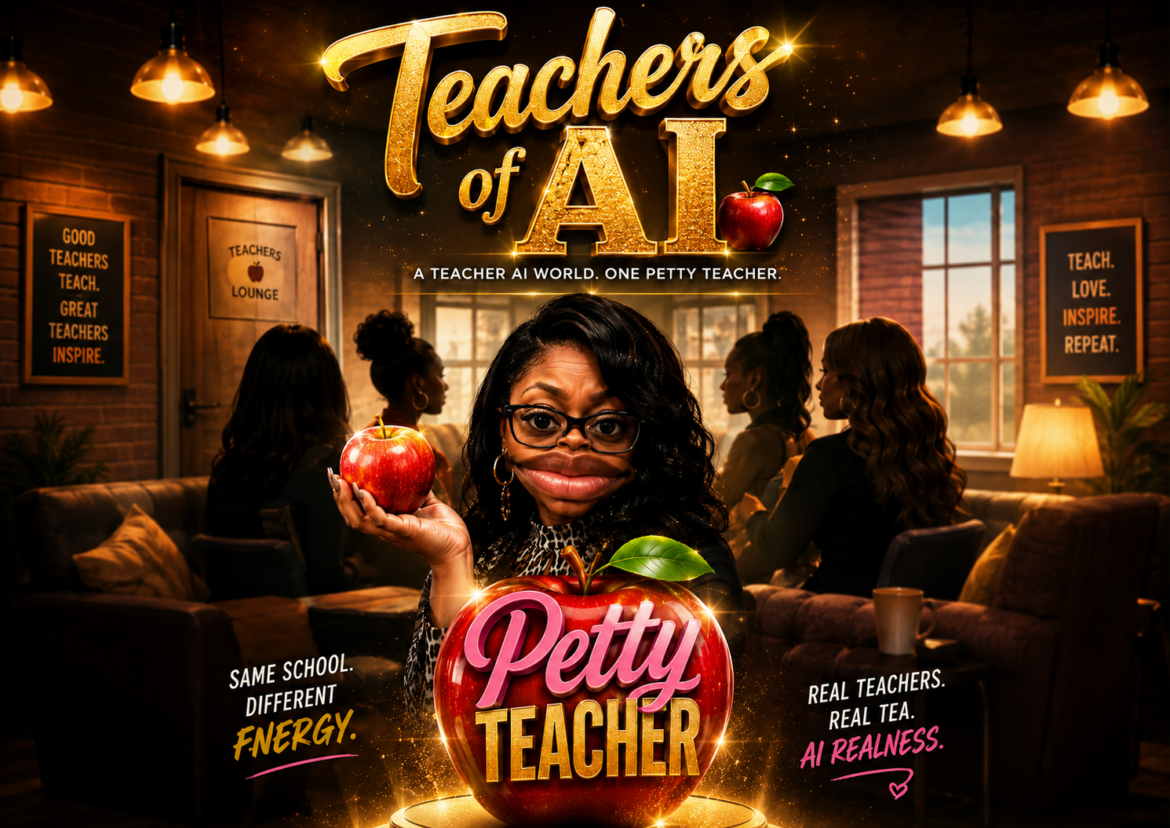
As two classroom teachers, we did not set out to become content creators. We simply noticed that many of the funniest, most challenging, and most relatable moments in education often go untold. We wanted to create something educators could laugh about together while also bringing awareness to the everyday realities of teaching. That journey led us to create Teachers of AI™, an independent short-form comedy series inspired by authentic classroom experiences.
Throughout the creative process, we discovered something important. AI did not replace our creativity. It helped expand it.
🍎 Start with Authentic Experiences
The best ideas do not begin with artificial intelligence. They begin with authentic human experiences.
Every educator has stories that make colleagues laugh in the hallway after school. It could be a memorable parent conference, an unexpected classroom moment, or a staff meeting that everyone can relate to. Those experiences are where meaningful storytelling begins.
When we create an episode, we do not ask AI to invent classroom situations. We begin with real experiences that educators understand. Then, we use AI to help organize ideas, explore possibilities, strengthen dialogue, and improve the overall flow of the story. The heart of every episode still comes from lived experience.
🍎 Use AI as a Creative Partner
One of the biggest misconceptions about AI is that it does all the creative work. In reality, the strongest results happen when educators remain the creative decision-makers.
AI can help brainstorm ideas, organize scenes, improve dialogue, suggest visuals, and refine writing. It can speed up the creative process, but it should never replace the educator’s voice.
Think of AI as a brainstorming partner. It can generate ideas quickly, but it does not know your students, your school community, or your teaching philosophy. Those are the things that make your work meaningful, and those are the things only you can provide.
🍎 Protect Student Privacy
One of our highest priorities has always been protecting students.
Rather than recreating actual classroom situations involving identifiable students, we created fictional characters inspired by common educational experiences. This allows us to discuss important topics while maintaining professionalism and protecting student privacy.
Whether educators use AI to write stories, create videos, or generate classroom materials, safeguarding student identities should always remain a priority.
🍎 Keep Your Voice at the Center
One lesson we learned early is that AI-generated content often sounds polished, but it does not always sound personal.
Every draft should be reviewed and revised until it reflects your own personality, teaching philosophy, and communication style.
Our fictional character, Ms. Petty, has a distinct voice because we intentionally developed her personality over time. AI helped us organize ideas and explore possibilities, but every creative decision came from us. That human touch is what makes storytelling authentic.
Your experience as an educator is something AI can never replace.
🍎 Review Everything Carefully
AI is a tool, not an expert.
Before sharing AI-generated content with students, families, or colleagues, take time to verify facts, check for bias, review accuracy, and ensure the content is appropriate for your audience. Human judgment remains one of the most important parts of responsible AI use.
We view AI-generated content as a first draft. The final responsibility always belongs to the educator.
🍎 Creativity Builds Community
One of the most rewarding parts of our journey has been seeing the conversations that creativity can spark. Humor has a unique way of bringing educators together. It opens the door to discussions about teaching, learning, and the evolving role of technology in our classrooms.
AI is more than a productivity tool. It can help educators share ideas, celebrate their experiences, and create content that helps others feel seen, understood, and connected.
As technology continues to evolve, educators have an opportunity to lead by demonstrating how AI can be used responsibly, ethically, and creatively. Students are watching how we use these tools. By modeling thoughtful and intentional practices, we help prepare them for a future where technology and human creativity work together.
The future of education will always depend on human connection, empathy, professional judgment, and imagination. AI does not replace those qualities. It simply gives educators another tool to amplify them.
Sometimes the most meaningful innovation is not using AI to do our work for us. It is using AI to help us tell the stories that only educators can tell.